
First I want to thank you all for your encouraging comments and your support. Many of you asked, what will happen after megaupload is down. Well, I think we should ask the FBI to shut down Microsoft, Apple and Google, since products of these companies were used for committing copyright infringement, too...
In the meantime, I want to tell you, what 12tone4ever said...
"My suggestion: everyone who downloaded sth from this site should re-upload it to a filehoster. and post the link in the comments respectively. What do you think that about?"
I think, that´s really a great idea, since I have neither time nor money to repost 500+ concerts.
Maybe I will continue this blog in the future sometime, I actually just don´t know...
February 22, 2012

January 18, 2012
Christian Muthspiel Yodel Group live at Jazzclub Unterfahrt Munich 2011

Christian Muthspiel - Trombone, Piano, Electronics
Gerald Preinfalk - Saxophones, Clarinet, Bass Clarinet
Matthieu Michel - Trumpet, Flügelhorn
Franck Tortiller - Vibraphone
Robert Riegler - E-Bass
Bobby Previte - Drums
recorded live at Jazzclub Unterfahrt München, November 8, 2011
1. Der Zirbitzkogler
2. Auf der Strah/ Der Schöffauer Luila
3. Der Lahnjodler/ Der Hirschauer/ Der Roller
4. Der Königsberger
5. Der Kollerschläger/ Ein schöner Verkehrter
6. Der Präbichler/ Der Langenwanger
7. Der Scheibm Dudler
"huljo": A second CD by the Yodel Group follows their recent first CD "may" (MRE 031-2). The Yodel Group was originally formed two years ago as a commissioned project for the 30th Saalfelden Jazz Festival. Since then, it has taken on life in the long-term as a band making regular tours. By virtue of these live performances it has evolved musically to such an extent that I thought the logical next step would be for me to compose a whole new program for the Yodel Group.
"On the one hand, I wanted to work more with the possibilities offered by this unique ensemble, which by now has been "road-tested" and which has developed a unity through its live performances. I wanted to write a set of new pieces that are tailor-made for this group, and that are musically enriched by their experience of playing together. On the other hand, there were still a good number of yodels that I couldn't include in my compositions for "may" and which have been waiting since then to be translated from the age-old folk music idiom into the language of jazz. Also, the reaction of the public and media to the first program encouraged me to write a second program for us to record and perform live in upcoming tours.
Seemingly simple yet highly refined, alpine yodeling is an archaic form of singing or calling - of Jauchzen and Juchzen, concepts unique to this Alpine region, which can roughly be translated as a joyful kind of shouting. Since my earliest days, it was a central part of my musical upbringing and naturally ran as a recurrent theme in the soundtrack of my childhood. My father collected yodels and preserved them by recording them and writing them down. We yodelled in the mountains with family and friends.
In the course of my explorations into the yodelling traditions of the Austrian alpine region, I became aware of fundamental parallels between yodelling and blues and jazz. It is easier to translate the one into the other than you might think, in both the formal as in the melodic- harmonic context. So it quickly became clear that jazz musicians coming from places that had nothing alpine about them - namely New York and Paris - could also work with this material, naturally and organically, and use it as the basis for new improvisation.
It is my intention to take this traditional folk music form, that I have known well since my earliest childhood, and to stretch it in all conceivable directions; to translate it, to give it new musical arenas - in this case jazz - while conserving the original yodelling as the unmistakable source and driving force. Far from being a mere polemic or deconstructive exercise in making "Alpine Blues", this is a creative way to give new life to old material, to use it as the basis for new interpretation, for new music." - Christian Muthspiel, translation by Karin Kaminker
"On the one hand, I wanted to work more with the possibilities offered by this unique ensemble, which by now has been "road-tested" and which has developed a unity through its live performances. I wanted to write a set of new pieces that are tailor-made for this group, and that are musically enriched by their experience of playing together. On the other hand, there were still a good number of yodels that I couldn't include in my compositions for "may" and which have been waiting since then to be translated from the age-old folk music idiom into the language of jazz. Also, the reaction of the public and media to the first program encouraged me to write a second program for us to record and perform live in upcoming tours.
Seemingly simple yet highly refined, alpine yodeling is an archaic form of singing or calling - of Jauchzen and Juchzen, concepts unique to this Alpine region, which can roughly be translated as a joyful kind of shouting. Since my earliest days, it was a central part of my musical upbringing and naturally ran as a recurrent theme in the soundtrack of my childhood. My father collected yodels and preserved them by recording them and writing them down. We yodelled in the mountains with family and friends.
In the course of my explorations into the yodelling traditions of the Austrian alpine region, I became aware of fundamental parallels between yodelling and blues and jazz. It is easier to translate the one into the other than you might think, in both the formal as in the melodic- harmonic context. So it quickly became clear that jazz musicians coming from places that had nothing alpine about them - namely New York and Paris - could also work with this material, naturally and organically, and use it as the basis for new improvisation.
It is my intention to take this traditional folk music form, that I have known well since my earliest childhood, and to stretch it in all conceivable directions; to translate it, to give it new musical arenas - in this case jazz - while conserving the original yodelling as the unmistakable source and driving force. Far from being a mere polemic or deconstructive exercise in making "Alpine Blues", this is a creative way to give new life to old material, to use it as the basis for new interpretation, for new music." - Christian Muthspiel, translation by Karin Kaminker

January 17, 2012
jazz big band graz: ‘Urban Folktales … And A Rose!’ live at Jazzfest Berlin 2010

Horst-Michael Schaffer, vocals, trumpet, conductor
Heinrich von Kalnein, saxophones, flute, conductor
Christoph ‘Pepe’ Auer, saxophones, clarinet, bass clarinet
Johannes Enders, saxophones, flute
Martin Harms, saxophones, bass clarinet
Bernhard Nolf, Axel Mayer, David Jarh, trumpet, flugelhorn
Johannes Herrlich, Robert Bachner, trombone
Wolfgang Tischhart, bass trombone
Uli Rennert, keyboards, lapsteel guitar
Matthias Loibner, electric hurdy-gurdy
Christof Dienz, e-zither, bassoon
Henning Sieverts, bass, cello
Gregor Hilbe, drums, programming
Barbara Buchholz, theremin
OchoReSotto, visuals
recorded live at Haus der Berliner Festspiele, Main Stage, November 4, 2010
1. Band Introduction
2. Urban Tribes - Introduction
3. Seelenbaumeln
4. Spacetrip (or the day we landed)
5. Reve africain
6. High voltage
Among European jazz orchestras the Jazz Bigband Graz has earned an exceptionally good reputation. The international cohort of soloists performs on a superior level. The two artistic directors Heinrich von Kalnein and Horst-Michael Schaffer have managed to mould this heterogeneous flock of individualists into a homogeneous team with a genuine musical language.
The notion of a “Big Band” almost seems too conventional for the reckless musical adventures of this group from Styria since with each new project they further depart from their normal frame work of large jazz ensembles. In 2008, the JBBG celebrated triumphs with their progressive programme Electric Poetry & Lo-Fi Cookies. This year’s edition of JazzFest Berlin stages their latest extravaganza, Urban Folktales … And A Rose!
The poetry of the newly refurbished orchestra –extended by electric zither, amplified wheel fiddle/hurdy-gurdy and a theremin, plus visual projections by artist group OchoReSotto – revolves around one of the most elementary of all human issues – love.

The notion of a “Big Band” almost seems too conventional for the reckless musical adventures of this group from Styria since with each new project they further depart from their normal frame work of large jazz ensembles. In 2008, the JBBG celebrated triumphs with their progressive programme Electric Poetry & Lo-Fi Cookies. This year’s edition of JazzFest Berlin stages their latest extravaganza, Urban Folktales … And A Rose!
The poetry of the newly refurbished orchestra –extended by electric zither, amplified wheel fiddle/hurdy-gurdy and a theremin, plus visual projections by artist group OchoReSotto – revolves around one of the most elementary of all human issues – love.
January 16, 2012
Orchestre National de Jazz & John Hollenbeck: Shut Up And Dance live at London Jazz Festival 2010

Orchestre National de Jazz
Daniel Yvinec: conductor
Eve Risser: piano, flutes, sound objects
Vincent Lafont: keyboards, electronics
Antonin-Tri Huong: alto sax, clarinets, piano
Matthieu Metzger: alto, soprano and sopranino sax, electronic treatments
Joce Mieniel: flutes, electronics
Rémi Dumoulin: saxophones, clarinets
Guillaume Poncelet: trumpet
Pierre Perchaud: guitars, banjo
Sylvain Daniel: e-bass, french horn, electronic effects
John Hollenbeck: drums
Purcell Room, November 2010
1. Failing Men
Soloist: Guillaume Poncelet, trumpet
2. Life Still
Soloist: Sylvain Daniel, e-bass
3. Flying Dreams
Soloist: Pierre Perchaud guitars
4. Tongs of Joy
Soloist: Vincent Lafont, keyboards
5. Praya Dance
Soloist: Joce Mieniel, flutes
6. Bob Walk
Soloist: Matthieu Metzger, alto & soprano saxophones
7. The Power Of Water
Produced in a creative sphere covering New York, Paris, Berlin and Saint-Rémy-de-Provence, Shut Up And Dance emphasizes the relation between music and movement.
The spotlight turns to rhythm in all aspects of expression, at times even where least expected: a ping pong ball bouncing across piano wire, miscellaneous objects mistreated by computer software, instrument keys, hands rubbing, PVC tubes morphing into melodies… Percussion is everywhere, a bona fide sequence of powerful melodic passages that blend the shades of a repeating musical sound, pygmy music, art music, electronic music, not to overlook a Gnawas' trance or a Duke Ellington swing.
John Hollenbeck's compositions, inspired specially for this program, stem from an extensive collaboration with Daniel Yvinec and reveal the excitement and body of classical works, in a series of ten mini-concertos, each one dedicated to a different orchestra musician tailored to their unique personality and language.
Turning the notion of instrumental function on its head without a moment's hesitation, the wind instruments drive the beat, while the prepared piano moves onto the percussion side of the orchestra… It's all about the idea of movement, conveyed in these mesmerizing rhythms, always and forever crisscrossing so as to ease our separation from self.
The spotlight turns to rhythm in all aspects of expression, at times even where least expected: a ping pong ball bouncing across piano wire, miscellaneous objects mistreated by computer software, instrument keys, hands rubbing, PVC tubes morphing into melodies… Percussion is everywhere, a bona fide sequence of powerful melodic passages that blend the shades of a repeating musical sound, pygmy music, art music, electronic music, not to overlook a Gnawas' trance or a Duke Ellington swing.
John Hollenbeck's compositions, inspired specially for this program, stem from an extensive collaboration with Daniel Yvinec and reveal the excitement and body of classical works, in a series of ten mini-concertos, each one dedicated to a different orchestra musician tailored to their unique personality and language.
Turning the notion of instrumental function on its head without a moment's hesitation, the wind instruments drive the beat, while the prepared piano moves onto the percussion side of the orchestra… It's all about the idea of movement, conveyed in these mesmerizing rhythms, always and forever crisscrossing so as to ease our separation from self.

January 15, 2012
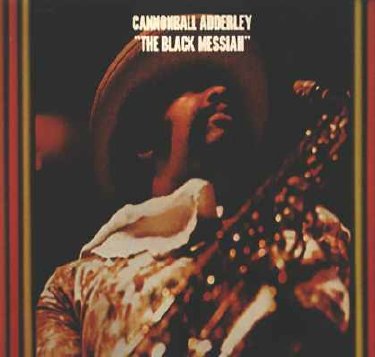
Cannonball Adderley Group live at Berliner Jazztage 1972

Julian "Cannonball" Adderley (as, ss)
Nat Adderley (co)
George Duke (p, elp)
Walter Booker (b)
Roy McCurdy (dr)
recorded live at Philharmonie Berlin, November 2, 1972
1. Hummin' (Nat Adderley; Eugene McDaniels)
2. Doctor Honoris Causa (Josef "Joe" Zawinul)
3. Yesterdays (Jerome Kern)
4. Walk tall (Josef "Joe" Zawinul)
5. Mercy, mercy, mercy (Josef "Joe" Zawinul)
6. The Theme
Still immersed in the burgeoning electronic jazz-rock explosion of the times, Cannonball Adderley goes further toward a rapprochement with the rock and soul audiences than ever before .
"Now I don't give a damn whether you can count or not, we still are the Cannonball Adderley Quintet!," quoth the leader, who is in loose, loquacious form throughout the set (the jazz world badly misses his witty verbal intros). With Joe Zawinul now flying off to Weather Report, his replacement is an even more electronically minded pianist, George Duke, who levitates into the outer limits with his Echoplex and ring modulator and proves to be a solid comper. But Zawinul is not forgotten, for the band pursues a long, probing, atmospheric excursion on his tune, "Dr. Honouris Causa."
Brother Nat Adderley gamely visits the outside on cornet, not always convincingly, while Cannonball doubles with increasing adventurousness on soprano and alto and bassist Walter Booker and drummer Roy McCurdy deftly handle all of the changes of style. Cannonball adeptly keeps pace with Miles Davis, his former boss while not abandoning his funky soul-jazz base nor the special audience-friendly ambience of his concerts.
"Now I don't give a damn whether you can count or not, we still are the Cannonball Adderley Quintet!," quoth the leader, who is in loose, loquacious form throughout the set (the jazz world badly misses his witty verbal intros). With Joe Zawinul now flying off to Weather Report, his replacement is an even more electronically minded pianist, George Duke, who levitates into the outer limits with his Echoplex and ring modulator and proves to be a solid comper. But Zawinul is not forgotten, for the band pursues a long, probing, atmospheric excursion on his tune, "Dr. Honouris Causa."
Brother Nat Adderley gamely visits the outside on cornet, not always convincingly, while Cannonball doubles with increasing adventurousness on soprano and alto and bassist Walter Booker and drummer Roy McCurdy deftly handle all of the changes of style. Cannonball adeptly keeps pace with Miles Davis, his former boss while not abandoning his funky soul-jazz base nor the special audience-friendly ambience of his concerts.
January 08, 2012
Trombone Shorty & Orleans Avenue live at 42nd International Jazzweek Burghausen 2011

Troy Andrews (tb, tp, voc)
Tim McFatter (s)
Pete Murano (g)
Mike Ballard (b)
Joey Peebles (dr)
recorded live at Wackerhalle, Burghausen, March 25, 2011
1. Backatown
2. Suburbia
3. Orleans and Claiborne
4. On Your Way Down
5. Hurricane Season
6. Groove On/ Right To Complain
7. St. James Infarmery
8. On The Sunny Side Of The Street
9. I Know You Wanna Be/ James Brown Medley
10. One Night Only/ Something Beautiful
11. When The Saints
Since Hurricane Katrina demolished New Orleans' musical infrastructure, there has been a committed reconfiguration of the city's brass-band tradition courtesy of young players like those in the Rebirth and Soul Rebels bands, among whom Troy "Trombone Shorty" Andrews perhaps offers the greatest crossover potential on his most recent album "For True", released on Verve Forecast.
Shorty here offers an explosive blend of funk, blues and jazz right from the opening bars of the rumbustious "Buckjump", where Rebirth's ebullient horns ride an itchy fatback groove against 5th Ward Weebie's syncopated vocal expostulations. It also includes the first of Shorty's athletic trombone solos, whose slippery, rowdy character is set against the fierier contributions of guest guitarists such as Warren Haynes and Jeff Beck, the latter typically dazzling on "Do to Me".

January 06, 2012
Bastian Jütte Inside live at Studio II, Munich 2011

Till Martin (Saxophone)
Max Frankl (Guitar)
Christian Elsässer (Piano)
Andreas Kurz (Bass)
Bastian Jütte (Drums)
recorded live at Studio II, Bavarian Broadcast, Munich, October 26, 2011
1. Restless Mind (Bastian Jütte)
2. Freedom Song (Bastian Jütte)
3. Down to the ground (Bastian Jütte)
4. Indie Jazz (Bastian Jütte)
5. Inside (Bastian Jütte)
6. Trust (Bastian Jütte)
He is someone who creates highly sensitive notes with sticks, drums and cymbals. You may experience him in one of his many bands - the lean young man with the distinctive, nonhairy crown. And he is always a guarantor for subtlety. For fine rhythmic nuances - and always for drive and power: Bastian Jütte. In some concerts, he likes to take the electric guitar to play self-made indie rock. That's his other side and it also sounds good. Particularly because he knows how to write thrilling, catchy songs.
Why always one without the other? Here, you find both: the drummer and the rock-inspired songwriter. On "Inside", Bastian Jütte gathers nine of his own compositions that reflect a lot of the things he is into. "Jazz", "singer-songwriter", "indie rock" and "indie tronic" is what he mentions as influences for his own mixtures. Sometimes, the song titles point at the respective sounds - with nice puns such as "Indiefication" or "Decadance". Or: "Aaron Parks His Car" - as title of a homage to an influential young jazz piano player from the USA. The album contains hypnotic piano as well as trashily alienated drums, rocking guitar motifs that are interconnected with melancholic key-harmonies that tend to change rhythm or tempo all of a sudden; backwards running only to be soon resolved into audio tracks with edgy clarity, ironically-casual dissonants that sound like an instrumental wink; sublimely hammering bass ostinati and many pullingly beautiful melodies. It almost doesn't matter what is contained. Because you realize that it all fits nicely. It's made from a single source - and it captures you in its very own style. It has esprit and stylistic coherence.
You can certainly take these compositions apart but you can also just allow yourself to fall into them. Surrounded by experienced jazz partners such as saxophone player Till Martin, guitar player Max Frankl, piano player Christian Elsässer and bass player Andreas Kurz, Bastian Jütte manages to conjure moods that remind you of instrumental songs from time to time and of musical short films at other times. Amusing, laconic, unaffected films that render an image of our era, and which offer a personal statement in a very relaxed way. And they are touching as well - until the "Inside" of the drummer and creator will ideally also become the "inside" of the listener. Enjoy! - Roland Spiegel
Why always one without the other? Here, you find both: the drummer and the rock-inspired songwriter. On "Inside", Bastian Jütte gathers nine of his own compositions that reflect a lot of the things he is into. "Jazz", "singer-songwriter", "indie rock" and "indie tronic" is what he mentions as influences for his own mixtures. Sometimes, the song titles point at the respective sounds - with nice puns such as "Indiefication" or "Decadance". Or: "Aaron Parks His Car" - as title of a homage to an influential young jazz piano player from the USA. The album contains hypnotic piano as well as trashily alienated drums, rocking guitar motifs that are interconnected with melancholic key-harmonies that tend to change rhythm or tempo all of a sudden; backwards running only to be soon resolved into audio tracks with edgy clarity, ironically-casual dissonants that sound like an instrumental wink; sublimely hammering bass ostinati and many pullingly beautiful melodies. It almost doesn't matter what is contained. Because you realize that it all fits nicely. It's made from a single source - and it captures you in its very own style. It has esprit and stylistic coherence.
You can certainly take these compositions apart but you can also just allow yourself to fall into them. Surrounded by experienced jazz partners such as saxophone player Till Martin, guitar player Max Frankl, piano player Christian Elsässer and bass player Andreas Kurz, Bastian Jütte manages to conjure moods that remind you of instrumental songs from time to time and of musical short films at other times. Amusing, laconic, unaffected films that render an image of our era, and which offer a personal statement in a very relaxed way. And they are touching as well - until the "Inside" of the drummer and creator will ideally also become the "inside" of the listener. Enjoy! - Roland Spiegel

January 05, 2012
Yellowjackets live at 32nd Leverkusener Jazztage 2011

Bob Mintzer - Saxophones, Bass Clarinet, EWI
Russell Ferrante - Keyboards, Synthesizer
William Kennedy - Drums
Jimmy Haslip - Bass
recorded live at Forum, Leverkusen, November 8, 2011
1. Spirit of the West (Russell Ferrante)
2. Red Sea (Bob Mintzer)
3. Tenacity (Bob Mintzer)
4. Claire´s Song (Russell Ferrante)
5. Greenhouse (Russell Ferrante/ Jimmy Haslip)
6. Why Is It (Bob Mintzer)
7. Revelation (Russell Ferrante)
In music, time flies, styles unstoppably evolve, and bands come and go. But there are also rare stable, forward moving forces on the scene—one prime example in jazz being the Yellowjackets. As of 2011, this beloved eclectic, electro-acoustic jazz band that keyboardist Russell Ferrante and bassist Jimmy Haslip built celebrates the ripe, young but deep age of 30—a milestone commemorated with another powerful and heartfelt album, fittingly named Timeline.
Yellowjackets celebrate 30 years as one of the premiere jazz groups of our time with the release of "Timeline". William Kennedy is back in the drum chair after a 10 year hiatus, and "Timeline" features a guest appearance by Yellowjackets alumni, Robben Ford. Yellowjackets first recorded in 1980 with Robben on guitar.

January 04, 2012
George Duke Band live at 32nd Leverkusener Jazztage 2011

George Duke - Piano, Keyboards, Synthesizer, Vocals
Andrew Papastephanou - Keyboards
Jef Lee Johnson - Guitar
Mike Manson - Bass
Gordon Campbell - Drums
recorded live at Forum, Leverkusen, November 8, 2011
1. Bus Tours
2. You Touch My Brain
3. Cobra/ Backyard Ritual
4. A Fonk Tail/ Old Skool Medley
5. Everyday Hero
"Aural nutrients for the mind, body and soul that when administered correctly can lead to mental, physical and spiritual healing and cause a tinglin in yo hip bone - uh, did I say somethin?" - George Duke.
Anything more to say?

January 02, 2012
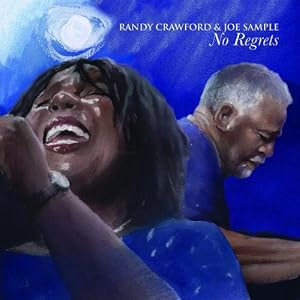
Randy Crawford & Joe Sample Trio live at 32nd Leverkusener Jazztage 2011

Randy Crawford - Vocals
Joe Sample - Piano
Nicklas Sample - Bass
Doug Belote - Drums
recorded live at Forum, Leverkusen, November 6, 2011
1. Gee Baby Ain´t I Good To You
2. Happiness Is A Thing Called Joe
3. Feeling Good
4. The End Of The Line
5. But Beautiful
6. Me, Myself And I
7. Rainy Night In Georgia
8. Everybody´s Talking
9. One Day I´ll Fly Away
10. Rio De Janeiro Blue
11. Cajun Moon
12. This Bitter Earth
13. Almaz
14. Danceland
Georgia-born R&B/jazz singer Randy Crawford and keyboardist Joe Sample go back a long way. Sample played on The Crusaders' huge 1979 hit, Street Life, which featured an extraordinary vocal by Crawford – check out the excellent YouTube footage, complete with Sample's frilly shirt! Although Crawford's early run of subsequent solo hits (Rainy Night In Georgia, You Might Need Somebody, etc) wasn't sustained, and she's had a fairly low profile in recent years, the UK's Shola Ama enjoyed success with a more or less copycat version of You Might Need Somebody in 1997. In 2006, Crawford and Sample made their first joint album, Feeling Good, which he claims was the first time her voice had ever got the stripped-down setting it really deserved.
No Regrets continues that approach with the same small ensemble on a selection of carefully chosen, lovingly crafted standards, plus a few less familiar numbers. There's great, unobtrusive backing by Steve Gadd (drums) and Christian McBride (bass), the occasional tasty touch of guitar and brass, and intuitive piano accompaniment by Sample. Crawford’s voice has deepened and mellowed over the years and she doesn't go in for the vocal gymnastics she once did, but her tremulous phrasing is as distinctive and appealing as ever.
Apart from that, and the fact that the world probably doesn't need another version of Chip Taylor's Angel Of The Morning, this won't disappoint old fans.
January 01, 2012
Big Sam's Funky Nation live at JazzFest Berlin 2011

Big Sam Williams trombone, vocals
Andrew Baham trumpet, keys, vocals
Takeshi Shimmura guitar
Chocolate Milk drums
Eric Vogel bass
recorded live at Quasimodo, Berlin, November 6, 2011
1. Good Times/We gonna do it (Sammie R. Williams)
2. It's Your Thing/Just Kissed My Baby/Chameleon
3. Funky Donkey
4. Cissy Strut
5. Feelin' Kind a Funky
6. Get Down/Big Sam's Blues
7. Whole Lota Shaking Going on/Walk with me (David Curlee Williams)
8. Do Whatcha Wanna/Let It Shine
9. Headline News
New Orleans’ own Big Sam’s Funky Nation is a driving force of urban funk. Ryan White, of the Oregonian, says the band is “tight enough (and hot enough) to turn coal into a diamond!” The band is led by trombone powerhouse, Big Sam Williams, formerly the trombonist for the Dirty Dozen Brass Band, whom the San Francisco Chronicle calls “the top man on the slide trombone in the birthplace of jazz”. Big Sam refuses to let the audience sit still. Between the band’s solos, Big Sam's signature dance moves and his distinctive trombone riffs, the energy level is high voltage when this band takes the stage!
“He’s got the chops of Louis, the charisma of Dizzy, the oomph of the Dirty Dozen Brass Band, and the understanding that it don’t mean a thing if it ain’t got that swing … and a whole lotta funk.” (Rachel Levitin, WeLoveDC.com)
“He’s got the chops of Louis, the charisma of Dizzy, the oomph of the Dirty Dozen Brass Band, and the understanding that it don’t mean a thing if it ain’t got that swing … and a whole lotta funk.” (Rachel Levitin, WeLoveDC.com)

December 31, 2011
Colin Towns Blue Touch Paper live at JazzFest Berlin 2011

Colin Towns keyboards, compositions
Mark Lockheart saxophone
Chris Montague guitar
Edward Maclean bass
Benny Greb drums
Stephan Maas percussion
recorded live at Haus der Berliner Festspiele, Main Stage, November 6, 2011
1. Blue Touch Paper/Say What You Mean/ The Forbidden Dance/ Another Time, Another Place
2. Lost For Words
3. Ducking And Diving
4. One Eye On The Clock
5. Principal Dancer/ Walls Have Ears
6. Introduction by Stephan Maas
7. Transcending
8. This Could Run
9. Crazy Man On Platform 13
No matter if he is busy with his own Mask Orchestra or co-operates with various European radio big bands – Colin Towns stands out from the run-of-the-mill arranging trade.
The British sound magician has developed a unique profile, and has been a welcome and regular guest with the Berlin Jazzfestival since more than a decade.
With his new six piece band the former keyboarder/arranger for the Ian Gillan Band finally returns to his roots – at least looking at the formate. His approach is a very fresh one, though. With an abundance of experience in rock, jazz, classical, electronic and film music at hand, and an excellent cast of German and UK free-thinkers at his side, the Berlin live premiere of Colin Towns Blue Touch Paper promises to be a highly entertaining experience – as drummer Stephan Maas says: “It’s optical music, it takes you on a trip … the challenge of this band is to play without fear”.
Leave your expectations at home – this is no predictable band!

The British sound magician has developed a unique profile, and has been a welcome and regular guest with the Berlin Jazzfestival since more than a decade.
With his new six piece band the former keyboarder/arranger for the Ian Gillan Band finally returns to his roots – at least looking at the formate. His approach is a very fresh one, though. With an abundance of experience in rock, jazz, classical, electronic and film music at hand, and an excellent cast of German and UK free-thinkers at his side, the Berlin live premiere of Colin Towns Blue Touch Paper promises to be a highly entertaining experience – as drummer Stephan Maas says: “It’s optical music, it takes you on a trip … the challenge of this band is to play without fear”.
Leave your expectations at home – this is no predictable band!
December 30, 2011
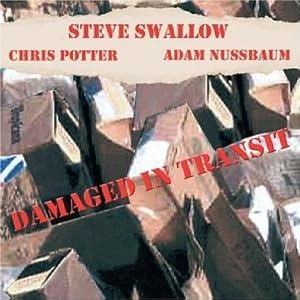
The Swallow Quintet feat. Carla Bley live at JazzFest Berlin 2011

Steve Swallow bass
Chris Cheek tenor sax
Carla Bley Hammond B3
Steve Cardenas guitar
Jorge Rossy drums
recorded live at Haus der Berliner Festspiele, Main Stage, November 6, 2011
1. Sad Old Candle/ Into The Woodwork/ From Whom It May Concern/ Crowded In The Shower (Steve Swallow)
2. Let's Eat (Steve Swallow)
3. Suitable From Framing/ Small Comfort / Still There/ Never Know/ Exil Stage Left (Steve Swallow)
4. Name That Tune (Steve Swallow)
His gig history with this festival dates back to 1966: Stan Getz and Astrud Gilberto were his first visiting card. He played with Gary Burton, kicked off John Scofield’s European career and returned with Carla Bley a couple of times. An innovator on the bass guitar, a gifted composer, producer and bandleader, Steve Swallow has been a consistently engaging presence in jazz over the last 40 years.
He has placed first (electric bass) in the Downbeat International Critics Poll since 1983, and in the Downbeat Readers Poll since 1985. He has also won the Jazz Times poll (electric bass) for the past several years, and has been voted the Jazz Journalists Association's electric bassist of the year since 2001, when that category was instituted.
Now he presents his new band, the first in a long time, a potent lineup that features Carla Bley on Hammond B3 organ, tenorist Chris Cheek, guitarist Steve Cardenas and drummer Jorge Rossy. Together, they create eloquent modern jazz packed with dynamism and drive. Between touring he lives in contented isolation with Carla Bley, in the mountains of upstate New York.
He has placed first (electric bass) in the Downbeat International Critics Poll since 1983, and in the Downbeat Readers Poll since 1985. He has also won the Jazz Times poll (electric bass) for the past several years, and has been voted the Jazz Journalists Association's electric bassist of the year since 2001, when that category was instituted.
Now he presents his new band, the first in a long time, a potent lineup that features Carla Bley on Hammond B3 organ, tenorist Chris Cheek, guitarist Steve Cardenas and drummer Jorge Rossy. Together, they create eloquent modern jazz packed with dynamism and drive. Between touring he lives in contented isolation with Carla Bley, in the mountains of upstate New York.
December 29, 2011
Charles Lloyd & Maria Farantouri live at JazzFest Berlin 2011

Charles Lloyd saxophone, flute, tarogato
Maria Farantouri vocals
Jason Moran piano
Reuben Rogers bass
Eric Harland drums
Socratis Sinopoulos lyra
recorded live at Haus der Berliner Festspiele, Main Stage, November 6, 2011
1. Blow Mind
2. Dream Weaver
3. Beyond Darknessn
4. Se pater kosmon
5. Medley: Vielfaro mou/Thalassaki Mou/Margaritenia/
Alismono/Tou Hel'to Kastron/Requiem/Yanni Mou
6. Prayer
The power, depth and beauty of music can transcend language and cultural differences. Charles Lloyd and Maria Farantouri are both independent, iconic figures in their respective worlds of music: American jazz and the classical music of Greece. When Lloyd and Farantouri met in the fall of 2002, they recognized the one in the other, a fellow soul pursuing a life using music as a means to inspire and elevate other fellow souls on the road to freedom.
The Berlin Jazzfestival line-up features, alongside the singer and the saxophonist’s all-star Charles Lloyd New Quartet, greek lyre player Socratis Silopoulos. Their album “Athens Concert” was recorded in 2010 and released this year on ECM.

December 28, 2011
Hypnotic Brass Ensemble live at JazzFest Berlin 2011

Smoov trumpet
Baji trumpet
Hudah trumpet
L.T. sousaphone
Yoshi trumpet
Rocco baritone
Clef trombone
Cid trombone
Emanuel Harrold drums
recorded live at Quasimodo, Berlin, November 5, 2011
1. Kryptonite
2. Worldchampions
3. Pluto
4. War
5. Mercury
6. Planet of Apes
7. Mars
8. Indigo
9. Get the Party started
10. Bajii
Hypnotic Brass Ensemble are eight brothers from the south side of Chicago. They come from an extraordinary musical family. Other sisters and brothers are professional musicians, their mothers are singers, and Philip Cohran, their father, has roots running back to Mississippi, his time in the musical hothouse of 1940s St Louis, and his seminal role with Sun Ra in Chicago in the 1950s. When Ra left for the east coast in 1960, Phil stayed in Chicago.
By the time the members of the HBE were growing up, they were wakened at 6 a.m. for several hours’ music practice before going to school. From an early age they were a central part of their father’s Youth Ensemble. By the end of the nineties, with everyone out of school, they brought together their musicianship, their jazz roots and their hip hop sensibility, and made a living busking on the streets of Chicago. They came up with their name after an incident on the El: playing on the platform, a man in a suit watched them for hours, missing train after train, till in the end he walked up to them and said, “You guys just hypnotized me”.
Eventually the group transferred to New York City, and after playing out relentlessly, including gigs with Mos Def and Erykah Badu, and some particularly incendiary shows in Europe, they have come to be known as one of the hottest and most individual bands around.
By the time the members of the HBE were growing up, they were wakened at 6 a.m. for several hours’ music practice before going to school. From an early age they were a central part of their father’s Youth Ensemble. By the end of the nineties, with everyone out of school, they brought together their musicianship, their jazz roots and their hip hop sensibility, and made a living busking on the streets of Chicago. They came up with their name after an incident on the El: playing on the platform, a man in a suit watched them for hours, missing train after train, till in the end he walked up to them and said, “You guys just hypnotized me”.
Eventually the group transferred to New York City, and after playing out relentlessly, including gigs with Mos Def and Erykah Badu, and some particularly incendiary shows in Europe, they have come to be known as one of the hottest and most individual bands around.

Subscribe to:
Posts (Atom)


 Posts
Posts


