November 30, 2011

Ascension – Harriet Tubman Double Trio live at 42nd German Jazzfestival Frankfurt 2011


Brandon Ross | g
Melvin Gibbs | el-b
J.T. Lewis | dr
Graham Haynes | cornet
DJ Logic | turntables
Val Inc. | turntables
recorded live at HR-Sendesaal, Frankfurt, October 29, 2011

1. Ascension
2. Encore

"Harriet Tubman´s mission is to show how we´ve digested the ideas our jazz mentors passed to us and how we applied them using the musical tools of our generation". (Melvin Gibbs)
There are multiple dimensions to the name of the pioneering band Harriet Tubman. The name certainly is a tribute to the African-American hero and leader, but it also alludes to freedom seeking in music, a paramount goal of the band. The combo of guitarist Brandon Ross, bassist Melvin Gibbs and drummer J.T. Lewis leads listeners to planes where music is free of stylistic limitations and designations. Ascension, Harriet Tubman s new recording on Sunnyside Records, introduces an expanded Double Trio that channels the spirit of earlier masters (namely, Ornette Coleman and John Coltrane) in reaching new musical heights.
Harriet Tubman has pushed the boundaries of musical expression since 1998. The group´s members combine solid performance experience with inventive skills to create a unique sound that blends jazz, rock, funk, soul and blues. Guitarist Brandon Ross has been a leader in advancing guitar vocabulary and has played alongside Henry Threadgill, Cassandra Wilson, Leroy Jenkins, Me Shell Ndegéocello, among others. Melvin Gibbs is regarded as one of the best electric bassists in the world, known for performing with bands such as the (Henry) Rollins Band, Power Tools (with Bill Frisell and Ronald Shannon Jackson) and the Sonny Sharrock Band, along with producing artists such as Arto Lindsay and DJ Logic. Drummer J.T. Lewis is a founding member of the legendary Living Colour jazz/rock band and has performed with several legends like Herbie Hancock, Don Pullen, Sting, Lou Reed and Tina Turner.
Echoing the legendary expanded ensemble work of Ornette Coleman and John Coltrane during their creative heights in the 1960s, Harriet Tubman bolstered its aural palette with the addition of three open-minded musicians: trumpeter Ron Miles (replaced by Graham Haynes for the live version) and turntablists DJ Logic and DJ Singe (Val. Inc. did the tour instead). The bassist suggested recreating Coleman s remarkable Double Quartet recording Free Jazz (Atlantic, 1960) with Harriet Tubman and the addition of Ron Miles and four DJs. When two DJs dropped out of the project, the idea of the Double Trio emerged. The group invited Miles to lead what became a second trio, thus loosening the focus on Coleman s masterpiece. They widened their scope and found inspiration in John Coltrane´s landmark recording Ascension (Impulse!, 1965), which also included an expanded ensemble. The band´s restyling of the Ascension themes has provided a frame of reference for listeners. The group´s unique performance ability and aesthetic have a model to which it may be compared (much like measuring a musician s mettle by his/her ability to cover standards becoming jazz tradition).
Harriet Tubman Double Trio aims at achieving the same high level of performance attained by these historic recordings. The members of Harriet Tubman have been steeped in the music of the African-American avant-garde and regard these progenitors as important influences. The music created on Ascension was informed and structured using different systems of spontaneous composition learned from heralds like Coleman, Coltrane, Threadgill and Wadada Leo Smith. 

November 29, 2011

hr Big Band feat. Vincent Herring, cond. by Jörg Achim Keller: The Blues And The Abstract Truth live at 42nd German Jazzfestival Frankfurt 2011


Vincent Herring | as, ss
Jörg Achim Keller | cond, arr
Frank Wellert, Martin Auer, Thomas Vogel, Axel Schlosser | tp
Günter Bollmann, Peter Feil, Christian Jaksjø | tb
Manfred Honetschläger | b-tb
Heinz-Dieter Sauerborn, Oliver Leicht | as
Ben Kraef, Karl-Martin Almqvist | ts; Rainer Heute | bs
Peter Reiter | p;  Martin Scales | g
Thomas Heidepriem | b; Jean Paul Höchstädter | dr
recorded live at HR-Sendesaal, Frankfurt, October 29, 2011

1. Stolen Moments (Oliver Nelson)
Soloists: Vincent Herring, as; Axel Schlosser, tp
2. Hoe-Down (Oliver Nelson)
Soloists: Martin Scales, gt; Jean Paul Höchstädter, dr; Vincent Herring, as
3. Cascades (Oliver Nelson)
Soloists: Karl Martin Almquvist, Heinz Dieter Sauerborn, Ben Kraef, ts; Peter Reiter, p
4. Yearnin' (Oliver Nelson)
Soloists: Vincent Hering, as; Günter Bollmann, tb; Axel Schlosser, tp
5. Butch and Butch (Oliver Nelson)
Soloists: Rainer Heute, bs; Peter Feil, tb; Vincent Herring, as
6. Teenie's Blues (Oliver Nelson)
Soloists: Vincent Herring, as; Thomas Heidepriem, b; Christian Jaksjø, tb; 
Manfred Honetschläger, b-tb; Frank Wellert, Thomas Vogel, tp
7. I Remember Bird (Leonard Feather, arr. Oliver Nelson)
Soloist: Vincent Herring, as

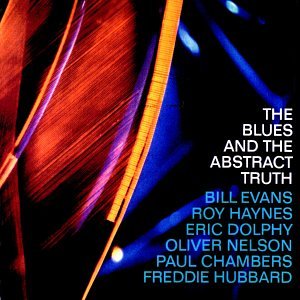
The Blues and the Abstract Truth is an album by Oliver Nelson recorded in February 1961. It remains Nelson's most acclaimed album. It features a lineup of notable musicians: Freddie Hubbard, Eric Dolphy (his last appearance on a Nelson album following a series of collaborations recorded for Prestige), Bill Evans (his only appearance with Nelson), Paul Chambers and Roy Haynes. Baritone saxophonist George Barrow does not take a solo but is a key feature of the subtle voicings of Nelson's arrangements.
The album is an exploration of the mood and structure of the blues, though only some of the tracks are in conventional 12-bar blues form. In this regard, though it is not modal jazz, it may be seen as a continuation of the trend towards greater harmonic simplicity and subtlety via reimagined versions of the blues that was instigated by Miles Davis's Kind of Blue in 1959 (Evans and Chambers played on both albums). Of the pieces on Nelson's album, "Stolen Moments" is the most famous; it is a sixteen-bar piece (in an eight-six-two pattern), though the solos are on a conventional 12-bar minor-key blues structure in C minor. "Hoe-Down" is built on a forty-four-bar structure (with thirty-two-bar solos based on "rhythm changes"). "Cascades" modifies the traditional 32-bar AABA form by using a 16-bar minor blues for the A section, stretching the form to a total of 56 bars. The B-side of the album contains three tracks that hew closer to 12-bar form: "Yearnin'", "Butch and Butch" and "Teenie's Blues".

November 28, 2011

Archie Shepp & Joachim Kühn: Pulse Beat live at 42nd German Jazzfestival Frankfurt 2011


Archie Shepp | ts
Joachim Kühn | p
recorded live at HR-Sendesaal, Frankfurt, October 28, 2011

1. Introspection/ Lonely Woman (Joachim Kühn/ Ornette Coleman)
2. Stablemates (Benny Golson)
3. Drivin´ Miss Daisy (Archie Shepp)
4. Nina (Archie Shepp)
5. Improvisation/ Sophisticated Lady (Archie Shepp & Joachim Kühn/ Duke Ellington)

There’s no end to the different ways two great jazz musicians can interact. In the case of German pianist Joachim Kühn and American saxophone player Archie Shepp, the collaboration is especially intriguing. They both came to maturity during the heady days of the Sixties free jazz scene and have played together often since.
The deep rapport between them is instantly apparent, but so are the differences. Kühn’s natural tone is compellingly dark, both as a pianist and a composer. He pursues a melodic idea in a concentrated way, and isn’t much interested in bright colours or fancy pedal-work.
Shepp tends more towards limpid arabesque, and his lovely husky tone is as instantly recognisable as Kühn’s wiry energy. Shepp’s compositions, such as Nina, leaven Kühn’s European seriousness with a sauntering American swing. They complement each other perfectly, which is just as it should be.
At first glance, the pairing of American saxophonist Archie Shepp and German pianist Joachim Kühn may seem an unlikely one. But Wo!man is not the first time the two have performed together. Two or three decades back—Shepp writes in the liner notes that he cannot now remember the year exactly—the saxophonist worked with Kühn in a band led by Finnish drummer Edward Vesala. It was a real pleasure, Shepp says, to have been reunited.
The pleasure is not, moreover, entirely Shepp's, or Kühn's, for Wo!man is a resplendently lyrical album. It is programmed over five sinuous Shepp/Kuhn originals and three jazz standards, Duke Ellington's "Sophisticated Lady," Ornette Coleman's "Lonely Woman" and Earle Hagen and Dick Rogers' "Harlem Nocturne." Shepp's signature rough edges and periodic free flights are intact, but so too are his retentions of balladeers Coleman Hawkins and Ben Webster, both formative influences: this is above all an album of lush romanticism.

November 27, 2011

McCoy Tyner Trio with special guests José James & Chris Potter: "John Coltrane and Johnny Hartman Revisited" live at 42nd German Jazzfestival Frankfurt 2011


McCoy Tyner| p
Gerald Cannon | b
Joe Farnsworth| dr
José James | voc
Chris Potter | ts
recorded live at HR-Sendesaal, Frankfurt, October 28, 2011

1. Fly With The Wind (McCoy Tyner)
2. Ballad for Aisha (McCoy Tyner)
3. Autumn Serenade (Peter DeRose, Sammy Gallop)
4. Dedicated To You (Sammy Cahn, Saul Chaplin, Hy Zaret)
5. You Are Too Beautiful (Richard Rodgers, Lorenz Hart)
6. My One and Only Love (Guy Wood, Robert Mellin)
7. In A Mellow Tone (Duke Ellington)
8.  (Encore)

John Coltrane and Johnny Hartman is a 1963 studio album featuring John Coltrane and Johnny Hartman.
Though Coltrane and Hartman had known each other since their days playing with Dizzy Gillespie's band in the late 1940s (Hartman had been with the band on an on and off basis, and Coltrane played (third) alto with the band in 1949), Hartman is the only vocalist with whom the saxophonist would record as a leader. Initially when producer Bob Thiele approached Hartman with Coltrane's request that the two record together Hartman was hesitant as he did not consider himself a jazz singer and did not think he and Coltrane would complement one another musically. However, Thiele encouraged Hartman to go see Coltrane perform at Birdland in New York to see if something could be worked out. Hartman did so, and after the club closed he, Coltrane, and Coltrane's pianist McCoy Tyner, went over some songs together. On March 7, 1963 Coltrane and Hartman had decided on 10 songs for the record album, but en route to the studio they heard Nat King Cole on the radio performing "Lush Life", and Hartman immediately decided that song had to be included in their album. The legendary compilation was made that same day at the Van Gelder Studio in Englewood Cliffs, New Jersey. Each song was done in only one take, except for "You Are Too Beautiful", which required two takes because Elvin Jones dropped one of his drumsticks during the first take.
The album became an instant jazz classic, and the renditions of "Lush Life", "My One and Only Love", and "They Say It's Wonderful" are considered definitive. Hartman's "master" Billy Eckstine stood godfather to this production which was directed by Bob Thiele.

November 26, 2011

A Love Supreme – Jonas Kullhammar Quartet live at 42nd German Jazzfestival Frankfurt 2011


Jonas Kullhammar | ts
Torbjörn Gulz | p
Torbjörn Zetterberg | b
Jonas Holgersson | dr
recorded live at HR-Sendesaal, Frankfurt, October 28, 2011

1. Acknowledgement
2. Resolution
3. Pursuance
4. Psalm

A Love Supreme is a studio album recorded by John Coltrane's quartet in December 1964 and released by Impulse! Records in February 1965. It is generally considered to be among Coltrane's greatest works, as it melded the hard bop sensibilities of his early career with the free jazz style he adopted later.
The quartet recorded the album in one session on December 9, 1964, at the Van Gelder Studio in Englewood Cliffs, New Jersey.
The album is a four-part suite, broken up into tracks: "Acknowledgement" (which contains the mantra that gave the suite its name), "Resolution", "Pursuance", and "Psalm." It is intended to be a spiritual album, broadly representative of a personal struggle for purity, and expresses the artist's deep gratitude as he admits to his talent and instrument as being owned not by him but by a spiritual higher power.
The album begins with the bang of a gong (tam-tam), followed by cymbal washes. Jimmy Garrison follows on bass with the four-note motif which structures the entire movement. Coltrane's solo follows. Besides soloing upon variations of the motif, at one point Coltrane repeats the four notes over and over in different modulations. After many repetitions, the motif becomes the vocal chant "A Love Supreme", sung by Coltrane (accompanying himself via overdubs).
In the final movement, Coltrane performs what he calls a "musical narration" of a devotional poem he included in the liner notes. That is, Coltrane "plays" the words of the poem on saxophone, but does not actually speak them. Some scholars have suggested that this performance is a homage to the sermons of African-American preachers. The poem (and, in his own way, Coltrane's solo) ends with the cry "Elation. Elegance. Exaltation. All from God. Thank you God. Amen."

November 24, 2011

Africa/Brass– hr-Big Band feat. Archie Shepp live at 42nd German Jazzfestival Frankfurt 2011


Archie Shepp | ts
Charles Tolliver | cond, arr
Frank Wellert, Martin Auer, Thomas Vogel, Axel Schlosser | tp
Günter Bollmann, Peter Feil , Christian Jaksjø | tb
Manfred Honetschläger | b-tb
Heinz-Dieter Sauerborn, Oliver Leicht | as
Ben Kraef, Karl-Martin Almqvist | ts
Rainer Heute | bs
Peter Reiter | p; Martin Scales | g
Thomas Heidepriem | b; Jean Paul Höchstädter | dr
recorded live at HR-Sendesaal, Frankfurt, October 27, 2011

1. Introduction
2. Song of the Underground Railroad (Trad.)
3. The Damned Don´t Cry (Calvin Massey)
4. Ujaama (Archie Shepp)
5. Greensleeves (Trad.)
6. Africa (John Coltrane)
7. On the Nile (Charles Tolliver)

Africa/Brass is the eighth album by John Coltrane, released in 1961 on Impulse Records. The sixth release for the fledgling label and his first for Impulse!, it features Coltrane's working quintet augmented by a larger ensemble to bring the total number of participating musicians to 21. Its big band sound, with the unusual instrumentation of french horns and euphonium, presented music very different from anything that had been associated with Coltrane to date.
Earlier in 1961, Coltrane had invited multi-instrumentalist Eric Dolphy to join his band, making it a quintet. Around the same time, bassist Steve Davis departed, replaced by Reggie Workman, at times Coltrane pairing him with a second bassist, Art Davis. With this group in tow, on May 23 Coltrane entered the new Van Gelder Studio in Hackensack, New Jersey for the first time; Rudy Van Gelder had been the sound engineer for most of his earlier sessions with Prestige Records. Coltrane would make the bulk of his recordings at the Van Gelder studio for the remainder of his career.
Apparently, Coltrane had initially contacted Gil Evans to assist with the arrangements; however nothing came of this, Coltrane turning to Dolphy and Tyner to orchestrate. Originally credited to Dolphy alone on the initial release, that has been corrected with the appearance of the 1995 reissue. Coltrane chose the ancient English folk ballad "Greensleeves," done in a similar major/minor contrast as his popular "My Favorite Things." For the two original pieces, "Africa" and "Blues Minor," Dolphy and Coltrane adapted Tyner's piano voicings for the orchestra. A second set of recording sessions for the album took place on June 4.

November 23, 2011

Bob Degen Quartet feat. Valentin Garvie live at 42nd German Jazzfestival Frankfurt 2011


Valentin Garvie | tp
Bob Degen | p
Ralf Cetto | b
Uli Schiffelholz | dr
recorded live at HR-Sendesaal, Frankfurt, October 27, 2011

1. Etosha
2. In Honour of Spring/ Frickin´Heart/ Parting
3. Vivian Elaine
4. Trails of One
5. B meets P/ Upstart
6. Far from Us
7. Cascade
8. Catability

American pianist Bob Degen grew up in a musical family in Scranton, PA that encouraged his path into music at a very early age. He attended the Berklee College of Music (graduating in 1963) and was also tuitioned by legendary Margret Chaloff (who also taught Herbie Hancock, Steve Kuhn and Chick Corea). A fellow student at Berklee persuaded Bob to come to Germany in 1965. He immediately found work with such as Dexter Gordon, Art Farmer, Carmell Jones, Leo Wright – musicians that had already left the US for Europe. However, he longed to play in a trio and missed the excellence of his former mates. So he returned one more time to the US in 1966 to set up a trio with bassist Mark Levinson and drummer Paul Motian. The trio did an East Coast tour but unfortunately they did not record. After two years with Buddy DeFranco and the Glenn Miller Band, Bob returned to Frankfurt, Germany to settle down. He joined trombonist Albert Mangelsdorff´s group, the HR Radio Jazz Ensemble and worked in different combinations, predominantly with tenor sax great Heinz Sauer. Their duet album Ellingtonia Revisited made Jazz Record Of The Year. In 1976 Bob did his first date for ENJA, the much admired trio album Sequoia Song. On the strength of this album, unknown Bob Degen suddenly had a fan club in Japan advertising for him in Swing Journal! More records followed over the years, a quartet with Japan’s Terumasa Hino, a duet with bassist Harvie Swartz, a quartet with South African drummer Makaya Ntsoko, a fine trio album 1997 with bassist Michael Formanek and drummer Bill Stewart, Catability. 
Bob´s original compositions are interpreted in trio and quartet when Argentinian trumpeter Valentin Garvie joins in on five titles. Garvie is well established in contemporary classical music and works with the worldwide renowned Ensemble Modern out of Frankfurt. Jake Remembered was recorded at the recently revived HGBS Studio in the Black Forest on the legendary Bösendorfer grand piano on which Oscar Peterson, Bill Evans, Friedrich Gulda recorded their master pieces. Bob Degen names as his favorites such uncompromising pianists like Hank Jones, Tommy Flanagan, Bill Evans, and he manages to intercorporate that great tradition into his own, no-nonsense concept that calls for openness and space.

November 21, 2011

Das Kapital plays Hanns Eisler live at 42nd German Jazzfestival Frankfurt 2011


Daniel Erdmann | ts
Hasse Poulsen | g
Edward Perraud | dr
recorded live at HR-Sendesaal, Frankfurt, October 27, 2011

1. Das Wunderland
2. Hotelzimmer 1942
3. Solidaritätslied
4. Moorsoldaten
5. Ohne Kapitalisten geht es besser
6. Elegie 1939
7. Mutter Beimlein
8. Impressions
9. An den deutschen Mond

Pan-European power trio Das Kapital continues to explore, on its third release, the musical legacy of composer Hanns Eisler, after successfully rearranging Eisler's well-known compositions and songs on Ballads & Barricades (Quark, 2009)
Obviously, Das Kapital is aware of Esler's troubled history. He fled Nazi Germany in the mid-1930s, to settle in New York. From there, he was evicted with just two days' notice by the McCarthyists in the late '40s, resettling in his native Berlin, where very soon he got into trouble with the governing Stalinists. On Conflicts & Conclusions ,Das Kapital presents lesser-known songs from Esler's engaged political period in the 1930s and more innocent songs from his Hollywood soundtrack days, as well as propaganda songs that he scored after returning to Germany.
The trio joyfully navigates Esler's impressive songbook, opening with a festive, almost anarchistic version of "Auferstanden aus Ruinen (Risen from Ruins)," the now-forgotten national anthem of the German Democratic Republic (better known s East Germany), emptying the song from its pompous Stalinist clichés to reclaim its melodic beauty. Brecht's post-war poem, "Die Pappel Vom Karlsplatz (The Poplar from Karlsplatz)"—dealing with the horrors and melancholy of WWII but also suggesting some hope—is turned into a playful, life-affirming soul-jazz ballad. On "Lied einer Deutschen Mutter (Song of a German mother)," tenor saxophonist Daniel Erdmann follows the original touching melody, while guitarist Hasse Poulsen and drummer Edward Perraud challenge him with layers of distorting sounds and fractured rhythms.
Conflicts & Conclusions is an inspiring set of idealist music from three fearless musicians who are not shy to suggest that the role of artists is as subversive agents against any powerful ideology, regime or convention.

November 20, 2011

Three Fall live in Hamburg 2011


Lutz Streun (sax, bcl)
Til Schneider (trb)
Sebastian Winne (dr)
recorded live at Fabrik, Hamburg, June 7, 2011

1. Voodoo Logic (Lutz Streun/Til Schneider)
2. Fiets (Til Schneider)
3. Ottostraße (Lutz Streun)
4. Matter (Til Schneider)
5. Walkabout (Red Hot Chili Peppers)
6. Under the Bridge (Red Hot Chili Peppers)
7. Bones and Steaks (Til Schneider)

Three Fall is stepping up to the plate alongside these established names with their ACT debut album “On a Walkabout”, celebrating the music of Red Hot Chili Peppers. Their extended horizons encompass their daring and masterful outlook, rejecting the use of continuous bass or chordal instruments. Instead, the trio create their own unique sound with Lutz Streun on saxophone and bass clarinet, Til Schneider on trombone and Sebastian Winne on drums. The three individual musicians are always in motion and working collectively, carefully balancing between structure and improvisation, with catchy melodies, clever arrangements and unexpected turns all buoyed up by their creativeness, groove and boundless energy. Three Fall has achieved acclaim in a very short time - founded in 2008, they won the Futuresounds competition at the Leverkusener Jazztage only a few months later. They have performed on other big stages, like the Viersen Jazz festival and the Leipziger Jazztage, and have been greeted with great enthusiasm as a support act for prominent jazz musicians including McCoy Tyner, Medeski Martin & Wood and Nils Petter Molvaer.
Three Fall know no musical limits - they take us on a tour through the genres. “Jazz means progression. For every generation, jazz has always been an attempt to cross borders and unite cultures. We simply use styles that we find inspiring and that we grew up with: hip-hop, world music, reggae, funk, rock. That is our musical background,” says bandleader Lutz Streun. One band has been especially influential. “The music of Red Hot Chili Peppers was the soundtrack of our youth in the 90’s. We grew up with it, it shaped us!” That is why Three Fall has so naturally merged the music of the Californian rock band with its own musical universe. “Their music is incredibly funky but they also play some sentimental ballads. We like their West Coast attitude, the roughness of their music and the fact that they are unconventional. That suits us. “
In fact, if you didn’t know the original songs, Chili Pepper classics like “Under The Bridge” or “Walkabout” could easily qualify as Three Fall songs. The band does not simply cover the songs, but translates them into its own musical language. All the songs on “On a Walkabout” are each a journey of discovery, both the band’s own compositions and the songs of their Californian idols, be they powerful and funky (“Fiets”), changing from Ellington style swing into rock (“Spaziergang”), flirting with free jazz (“Montag”), integrating Eastern sounds (“Skyscraper”) or simply in the tradition of good old brass music. A further highlight, very much loyal to the style and spirit of Red Hot Chili Peppers, is the final groovy brass driven hip-hop piece “Matter” with a guest appearance of the well-known Swedish rapper Promoe.


November 10, 2011

Charles Mingus Quintet live in Bremen 1975


George Adams (ts)
Jack Walrath (tp)
Don Pullen (p)
Charles Mingus (b)
Dannie Richmond (dr)

recorded live at Aula der Oberpostdirektion, Bremen, July 8, 1975

1. Free Cell Block F, ‘tis Nazi USA (Charles Mingus)
2. Black Bats And Poles (Jack Walrath)
3. Fables Of Faubus (Charles Mingus)
4. Duke Ellington’s Sound Of Love (Charles Mingus)
5. Cherokee (Ray Nobles)
6. Remember Rockefeller At Attica (Charles Mingus)

For the film project Mingus On Mingus by Charles´ grandson Kevin Ellington Mingus your help and support is needed. Orangethenblue is the group behind the documentary Mingus on Mingus. A creative team formed to develop and promote the relationship of film and music through performance, it has become the main vehicle for this production. Based between Berlin and New York City, Orangethenblue is built upon a strong vision and outlook to support and realize innovative films that leave an indelible mark on audiences. They are about to raise funds for a few additional interviews and production costs. More information on this project can be obtained from http://orangethenblue.com, also you can learn how to support Mingus on Mingus. Following this link you will get to the kickstarter campaign

November 09, 2011

Charles Mingus Group live at Berliner Jazztage 1975


George Adams (ts)
Jack Walrath (tp)
Hugh Lawson (p)
Charles Mingus (b)
Dannie Richmond (dr)

recorded live at Philharmonie, Berlin, November 8, 1975

1. For Harry Carney
2. Sue's changes

Charles Mingus is considered one of the most important figures in 20th century American music among such innovators as Charles Ives, George Gershwin and Duke Ellington. He was a master contra-bassist, accomplished pianist, bandleader and composer.
Born on a military base in Nogales, Arizona in 1922 and raised in Watts, California, the Mingus family parentage included African American, German, Chinese and Native American. His earliest musical influences came from the mix of gospel singing from the local church and the jazz he heard on the radio, in particular the records of Duke Ellington. He started to develop his musical skills through the trombone and cello, but his future collaborator, Buddy Collette, would introduce him to the contra-bass in his teen years.
While his reputation grew as a bass prodigy, Mingus played with Lionel Hampton in addition to performing with the acclaimed trio of Red Norvo and Tal Farlow in California. In the mid-1950s he settled in New York where he built musical relationships with Charlie Parker, Miles Davis and Bud Powell. At the same time he formed his own publishing and recording label with Max Roach, Debut Records, to publish and record his bourgeoning repertoire of original music. Debut Records captured the “Greatest Jazz Concert Ever” live at Toronto’s Massey Hall in 1953, featuring Mingus, Roach and bebop founders Charlie Parker, Dizzy Gillespie and Bud Powell.
Charles Mingus focused on collective improvisation, similar to the old-time New Orleans Jazz parades, paying particular attention to how each band member interacted with the group as a whole. He believed in developing a dialogue in music, where the double bass, as the rest of the instruments, belonged in the conversation. Mingus’ compositions were soulful, emotionally dense and drew heavily from black gospel music, elements of free jazz and classical music. Yet Mingus avoided categorization, forging his own path in music that fused tradition with unique and unexplored realms of jazz.
He toured all over the world until 1977, when he was diagnosed with Amyotrophic Lateral Sclerosis (Lou Gehrig’s disease). Two years later on January 5th, 1979, he fell victim to the disease in Cuernavaca, Mexico. His ashes were scattered on the Ganges River in Rishikesh, India.

Mingus on Mingus, directed by Kevin Ellington Mingus, is a documentary of a grandson discovering the truths behind the legend of the grandfather he never knew. Known to the world as a composer who left one of the largest musical legacies of the 20th century, the film highlights the voices of the people he touched and the places he lived.  While following the search for a grandfather and a true jazz legend, we rediscover both, the man and the artist: Charles Mingus.

November 07, 2011

Chick Corea & Gary Burton live at 42nd International Jazzweek Burghausen 2011


Chick Corea (p, vib on track 17)
Gary Burton (vib)
recorded live at Wackerhalle, Burghausen, March 23, 2011

1. Introduction by Chick Corea
2. Love Castle (Chick Corea)
3. Introduction by Gary Burton
4. Alegria (Chick Corea)
5. Introduction by Chick Corea
6. Can´t We Be Friends (K. Swift and P. James)
7. Introduction by Gary Burton
8. Chega De Saudade (A.C. Jobim)
9. Introduction by Chick Corea
10. Time Remembered (Bill Evans)
11. Introduction by Gary Burton
12. Mozart Goes Dancing (Chick Corea)
13. Introduction by Chick Corea
14. Eleanor Rigby (Lennon/ McCartney)
15. La Fiesta (Chick Corea)
16. Blue Monk (Thelonious Monk)
17. Armando´s Rhumba (Chick Corea)

Chick embarks on a tour of the US and Europe through March, April and May with vibraphonist and longtime collaborator Gary Burton. The two kindred spirits will explore some fresh Corea-created arrangements of jazz standards, a direction they have not focused on before in their ongoing partnership.
“Gary and I both have a love of the 'standards' so this tour we will try to develop more songs in that direction. We're hoping to have enough new material to make our next album.” — Chick
"If you think in terms of speaking, a solo performance is like a speech. If you play with a band, it's like a panel discussion. But a duet with Chick is an intense conversation with your best friend. You know what he's going to say before they say it, so you can jump ahead. There are a lot of sparks flying, and you feel free to pursue any thought or feeling." — Gary Burton (via LA Times)
The 2008 Grammy Award for Best Jazz Instrumental Album went to Chick and Gary Burton for The New Crystal Silence. On the double-album they re-imagined their 1972 classic Crystal Silence, both in their long-standing duet format, and with the phenomenal Sydney Symphony Orchestra.

November 06, 2011

Joe Lovano US Five at 42nd International Jazzweek Burghausen 2011


Joe Lovano, Saxophones
James Weidman, Piano
James Weidman, Bass
Otis Brown III, Drums
Francisco Mela, Drums

recorded live at Wackerhalle, Burghausen, March 24, 2011

1. US Five/ Folk Art (Joe Lovano)
2. Yardbird Suite (Charlie Parker)
3. Lover Man (Jimmy Davis, Roger Ramirez, James Sherman)
4. Ko-Ko/ Drum Song (Charlie Parker)
5. Spiritual/ Mystic (John Coltrane/ Joe Lovano)
6. Viva Caruso (Joe Lovano)
7. Donna Lee (Charlie Parker)

“I didn’t approach this as a tribute record,” states Joe Lovano, dispelling right off the bat any preconception that his new album Bird Songs—an exploration of the Charlie Parker songbook—is a mere retread. Lovano’s 22nd album for Blue Note Records (the release of which will mark his 20th year on the label) breaks the mold of Bird tribute records. Bird Songs is a thrillingly adventurous, thoroughly modern, and uniquely personal look at one of the most influential figures in jazz history by one of the most important voices in the music today. Us Five turned out to be the perfect vehicle for his exploration. Lovano’s dynamic young band—which features drummers Otis Brown III and Francisco Mela, bassist Esperanza Spalding, and pianist James Weidman—has been captivating audiences around the world for several years now. Their debut recording—2009’s Folk Art—was a wide-ranging set of Lovano’s original compositions that resulted in Us Five being awarded Best Small Ensemble of the Year at the 2010 JJA Jazz Awards and winning the Best Jazz Group of the Year category in the 2010 DownBeat Critics Poll. Lovano completed a double-triple of awards by also winning the JJA’s Musician and Tenor Saxophonist of the Year, and DownBeat’s Jazz Artist and Tenor Saxophonist of the Year. “Putting this recording together I kept wondering how Bird would have developed within these tunes, not just as the incredible soloist that he was but as an arranger and band leader. From what we know about him it is clear that he was into the world of music beyond so called Jazz and Be Bop and I’m sure we would have all been surprised at every turn in his approach just as we were with Miles, Coltrane, Rollins and Coleman, four of his most distinguished and celebrated disciples. At the young age of 34 Charlie Parker passed and left us with all of these questions about what would be. This recording is my humble attempt to answer some of those questions in my own way.”

November 04, 2011

The Bad Plus feat. Joshua Redman live at Jazzfestival Saalfelden 2011


Joshua Redman, sax
Ethan Iverson, piano
Reid Anderson, bass
Dave King, drums

recorded live at Kongreßhaus, Saalfelden, August 28, 2011

1. Love Is The Answer (Reid Anderson)
2. 2 PM (Ethan Iverson)
3. Introductions by Ethan Iverson
4. Thriftstore Jewelry (Dave King)
5. People Like You (Reid Anderson)
6. Big Eater (Reid Anderson)
7. Silence Is The Question (Reid Anderson)
8. Layin' A Strip For The Higher Self-State-Line (Dave King)

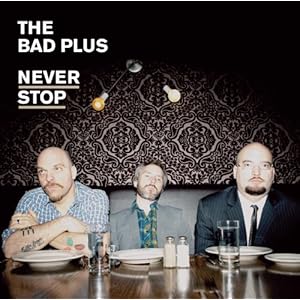
"Most contemporary jazz groups merely preach to the choir, but the Bad Plus is that rare band that’s managed to get through to the world beyond the jazz audience. Its ingenious tactic is to play acoustic jazz with the rhythmic sensibilities a Rush fan might appreciate, and early on the trio made a specialty of jazz interpretations of recent anthems. Adding tenor saxophonist Joshua Redman to the fray might seem counterproductive in terms of that goal—after all, he strengthens the group’s ties to music that jazz fans like. Yet even the grungiest rocker couldn’t deny that the combination is remarkable. It may be the jazz snob in me, but as much as I’ve enjoyed the Bad Plus up to now, this is the first time that I find myself describing its music as beautiful.
Mr. Redman joining Bad Plus puts me in mind of the scene in “The Wizard of Oz” where Dorothy steps out of the house and all of a sudden everything is in Technicolor. It’s the same movie, but now the whole shebang is much more vivid and vibrant. Compared with what Mr. Redman, pianist Ethan Iverson, bassist Reid Anderson and drummer Dave King played during the late set on Tuesday night, everything the trio has done thus far sounds almost like mere monochrome by comparison.
Of course, the Bad Plus still sounds like the Bad Plus. As always, there’s the exceptional playing of Mr. King: Most jazz lovers feel about drumming the way the Tea Party feels about government: less is better. Our highest praise is that a drummer plays subtly, pushing the band without making a lot of noise. Yet Mr. King’s in-your-face, all-over-the-place drumming is an integral part of the BP’s sound—loud as it is, his playing is about serving the group rather than himself. Percussion should derive from the consent of the governed rather than the threat of force." - Will Friedwald, The Wall Street Journal

November 02, 2011

Tribute to Esbjörn Svensson live at JazzBaltica 2011


1. Ballad For E (Magnus Öström)
2. Bright Size Life (Pat Metheny)
Pat Metheny, gt
Dan Berglund, b
Magnus Öström, dr

3. From Gagarin's Point Of View (Esbjörn Svensson)
Pat Metheny, gt
Dan Berglund, b
Magnus Öström, dr
Nils Landgren, tb

4. Dodge The Dodo (Esbjörn Svensson)
Pat Metheny, gt
Dan Berglund, b
Magnus Öström, dr
Nils Landgren, tb
Leszek Mozdzer, p
Lars Danielsson, cello

5. Pavane. Thoughts Of A Septuagenarian (Esbjörn Svensson)
Yaron Herman, p
Lars Danielsson, cello

6. Chopin (Leszek Mozdzer)
Leszek Mozdzer, piano

7. Epistrophy (Thelonious Monk)
8. Remembrance (Vijay Iyer)
Vijay Iyer, piano

9. Don't Tell Me How The Story Goes (Kris Kristofferson)
Nils Landgren, tb
Michael Wollny, p

10. Believe, Beleft, Below (Esbjörn Svensson)
Viktoria Tolstoy, voc
Pat Metheny, gt
Dan Berglund, b
Magnus Öström, dr
Michael Wollny, p

11. Shining On You (Esbjörn Svensson)
Viktoria Tolstoy, voc
Pat Metheny, gt
Dan Berglund, b
Magnus Öström, dr
Nils Landgren, tb
Michael Wollny, p
Lars Danielsson, cello

12. The Goldhearted Miner (Esbjörn Svensson)
Yaron Herman, p
Lars Danielsson, cello

Since Esbjörn Svensson’s untimely death in 2008 his childhood friend the distinctive drum ’n’ bass-influenced drummer in EST Magnus Öström has taken time to adjust to his sense of loss following the devastating death of Svensson as a result of a scuba diving accident.
Last year Dan Berglund, EST’s bassist, debuted Tonbruket, a prog rock-tinged group that successfully toured its debut album in the UK. Like Berglund Öström has paid tribute to their great friend on the album which features a new grouping of Stockholm musicians, with Andreas Hourdakis coming in on guitar; Gustaf Karlöf, piano and Thobias Gabrielson (electric bass) to join Öström.
The album titled Thread of Life was recorded in Magnus’ favourite studio, Atlantis in Stockholm, with all of the 10 songs written by the drummer. Pat Metheny, who famously performed on a staggering version of ‘Dodge The Dodo’ with EST at the JazzBaltica festival in Germany in 2003, got close to the band over the years and was greatly affected by Esbjörn’s death. He and Berglund join on the poignant sixth track ‘Ballad For E’ recorded at Avatar in New York at the end of last year.

November 01, 2011

Michael Wollny & Theo Bleckmann live at JazzBaltica 2011


Michael Wollny - Piano
Theo Bleckmann - Vocals, Electronics
Gastsolisten: Nils Landgren - Trombone; Christopher Dell - Vibraphone
JazzBaltica Salzau, July 3, 2011

You Go To My Head (Coots)
None Of The Above (Bleckmann
The Rip (Portishead)
Song Of Indifference (Wollny)
Take My Life (Bleckmann)
Marion & Sam (Herrmann)

"Singing is difficult. Singing with words is a challenge. To sing without words is an art. Theo Bleckmann is very daring. The Dortmund-born singer, who has been living in New York for a decade, makes collages and water colors, destroys and re-constructs sounds, until almost nothing is left of the well trot expressions of Jazz language. The few standards that he in-cluded into his program at the Unterfahrt, seemed like little reconcilliating life savers amidst the experimental sounds in front of s stunned audience. Bleckmann works with layering and Irritation, with harmonies and contrast. Effortlessly and with breath-taking intonation he changes registers, departs from the semantic connection of the words, to then create soundscapes through new combinations of syllables and utterances and their associations. Sparsely, sometimes dry and introverted or edgy and loudly accompanied by the guitarist Ben Monder, he plays with vocal expressions, gargles and presses, breathes and screams, beams and triumphs. Bleckmann, who has also worked with Philip Glass and Meredith Monk, combines compositional and interpretive elements of the contemporary classical music with influences from experimental jazz. With dodecaphonic joy he jumps into variations of melodies creating new, fresh and provocative colors, sometimes directly, sometimes in dialogue with a sequencer. That is not always easy to listen to. A jazz concert for advanced listeners, powerful and convincing."-Ralf Dombrowski, Süddeutsche Zeitung.
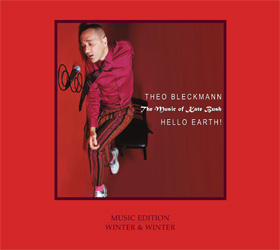
Theo´s latest CD "Hello Earth! – The Music of Kate Bush" was released on Winter & Winter this year.