December 31, 2011

Colin Towns Blue Touch Paper live at JazzFest Berlin 2011


Colin Towns keyboards, compositions
Mark Lockheart saxophone
Chris Montague guitar
Edward Maclean bass
Benny Greb drums
Stephan Maas percussion

recorded live at Haus der Berliner Festspiele, Main Stage, November 6, 2011

1. Blue Touch Paper/Say What You Mean/ The Forbidden Dance/ Another Time, Another Place
2. Lost For Words
3. Ducking And Diving
4. One Eye On The Clock
5. Principal Dancer/ Walls Have Ears
6. Introduction by Stephan Maas
7. Transcending
8. This Could Run
9. Crazy Man On Platform 13
No matter if he is busy with his own Mask Orchestra or co-operates with various European radio big bands – Colin Towns stands out from the run-of-the-mill arranging trade.
The British sound magician has developed a unique profile, and has been a welcome and regular guest with the Berlin Jazzfestival since more than a decade.
With his new six piece band the former keyboarder/arranger for the Ian Gillan Band finally returns to his roots – at least looking at the formate. His approach is a very fresh one, though. With an abundance of experience in rock, jazz, classical, electronic and film music at hand, and an excellent cast of German and UK free-thinkers at his side, the Berlin live premiere of Colin Towns Blue Touch Paper promises to be a highly entertaining experience – as drummer Stephan Maas says: “It’s optical music, it takes you on a trip … the challenge of this band is to play without fear”.
Leave your expectations at home – this is no predictable band!

December 30, 2011

The Swallow Quintet feat. Carla Bley live at JazzFest Berlin 2011


Steve Swallow bass
Chris Cheek tenor sax
Carla Bley Hammond B3
Steve Cardenas guitar
Jorge Rossy drums

recorded live at Haus der Berliner Festspiele, Main Stage, November 6, 2011

1. Sad Old Candle/ Into The Woodwork/ From Whom It May Concern/ Crowded In The Shower (Steve Swallow)
2. Let's Eat (Steve Swallow)
3. Suitable From Framing/ Small Comfort / Still There/ Never Know/ Exil Stage Left (Steve Swallow)
4. Name That Tune (Steve Swallow)
His gig history with this festival dates back to 1966: Stan Getz and Astrud Gilberto were his first visiting card. He played with Gary Burton, kicked off John Scofield’s European career and returned with Carla Bley a couple of times. An innovator on the bass guitar, a gifted composer, producer and bandleader, Steve Swallow has been a consistently engaging presence in jazz over the last 40 years.
He has placed first (electric bass) in the Downbeat International Critics Poll since 1983, and in the Downbeat Readers Poll since 1985. He has also won the Jazz Times poll (electric bass) for the past several years, and has been voted the Jazz Journalists Association's electric bassist of the year since 2001, when that category was instituted.
Now he presents his new band, the first in a long time, a potent lineup that features Carla Bley on Hammond B3 organ, tenorist Chris Cheek, guitarist Steve Cardenas and drummer Jorge Rossy. Together, they create eloquent modern jazz packed with dynamism and drive. Between touring he lives in contented isolation with Carla Bley, in the mountains of upstate New York.

December 29, 2011

Charles Lloyd & Maria Farantouri live at JazzFest Berlin 2011


Charles Lloyd saxophone, flute, tarogato
Maria Farantouri vocals
Jason Moran piano
Reuben Rogers bass
Eric Harland drums
Socratis Sinopoulos lyra

recorded live at Haus der Berliner Festspiele, Main Stage, November 6, 2011

1. Blow Mind
2. Dream Weaver
3. Beyond Darknessn
4. Se pater kosmon
5. Medley: Vielfaro mou/Thalassaki Mou/Margaritenia/
Alismono/Tou Hel'to Kastron/Requiem/Yanni Mou
6. Prayer

The power, depth and beauty of music can transcend language and cultural differences. Charles Lloyd and Maria Farantouri are both independent, iconic figures in their respective worlds of music: American jazz and the classical music of Greece. When Lloyd and Farantouri met in the fall of 2002, they recognized the one in the other, a fellow soul pursuing a life using music as a means to inspire and elevate other fellow souls on the road to freedom.
The Berlin Jazzfestival line-up features, alongside the singer and the saxophonist’s all-star Charles Lloyd New Quartet, greek lyre player Socratis Silopoulos. Their album “Athens Concert” was recorded in 2010 and released this year on ECM.

December 28, 2011

Hypnotic Brass Ensemble live at JazzFest Berlin 2011


Smoov trumpet
Baji trumpet
Hudah trumpet
L.T. sousaphone
Yoshi trumpet
Rocco baritone
Clef trombone
Cid trombone
Emanuel Harrold drums

recorded live at Quasimodo, Berlin, November 5, 2011

1. Kryptonite
2. Worldchampions
3. Pluto
4. War
5. Mercury 
6. Planet of Apes
7. Mars
8. Indigo
9. Get the Party started
10. Bajii
Hypnotic Brass Ensemble are eight brothers from the south side of Chicago. They come from an extraordinary musical family. Other sisters and brothers are professional musicians, their mothers are singers, and Philip Cohran, their father, has roots running back to Mississippi, his time in the musical hothouse of 1940s St Louis, and his seminal role with Sun Ra in Chicago in the 1950s. When Ra left for the east coast in 1960, Phil stayed in Chicago.
By the time the members of the HBE were growing up, they were wakened at 6 a.m. for several hours’ music practice before going to school. From an early age they were a central part of their father’s Youth Ensemble. By the end of the nineties, with everyone out of school, they brought together their musicianship, their jazz roots and their hip hop sensibility, and made a living busking on the streets of Chicago. They came up with their name after an incident on the El: playing on the platform, a man in a suit watched them for hours, missing train after train, till in the end he walked up to them and said, “You guys just hypnotized me”.
Eventually the group transferred to New York City, and after playing out relentlessly, including gigs with Mos Def and Erykah Badu, and some particularly incendiary shows in Europe, they have come to be known as one of the hottest and most individual bands around.

December 27, 2011

Lizz Wright live at JazzFest Berlin 2011


Lizz Wright vocals
Robin Macatangay guitar
Marvin Sewell guitar
Nick D’Amato bass
Jano Rix drums

recorded live at Haus der Berliner Festspiele, Main Stage, November 5, 2011

1. Old Man (Neil Young)
2. Fellowship (Bob Marley)
3. Walk With Me (Trad.)
4. Hit the Ground (Jesse Harris)
5. Stop (Joseph Lee Henry)
6. Easy Rider Blues (trad.)
7. A Lover is Forever (Steve Goodman/Frederik Knobloch)
8. I Remember I Believe (Bernice Reagon)
9. Coming Home (Toshi Reagon/Lizz Wright)
10. Thank You (Jimmy Page/Robert Plant)
Born and raised as the daughter of a preacher in the South East of America, Lizz Wright grew up in close contact with the roots and traditions of black music. Although the says “the gospel is always in my heart and veins” she is far from being afraid of genres like folk, rock or avant-garde - a nod to her roots in gospel on the one hand and her gospel of eclecticism on the other. “The funny thing about the transition from only gospel to jazz is that I felt that jazz had a familiar sacredness to it.”
Wright has been the recipient of non-stop critical acclaim and ever-increasing audiences ever since her Verve debut, Salt, in 2003. Asked about the motivations for her new programme she says “It’s time for me to think about what helps and heals somebody else. And sometimes it’s good to sing simple things that people need, besides pieces that are more intriguing or that have great poetry. That’s where I found myself this time around. There are a lot of tools in here. Sometimes we have songs to climb up on to get over obstacles.” Her latest CD is called Fellowship.

December 26, 2011

Joe Sample & NDR Big Band "Children of the Sun" live at JazzFest Berlin 2011


Jörg Achim Keller conductor, arrangements
Joe Sample compositions, piano
Thorsten Benkenstein, Ingolf Burkhardt, Claus Stötter, Reiner Winterschladen trumpet
Fiete Felsch, Peter Bolte alto sax
Christof Lauer, Lutz Büchner tenor sax
Frank Delle baritone sax
Nils Landgren trombone, vocals
Dan Gottshall, Klaus Heidenreich, Stefan Lottermann trombone
Ingo Lahme bass trombone
Stephan Diez guitar
Ingmar Heller bass
Robert Ikiz drums
Marcio Doctor percussion
recorded live at Haus der Berliner Festspiele, Main Stage, November 5, 2011

1. Buttermilk Sky
2. Islands Of The Mind
3. Rumfire
4. Gold In The Cane
5. I Believe In
6. Children Of The Sun
7. Blue Abyss
8. I Wanna Go Home
9. Street Life

With the Crusaders he became famous far beyond the jazz scene, his song Street Life was a massive international disco hit, and he has proved to be a reliable provider of chart-breaking material, like One Day I’ll Fly Away for Randy Crawford. He has recorded with a wide range of bands and musos, among them Canned Heat, Steely Dan, The Supremes, Miles Davis, Joni Mitchell and Eric Clapton.
Joe Sample is the golden boy of American fusion-jazz, but his recent project Children of the Sun is not as sunny as the title might imply. Stimulated by a visit to the Caribbean island of St. Croix, he started to look particularly into the subject of slavery – a part of his own family history.
Sample has been planning this project since 1995, and will bring his composition to the Berlin audience with the NDR Bigband (the Hamburg Radio Big Band), arranged by Jörg Achim Keller.
In 2005 Nils Landgren released Creole Love Call featuring Joe Sample.

Merry Christmas

Thank you for staying with us for three years now!
More than one million visits, more than 500 concerts, all recorded from German radio or tv, not commercially available (at least at time of posting...), no re-posts from dime-a-dozen, no advertisement and everything for free...
Please support the artists and buy their official recordings, visit their concerts and keep the music we all love alive.
Thanks for listening! There´s a lot more to come!

December 25, 2011

Stanton Moore Trio live at JazzFest Berlin 2011


Stanton Moore drums
Robert Walter Hammond B3, keyboards
Will Bernard guitar
recorded live at Quasimodo, Berlin, November 4, 2011

1. Pie-eyed Manc (Stanton Moore)
2. Pot Licker (Robert Shawn Walter)
3. Marple Planc (Robert Shawn Walter)
4. Over Compensating (Stanton Moore)
5. Magnolia Triangle (William E. Bernard)
6. Funky Miracle (Arthur L. Neville)
7. Late Night At the Maple Leaf (George Porter)
8. Who Ate The Layer Cake (Stanton Moore)
9. Adelita (Robert Shawn Walter)
In medieval times, alchemy was a mystical pursuit based on a belief that gold could be created from common raw materials. It’s an ancient practice, an idea that has long since been debunked by centuries of scientific evidence to the contrary.
Or has it? Attempts to derive precious substances from lead or tin may have been dismissed by modern-day science as a fool’s errand, but the belief that something of great value can come from something common persists. For drummer Stanton Moore, it’s just a matter of finding the right groove.
Born and raised in New Orleans, Stanton Moore is a dedicated drummer and performer especially connected to the city, its culture and collaborative spirit. Driven and inspired by the thriving music scene of his hometown which includes such greats as Professor Longhair, Doctor John and The Meters, Moore’s name is now mentioned amongst these Big Easy mainstays.
In the early ’90s, Moore helped found the New Orleans-based essential funk band Galactic, he played with metal legends Corrosion of Conformity and the New Orleans Klezmer Allstars, with his trio Garage A Trois and – alongside Trombone Shorty, Big Sam ao – in the brass band Midnight Disturbers. His latest album "Groove Alchemy" was released on Telarc Records in 2010.

December 24, 2011

Adam Baldych Quintet live at JazzFest Berlin 2011


Adam Baldych violin
Maciej Kociński saxophone
Krzysztof Dys piano
Andrzej Święs bass
Dana Hawkins drums
recorded live at Quasimodo, Berlin, November 3, 2011

1. Lot mazgorzaty (Adam Baldych)
2. Welcome Pill (Adam Baldych)
3. Babuszka (Adam Baldych)
4. Diabel Boruta (Adam Baldych)
5. Abra kadabra (Adam Baldych)
6. Yes or No (Wayne Shorter)

Ever since Zbigniew Seifert revolutionized the jazz-violin in the 1970ies, tantamount to Coltrane's sax or Hendrix’ guitar, the Polish jazz scene has been a hotbed of a unique line of outstanding violinists, from Michał Urbaniak or Krzęsimir Debski to Henryk Gembalski, latest representative of this trade being Adam Baldych.
In spite of his youth this extraordinarily creative artist has been performing and recording with some of the best Polish and international musicians. The former “infant prodigy’s” music is an extremely expressive combination of modern musical flows. The virtuosity which is his trademark turns Adam's concerts into a unique experience full of energy, youthful zing, yet with a mature sound that receives popularity and respect both from the audience as critics. His nickname “Evil” is probably the best certificate defining his emotional kind of playing and improvising.

December 23, 2011

Tomasz Stanko "Litania" live at JazzFest Berlin 2011


Tomasz Stańko trumpet
Mark Turner saxophone
Joakim Milder saxophone
Marcin Wasilewski piano
Sławomir Kurkiewicz bass
Michał Miśkiewicz drums
recorded live at Haus der Berliner Festspiele, Main Stage, November 3, 2011

1. Litania (Krysztof Komeda)
2. Sleep Safe And Warm (Krysztof Komeda)
3. Svantetic (Krysztof Komeda)
4. Ballada (Krysztof Komeda)

Tomasz Stańko was 20 and a graduate of the Cracow Music Academy when he formed his first band, the Jazz Darings, with pianist Adam Makowicz in 1962. Inspired by early Ornette Coleman and the innovations of Coltrane, Miles Davis and George Russell, the group is often cited by music historians as the first European group to play free jazz, but for the trumpeter its importance was eclipsed by the invitation to join Krzysztof Komeda’s quintet the following year. Stańko toured for five years with Komeda, appeared on eleven albums with him, and also made contributions to all of the films scores that Komeda realized in Poland.
In 1970, Stańko joined Alex Schlippenbach’s Globe Unity Orchestra, which brought him into contact with all the key figures of the European jazz avant-garde, and also formed a quintet, with violinist Zbigniew Seifert. The following year he collaborated with Krysztof Penderecki and Don Cherry. His most important work of the 1970s, however, may have been with Finnish drummer Edward Vesala.
During the 1980s Tomasz Stanko explored many approaches to improvisation and when many Polish musicians left the country in the late eighties he kept true his roots. From his Polish homebase he went travelling to India, worked extensively with Cecil Taylor and, together with the crop of the Scandinavian scene, did recordings for ECM – amongst them the album Litania (1996).
The JazzFest Berlin 2011 edition will see an updated version of this Komeda-tribute, with members of Stańko’s ‘house band’, the Wasilewski Trio, and Joakim Milder from the original cast.

December 22, 2011

Leszek Możdżer live at JazzFest Berlin 2011


Leszek Możdżer piano
recorded live at Haus der Berliner Festspiele, Main Stage, November 3, 2011

1. Crazy Girl (Krystof Komeda)
2. Nighttime, daytime requiem (Krystof Komeda)
3. Ballad for Bernt (Krystof Komeda)
4. Cherry (Krystof Komeda)
5. Sleep Save And Warm (Krystof Komeda)
6. The Law and The Fist (Krystof Komeda)
7. Svantetic (Krystof Komeda)
8. Cherry (Krystof Komeda)

Starting from Frédéric Chopin as originator, Poland looks back on a long tradition of piano esthetes. After Krzysztof Komeda, Mieczysław Kosz and Adam Makowicz, outstanding pianist/composer/producer, Leszek Możdżer is widely considered to be the greatest revelation of Polish jazz of the last decade, eventually proving Frankfurter Allgemeine’s prediction right: “Leszek Możdżer, one of the greatest piano virtuosos, could easily be dubbed the Star of the East”. Over the years he has recorded more than 100 albums, not only with all the stars of the Polish scene but also with the likes of John Scofield, Pat Metheny or Lars Danielsson.
With his solo-project, Komeda, Możdżer not only fathoms the universe of the legendary film composer. He re-translates his great ancestor’s sonic world back into the classical context from which Komeda had drawn his essential impulses 40 years earlier.

December 21, 2011

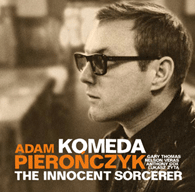
Adam Pieronczyck feat. Gary Thomas: Komeda – The Innocent Sorcerer live at JazzFest Berlin 2011


Adam Pierończyk saxophones
Gary Thomas tenor sax
Nelson Veras guitar
Max Mucha bass
Łukasz Żyta drums
recorded live at Haus der Berliner Festspiele, Main Stage, November 3, 2011

1. Sleep Save and Warm (Krysztof Komeda)
2. Roman (Krysztof Komeda)
3. Kattorna (Krysztof Komeda)
4. Roman II (Krysztof Komeda)
Adam Pierończyk belongs to a younger generation of Polish musicians who concern themselves with their national jazz history in a fresh and jaunty way. On his cd Komeda – The Innocent Sorcerer he celebrates a nostalgia-free homage to the sonic universe of the great jazz pioneer and film composer Komeda; And much like his musical ancestor, Pierończyk manages to conjure musical magic with relatively simple means.
New York’s Cadence magazine certifies him to be “a discovery, for he has a lovely warm tone and a clever imagination, but he can also blow for the borders.” Besides playing with Polish musicians Tomasz Stańko or Leszek Możdżer the Krakow-based saxophonist has worked with international stars like Greg Osby, Sam Rivers, Archie Shepp and Ted Curson.
“Adam Pierończyk is among the very finest of the Polish jazz scene. He is successful like few others in combining instrumental virtuosity, precision, and intellectual refinement with an emotionality that borders on exhibitionism. He burns in his improvisations, and the listener burns with him.”
(Gazeta Wyborcza)

December 20, 2011

Jacky Terrasson Trio live at Rheingau Musik Festival, Rüsselsheim 2011


Jacky Terrasson - Piano
Earl Travis - Bass
Justin Faulkner - Drums

recorded live at Rheingau Musik Festival, Stadttheater Rüsselsheim, August 6, 2011

1. Medley: Harry Potter/Beat It/Over The Rainbow/Smoke Gets In Your Eyes 
2. Love For Sale (Cole Porter)
3. Caravan (Duke Ellington/ Juan Tizol)
4. Smile (Charles Chaplin)
5. Maraba Blue (Abdullah Ibrahim)
6. My Church (Jacky Terrasson)
7. Softly As In The Morning Sunrise (Romberg)

Ever since pianist extraordinaire Jacky Terrasson burst upon the jazz scene in 1993 by winning the Thelonious Monk Piano Competition, he has consistently recorded richly refined and remarkably free-spirited music. After delivering 10 CDs for Blue Note Records, Terrasson's Concord Jazz debut Push is an 11-track gem of dynamic pianism that opens up a new door onto his creative technique and ingenuity. Push features seven new Terrasson compositions as well as a sampling of fresh spins on standards, including two Monk tunes and a Cole Porter beauty as well as a version of the timeless melody "Body and Soul" melded with "Beat It," Michael Jackson's Thriller hit. 

December 19, 2011

Ron Carter Trio live at Jazzfest Bonn 2011


Ron Carter - Bass
Mulgrew Miller - Piano
Bobby Broom - Guitar
recorded live at Jazzfest Bonn, May 28, 2011

1. Cedar Tree (Ron Carter)
2. Samba De Orfeu (Luis Bonfa)
3. The Golden Striker (John Lewis)
4. Soft Winds (Henderson)
5. My Funny Valentine (Richard Rogers)
6. Laverne Walk (Ron Carter)

Walk or wander into the world of jazz. Ron Carter is there. His reputation in the music world is peerless. He stylishly accompanies any player or group and, without breaking stride, performs with stunning virtuosity as a soloist. His work is rich in detail, pure in sound, and technically impressive. His long list of accolades as a performer is unprecedented; he may be the most popular bassist there is. 
A lean six feet four inches with a mixture of pride and courtliness, Ron displays an elegant calm on stage as well as off. He has created music with consummate skill for more than forty-five years, apparently without rumpling his tasteful suits or raising a serious sweat. In the early 1960s, he performed throughout the United States in nightclubs and concert halls with Eric Dolphy, Jaki Byard, and Wes Montgomery, then toured Europe with Cannonball Adderley. He was a member of Miles Davis’s now classic quintet from 1963 to 1968, along with Herbie Hancock, Tony Williams, and Wayne Shorter.
Ron was among the few bassists who continued to play acoustic bass when many turned to electric bass. “It was a conscious choice,” he says. “I felt a responsibility to present a viable alternative to the popular electric sound.”
One of Ron’s chief traits is that he creates bass lines so harmonically and rhythmically rich that soloists must go far to respond to his challenge. As he puts it: “A good bassist determines the direction of any band.” Often Ron uses gonglike tones and glissandos in his work. Once his exclusive trademark, these sounds have now become part of every modern bassist’s vocabulary.
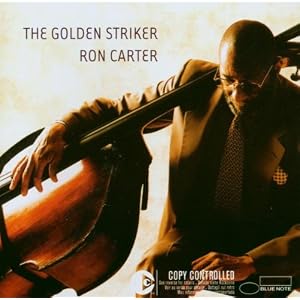
When he first formed his own group, the bass was not generally considered a lead instrument. Ron found a solution in the piccolo bass, an instrument one-half the size of a standard bass. He tuned the instrument so as to foster an unusual sound quality, one that stands out in an ensemble. Backed by a quartet of piano, drums, percussion, and an additional bass, Ron created one of the most distinctive and unusual jazz combos ever heard.  In 2003 he recorded the great album "The Golden Striker" featuring his trio with Mulgrew Miller and guitarist Russell Malone.

December 18, 2011

Dave Douglas / Donny McCaslin Quintet live at JazzBaltica 2011


Dave Douglas - Trumpet
Donny McCaslin - Tenor Saxophone
Jason Linder - Keyboards
Tim Lefebrve - Bass
Mark Guiliana - Drums
recorded live at Konzertscheune Salzau, Jazzbaltica Salzau, July 3, 2011

1. Five Hands Down (Donny McCaslin)
2. Creature Theme (Dave Douglas)
3. L.Z.C.M. (Donny McCaslin)
4. Prologue (Dave Douglas)
5. Memphis Redux (Donny McCaslin)

Donny McCaslin´s Perpetual Motion meet Dave Douglas´ Keystone. For this concert the two Greenleaf recording artists joined forces.
Following the sparse tenor trio album Recommended Tools (Greenleaf, 2008), Perpetual Motion is a 180° turn for McCaslin. Never sounding more confident, McCaslin delves into angular post-bop, blistering polyphonic funk, backbeat-driven R&B, and delicate, ethereal balladry, all without compromising his distinct compositional voice.
On April 24th, 2010, Dave Douglas and experimental filmmaker Bill Morrison unveiled their multimedia collaboration, Spark Of Being, at Stanford University. On film, it stands as a reinterpretation of that Frankenstein myth using new, archival, and distressed footage. The themes, penned by Douglas for his Grammy-nominated band Keystone, integrate electronics seamlessly into the improvised music, piecing sounds and movement together to make three strikingly different Creatures.

December 06, 2011

Vladyslav Sendecki Roots live at Rolf- Liebermann-Studio 2011


Vladyslav Sendecki (p)
Frank Delle (sax)
Michael Schiefel (voc)
Patrice Héral (dr)
Stephan Maass (perc)
recorded live at Rolf- Liebermann-Studio, NDR, Hamburg, September 8/9, 2011

1. Rain Dance (Trad.)
2. Piano Interlude (Vladyslav Sendecki)
3. Hymnus (Vladyslav Sendecki)
4. Krakowiak (Trad.)
5. Dubrowmica (Trad.)
6. Komeda Hommage (Vladyslav Sendecki)
7. Obertas (Trad.)
8. Back Where I Belong (Vladyslav Sendecki)
9. The Ballad (Vladyslav Sendecki)

Even though New York’s Village Voice named Sendecki “one of the world’s top five jazz pianists” he first had to endure a long struggle with himself and the music scene before he became what he is today. Born in 1955 in Gorlice in Poland, Sendecki first learnt classical piano in the great tradition of his home country. It was only the records by Western greats, that he secretly heard during his time at the Frederic-Chopin conservatory and the Krakow music academy, which brought him latterly to jazz. In 1981 he emigrated to Switzerland where he started an international career, playing with Klaus Doldinger’s Passport group, Billy Cobham, Michael and Randy Brecker, Jaco Pastorius, Joe Henderson, Lenny White and Charlie Mariano. But in the long term, he wasn’t fulfilled with the role of the highly regarded “musicians’ musician.” A period of self contemplation followed during which he hardly played for years until he moved to Hamburg and, in 1996, became a piano soloist with the internationally acclaimed NDR Big Band.
With his new band project Roots he reflects on traditional songs from his home. His latest CD available is the solo album "Solo Piano live at Schloss Elmau", released on ACT.

December 05, 2011

NDR Big Band feat. Maria Joao & Mario Laginha at NDR 1993


Maria João, vocals
Mario Laginha, piano, arrangements
Dieter Glawischnig, conductor
recorded live at Studio 10, NDR Hamburg, September 3, 1993
106th NDR Big Band Concert
October 27, 1994 (track 5)

1. O vos omnis
Soloists: Maria Joao, voc; Christof Lauer, ts; Mario Laginha, p
2. Varias dancas (Mario Laginha)
Soloists: Christof Lauer, ts; Mario Laginha, p
3. Saudosa maloca (Adoniran Barboas)
Soloists: Johannes Faber, tp
4. O coro das meninas (Mario Laginha)
Soloists: Christof Lauer, ts;
5. Hino - passagem - certeza (Joao Paulo Estevas da Silva)

Maria João is a Portuguese jazz singer, known for her vocal flexibility and improvisational skills. While normally considered a jazz singer, her music incorporates a mix of folk/ethnic music, modern jazz, and the avant-garde. Depending on the thematic slant of a release, she has approached electronica, symphonic and other genres as well.
Although her main collaborator is Portuguese pianist Mário Laginha, she has worked with many musicians throughout her career, including Manu Katche, Trilok Gurtu, Bobby McFerrin, Wolfgang Muthspiel, Joe Zawinul, Ralph Towner, Dino Saluzzi and Kai Eckhardt.
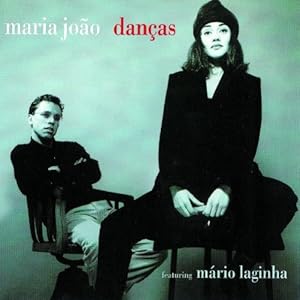
Together with Mário Laginha she has released quite a dozen of great albums, for example in 1994 the cd "Dancas".

December 04, 2011

Bobby McFerrin live at Jazzfest Brno 2011


Bobby McFerrin, vocals
recorded live at Jazzfest Brno/Czech Republic, March 29, 2011

1. Improvisation (Bobby McFerrin)
2. Smile (Bobby McFerrin)
3. Drive (Bobby McFerrin)
4. Sweet Home Chicago (R. Johnson)
5. Ave Maria (Gounod/Bach)
6. I Want You/She's So Heavy (Lennon/McCartney)
7. I Can See Clearly Now (Nash)
8. Blackbird (Lennon/McCartney)
9. Improvisation (Bobby McFerrin)

“There is something almost superhuman about the range and technique of Bobby McFerrin,” says Newsweek. “He sounds, by turns, like a blackbird, a Martian, an operatic soprano, a small child, and a bebop trumpet.” But despite the undeniable uniqueness of his gift, Bobby’s music is always accessible and inviting. When he invites his fans to sing along, as he almost always does, few can resist. Inclusiveness, play, and the universality of voices raised together in song are at the heart of Bobby’s art. Bobby McFerrin was exposed to a multitude of musical genres during his youth–classical, R&B, jazz, pop and world musics. “When you grow up with that hodgepodge of music, it just comes out. It was like growing up in a multilingual house,” he says. Bobby McFerrin continues to explore the musical universe, known and unknown. Drawing on all genres, demonstrating matchless improvisational skills, he never fails to dazzle. He never seems to run out of new ideas, and he loves having no clue what’s going to happen next. Ask him where he went to school, and he just might tell you that he is a graduate of MSU: Making Stuff Up. “Music for me,” McFerrin says, “is like a spiritual journey down into the depths of my soul. And I like to think we’re all on a journey into our souls. What’s down there? That’s why I do what I do.” His latest album "Vocabularies" was released in 2010.

Jeff Ballard Trio live at Rolf-Liebermann-Studio 2011


Jeff Ballard - dr
Miguel Zenón - sax
Lionel Loueke - git, voc
recorded live at Rolf-Liebermann-Studio, NDR, Hamburg, September 8, 2011

1. Gaida (Miguel Zenón)
2. Hangin' Tree (Queens Of A Stoneage)
3. Off The Top (Miguel Zenón)
4. Come With Me Miz P. (Jeff Ballard)
5. Vivi (Lionel Loueke)

One of the most exciting drummers in jazz today, Jeff Ballard, may be best known for being a member of piano phenom Brad Mehldau's Trio, but he also leads his own groups, and his newest features Miguel Zenon on saxophone and Lionel Loueke on guitar.
After three years with Ray Charles, Ballard moved to New York City, where he soon began to play with jazz giants including Eddie Harris, Bobby Hutcherson, Lou Donaldson, Danilo Perez and Chick Corea, as well as up-and-coming players closer to his age, including Mark Turner, Kurt Rosenwinkel, Mehldau, Avishai Cohen, Larry Grenadier and Guillermo Klein. His newest trio, with Zenon and Loueke, comes from sessions with some of his closest collaborators.
"I met Miguel [Zenon] through playing in Guillermo Klein's band, and I met Lionel [Loueke] for the first time when we played in a group with Avishai Cohen, the trumpet player," Ballard says.
Saxophone, guitar and drums is an unusual combination for a jazz group, though there is one outstanding trio led by drummer Paul Motian, with saxophonist Joe Lovano and guitarist Bill Frisell. But Ballard says they weren't an influence on his group.
"I put this trio together not thinking of Paul's trio, but afterwards, I have thought of it like a World Music-Paul Motian trio thing," he says. "They are both from cultures which are rich in the tradition of the drum, and this allows us to meet in a similar place musically."
While Ballard and his trio might meet in a similar place musically as Motian's trio, they journey to places far away from the usual musical fare. While Ballard is quick to complement the sound and skills of his fellow players, he also draws attention to the importance of his diverse drum kit - which contains drums from around the world with real skin heads - in the trio's sound. But above all, he says, it is the group's serious approach to music that sets them apart.
"For me, it's not good enough just to have ability. There must be a life energy to it with reasons and feelings and understanding as to why. Music is one of the highest things we have in life. We can be proud that it is a human invention," he says.
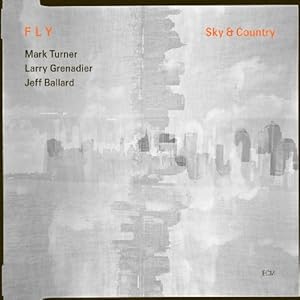
This fine trio hasn´t recorded an album so far, the latest album available by Jeff is the 2009 record "Sky & Country" featuring FLY, another trio with Jeff Ballard, Larry Grenadier and Mark Turner.

December 01, 2011

Rolf Kühn / Joachim Kühn / John Patitucci / Brian Blade: Impressions Of New York Revisited live at 42nd German Jazzfestival Frankfurt 2011

Rolf Kühn | cl
Joachim Kühn | p
John Patitucci | b
Brian Blade | dr

recorded live at HR-Sendesaal, Frankfurt, October 29, 2011

Impressions of New York is an album by German jazz clarinetist Rolf Kühn and his brother, pianist Joachim Kühn, featuring performances recorded in 1967 for the Impulse! label
Although throughout much of his career Rolf Kuhn has been a swing-based clarinetist, he also has had an open mind toward much more adventurous jazz, possibly inspired a bit by his younger brother, pianist Joachim Kuhn. On this recently reissued album, the two Kuhns, bassist Jimmy Garrison, and drummer Aldo Romano perform a 33-minute suite titled "Impressions of New York," which is divided into "Arrival," "The Saddest Day," "Reality," and "Predictions." The music flows with a strong momentum, never losing one's interest. Rolf Kuhn easily keeps up with his younger sidemen, and the overall results feature strong development and some surprises. Recommended.
For the 42nd German Jazzfestival Frankfurt the Kühn brothers joined forces with John Patitucci and Brian Blade (followed by a recording session one day later, to be released on cd next January).

November 30, 2011

Ascension – Harriet Tubman Double Trio live at 42nd German Jazzfestival Frankfurt 2011


Brandon Ross | g
Melvin Gibbs | el-b
J.T. Lewis | dr
Graham Haynes | cornet
DJ Logic | turntables
Val Inc. | turntables
recorded live at HR-Sendesaal, Frankfurt, October 29, 2011

1. Ascension
2. Encore

"Harriet Tubman´s mission is to show how we´ve digested the ideas our jazz mentors passed to us and how we applied them using the musical tools of our generation". (Melvin Gibbs)
There are multiple dimensions to the name of the pioneering band Harriet Tubman. The name certainly is a tribute to the African-American hero and leader, but it also alludes to freedom seeking in music, a paramount goal of the band. The combo of guitarist Brandon Ross, bassist Melvin Gibbs and drummer J.T. Lewis leads listeners to planes where music is free of stylistic limitations and designations. Ascension, Harriet Tubman s new recording on Sunnyside Records, introduces an expanded Double Trio that channels the spirit of earlier masters (namely, Ornette Coleman and John Coltrane) in reaching new musical heights.
Harriet Tubman has pushed the boundaries of musical expression since 1998. The group´s members combine solid performance experience with inventive skills to create a unique sound that blends jazz, rock, funk, soul and blues. Guitarist Brandon Ross has been a leader in advancing guitar vocabulary and has played alongside Henry Threadgill, Cassandra Wilson, Leroy Jenkins, Me Shell Ndegéocello, among others. Melvin Gibbs is regarded as one of the best electric bassists in the world, known for performing with bands such as the (Henry) Rollins Band, Power Tools (with Bill Frisell and Ronald Shannon Jackson) and the Sonny Sharrock Band, along with producing artists such as Arto Lindsay and DJ Logic. Drummer J.T. Lewis is a founding member of the legendary Living Colour jazz/rock band and has performed with several legends like Herbie Hancock, Don Pullen, Sting, Lou Reed and Tina Turner.
Echoing the legendary expanded ensemble work of Ornette Coleman and John Coltrane during their creative heights in the 1960s, Harriet Tubman bolstered its aural palette with the addition of three open-minded musicians: trumpeter Ron Miles (replaced by Graham Haynes for the live version) and turntablists DJ Logic and DJ Singe (Val. Inc. did the tour instead). The bassist suggested recreating Coleman s remarkable Double Quartet recording Free Jazz (Atlantic, 1960) with Harriet Tubman and the addition of Ron Miles and four DJs. When two DJs dropped out of the project, the idea of the Double Trio emerged. The group invited Miles to lead what became a second trio, thus loosening the focus on Coleman s masterpiece. They widened their scope and found inspiration in John Coltrane´s landmark recording Ascension (Impulse!, 1965), which also included an expanded ensemble. The band´s restyling of the Ascension themes has provided a frame of reference for listeners. The group´s unique performance ability and aesthetic have a model to which it may be compared (much like measuring a musician s mettle by his/her ability to cover standards becoming jazz tradition).
Harriet Tubman Double Trio aims at achieving the same high level of performance attained by these historic recordings. The members of Harriet Tubman have been steeped in the music of the African-American avant-garde and regard these progenitors as important influences. The music created on Ascension was informed and structured using different systems of spontaneous composition learned from heralds like Coleman, Coltrane, Threadgill and Wadada Leo Smith. 

November 29, 2011

hr Big Band feat. Vincent Herring, cond. by Jörg Achim Keller: The Blues And The Abstract Truth live at 42nd German Jazzfestival Frankfurt 2011


Vincent Herring | as, ss
Jörg Achim Keller | cond, arr
Frank Wellert, Martin Auer, Thomas Vogel, Axel Schlosser | tp
Günter Bollmann, Peter Feil, Christian Jaksjø | tb
Manfred Honetschläger | b-tb
Heinz-Dieter Sauerborn, Oliver Leicht | as
Ben Kraef, Karl-Martin Almqvist | ts; Rainer Heute | bs
Peter Reiter | p;  Martin Scales | g
Thomas Heidepriem | b; Jean Paul Höchstädter | dr
recorded live at HR-Sendesaal, Frankfurt, October 29, 2011

1. Stolen Moments (Oliver Nelson)
Soloists: Vincent Herring, as; Axel Schlosser, tp
2. Hoe-Down (Oliver Nelson)
Soloists: Martin Scales, gt; Jean Paul Höchstädter, dr; Vincent Herring, as
3. Cascades (Oliver Nelson)
Soloists: Karl Martin Almquvist, Heinz Dieter Sauerborn, Ben Kraef, ts; Peter Reiter, p
4. Yearnin' (Oliver Nelson)
Soloists: Vincent Hering, as; Günter Bollmann, tb; Axel Schlosser, tp
5. Butch and Butch (Oliver Nelson)
Soloists: Rainer Heute, bs; Peter Feil, tb; Vincent Herring, as
6. Teenie's Blues (Oliver Nelson)
Soloists: Vincent Herring, as; Thomas Heidepriem, b; Christian Jaksjø, tb; 
Manfred Honetschläger, b-tb; Frank Wellert, Thomas Vogel, tp
7. I Remember Bird (Leonard Feather, arr. Oliver Nelson)
Soloist: Vincent Herring, as

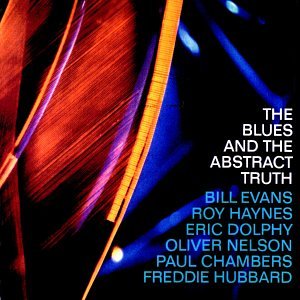
The Blues and the Abstract Truth is an album by Oliver Nelson recorded in February 1961. It remains Nelson's most acclaimed album. It features a lineup of notable musicians: Freddie Hubbard, Eric Dolphy (his last appearance on a Nelson album following a series of collaborations recorded for Prestige), Bill Evans (his only appearance with Nelson), Paul Chambers and Roy Haynes. Baritone saxophonist George Barrow does not take a solo but is a key feature of the subtle voicings of Nelson's arrangements.
The album is an exploration of the mood and structure of the blues, though only some of the tracks are in conventional 12-bar blues form. In this regard, though it is not modal jazz, it may be seen as a continuation of the trend towards greater harmonic simplicity and subtlety via reimagined versions of the blues that was instigated by Miles Davis's Kind of Blue in 1959 (Evans and Chambers played on both albums). Of the pieces on Nelson's album, "Stolen Moments" is the most famous; it is a sixteen-bar piece (in an eight-six-two pattern), though the solos are on a conventional 12-bar minor-key blues structure in C minor. "Hoe-Down" is built on a forty-four-bar structure (with thirty-two-bar solos based on "rhythm changes"). "Cascades" modifies the traditional 32-bar AABA form by using a 16-bar minor blues for the A section, stretching the form to a total of 56 bars. The B-side of the album contains three tracks that hew closer to 12-bar form: "Yearnin'", "Butch and Butch" and "Teenie's Blues".

November 28, 2011

Archie Shepp & Joachim Kühn: Pulse Beat live at 42nd German Jazzfestival Frankfurt 2011


Archie Shepp | ts
Joachim Kühn | p
recorded live at HR-Sendesaal, Frankfurt, October 28, 2011

1. Introspection/ Lonely Woman (Joachim Kühn/ Ornette Coleman)
2. Stablemates (Benny Golson)
3. Drivin´ Miss Daisy (Archie Shepp)
4. Nina (Archie Shepp)
5. Improvisation/ Sophisticated Lady (Archie Shepp & Joachim Kühn/ Duke Ellington)

There’s no end to the different ways two great jazz musicians can interact. In the case of German pianist Joachim Kühn and American saxophone player Archie Shepp, the collaboration is especially intriguing. They both came to maturity during the heady days of the Sixties free jazz scene and have played together often since.
The deep rapport between them is instantly apparent, but so are the differences. Kühn’s natural tone is compellingly dark, both as a pianist and a composer. He pursues a melodic idea in a concentrated way, and isn’t much interested in bright colours or fancy pedal-work.
Shepp tends more towards limpid arabesque, and his lovely husky tone is as instantly recognisable as Kühn’s wiry energy. Shepp’s compositions, such as Nina, leaven Kühn’s European seriousness with a sauntering American swing. They complement each other perfectly, which is just as it should be.
At first glance, the pairing of American saxophonist Archie Shepp and German pianist Joachim Kühn may seem an unlikely one. But Wo!man is not the first time the two have performed together. Two or three decades back—Shepp writes in the liner notes that he cannot now remember the year exactly—the saxophonist worked with Kühn in a band led by Finnish drummer Edward Vesala. It was a real pleasure, Shepp says, to have been reunited.
The pleasure is not, moreover, entirely Shepp's, or Kühn's, for Wo!man is a resplendently lyrical album. It is programmed over five sinuous Shepp/Kuhn originals and three jazz standards, Duke Ellington's "Sophisticated Lady," Ornette Coleman's "Lonely Woman" and Earle Hagen and Dick Rogers' "Harlem Nocturne." Shepp's signature rough edges and periodic free flights are intact, but so too are his retentions of balladeers Coleman Hawkins and Ben Webster, both formative influences: this is above all an album of lush romanticism.

November 27, 2011

McCoy Tyner Trio with special guests José James & Chris Potter: "John Coltrane and Johnny Hartman Revisited" live at 42nd German Jazzfestival Frankfurt 2011


McCoy Tyner| p
Gerald Cannon | b
Joe Farnsworth| dr
José James | voc
Chris Potter | ts
recorded live at HR-Sendesaal, Frankfurt, October 28, 2011

1. Fly With The Wind (McCoy Tyner)
2. Ballad for Aisha (McCoy Tyner)
3. Autumn Serenade (Peter DeRose, Sammy Gallop)
4. Dedicated To You (Sammy Cahn, Saul Chaplin, Hy Zaret)
5. You Are Too Beautiful (Richard Rodgers, Lorenz Hart)
6. My One and Only Love (Guy Wood, Robert Mellin)
7. In A Mellow Tone (Duke Ellington)
8.  (Encore)

John Coltrane and Johnny Hartman is a 1963 studio album featuring John Coltrane and Johnny Hartman.
Though Coltrane and Hartman had known each other since their days playing with Dizzy Gillespie's band in the late 1940s (Hartman had been with the band on an on and off basis, and Coltrane played (third) alto with the band in 1949), Hartman is the only vocalist with whom the saxophonist would record as a leader. Initially when producer Bob Thiele approached Hartman with Coltrane's request that the two record together Hartman was hesitant as he did not consider himself a jazz singer and did not think he and Coltrane would complement one another musically. However, Thiele encouraged Hartman to go see Coltrane perform at Birdland in New York to see if something could be worked out. Hartman did so, and after the club closed he, Coltrane, and Coltrane's pianist McCoy Tyner, went over some songs together. On March 7, 1963 Coltrane and Hartman had decided on 10 songs for the record album, but en route to the studio they heard Nat King Cole on the radio performing "Lush Life", and Hartman immediately decided that song had to be included in their album. The legendary compilation was made that same day at the Van Gelder Studio in Englewood Cliffs, New Jersey. Each song was done in only one take, except for "You Are Too Beautiful", which required two takes because Elvin Jones dropped one of his drumsticks during the first take.
The album became an instant jazz classic, and the renditions of "Lush Life", "My One and Only Love", and "They Say It's Wonderful" are considered definitive. Hartman's "master" Billy Eckstine stood godfather to this production which was directed by Bob Thiele.

November 26, 2011

A Love Supreme – Jonas Kullhammar Quartet live at 42nd German Jazzfestival Frankfurt 2011


Jonas Kullhammar | ts
Torbjörn Gulz | p
Torbjörn Zetterberg | b
Jonas Holgersson | dr
recorded live at HR-Sendesaal, Frankfurt, October 28, 2011

1. Acknowledgement
2. Resolution
3. Pursuance
4. Psalm

A Love Supreme is a studio album recorded by John Coltrane's quartet in December 1964 and released by Impulse! Records in February 1965. It is generally considered to be among Coltrane's greatest works, as it melded the hard bop sensibilities of his early career with the free jazz style he adopted later.
The quartet recorded the album in one session on December 9, 1964, at the Van Gelder Studio in Englewood Cliffs, New Jersey.
The album is a four-part suite, broken up into tracks: "Acknowledgement" (which contains the mantra that gave the suite its name), "Resolution", "Pursuance", and "Psalm." It is intended to be a spiritual album, broadly representative of a personal struggle for purity, and expresses the artist's deep gratitude as he admits to his talent and instrument as being owned not by him but by a spiritual higher power.
The album begins with the bang of a gong (tam-tam), followed by cymbal washes. Jimmy Garrison follows on bass with the four-note motif which structures the entire movement. Coltrane's solo follows. Besides soloing upon variations of the motif, at one point Coltrane repeats the four notes over and over in different modulations. After many repetitions, the motif becomes the vocal chant "A Love Supreme", sung by Coltrane (accompanying himself via overdubs).
In the final movement, Coltrane performs what he calls a "musical narration" of a devotional poem he included in the liner notes. That is, Coltrane "plays" the words of the poem on saxophone, but does not actually speak them. Some scholars have suggested that this performance is a homage to the sermons of African-American preachers. The poem (and, in his own way, Coltrane's solo) ends with the cry "Elation. Elegance. Exaltation. All from God. Thank you God. Amen."

November 24, 2011

Africa/Brass– hr-Big Band feat. Archie Shepp live at 42nd German Jazzfestival Frankfurt 2011


Archie Shepp | ts
Charles Tolliver | cond, arr
Frank Wellert, Martin Auer, Thomas Vogel, Axel Schlosser | tp
Günter Bollmann, Peter Feil , Christian Jaksjø | tb
Manfred Honetschläger | b-tb
Heinz-Dieter Sauerborn, Oliver Leicht | as
Ben Kraef, Karl-Martin Almqvist | ts
Rainer Heute | bs
Peter Reiter | p; Martin Scales | g
Thomas Heidepriem | b; Jean Paul Höchstädter | dr
recorded live at HR-Sendesaal, Frankfurt, October 27, 2011

1. Introduction
2. Song of the Underground Railroad (Trad.)
3. The Damned Don´t Cry (Calvin Massey)
4. Ujaama (Archie Shepp)
5. Greensleeves (Trad.)
6. Africa (John Coltrane)
7. On the Nile (Charles Tolliver)

Africa/Brass is the eighth album by John Coltrane, released in 1961 on Impulse Records. The sixth release for the fledgling label and his first for Impulse!, it features Coltrane's working quintet augmented by a larger ensemble to bring the total number of participating musicians to 21. Its big band sound, with the unusual instrumentation of french horns and euphonium, presented music very different from anything that had been associated with Coltrane to date.
Earlier in 1961, Coltrane had invited multi-instrumentalist Eric Dolphy to join his band, making it a quintet. Around the same time, bassist Steve Davis departed, replaced by Reggie Workman, at times Coltrane pairing him with a second bassist, Art Davis. With this group in tow, on May 23 Coltrane entered the new Van Gelder Studio in Hackensack, New Jersey for the first time; Rudy Van Gelder had been the sound engineer for most of his earlier sessions with Prestige Records. Coltrane would make the bulk of his recordings at the Van Gelder studio for the remainder of his career.
Apparently, Coltrane had initially contacted Gil Evans to assist with the arrangements; however nothing came of this, Coltrane turning to Dolphy and Tyner to orchestrate. Originally credited to Dolphy alone on the initial release, that has been corrected with the appearance of the 1995 reissue. Coltrane chose the ancient English folk ballad "Greensleeves," done in a similar major/minor contrast as his popular "My Favorite Things." For the two original pieces, "Africa" and "Blues Minor," Dolphy and Coltrane adapted Tyner's piano voicings for the orchestra. A second set of recording sessions for the album took place on June 4.