January 31, 2011

Johannes Enders and JazzBaltica Ensemble live at Jazzclub Unterfahrt Munich 2010


Johannes Enders, Tenor Saxophone, Flute, Leader
Karin Hammar, Trombone
Niels Lyhne Løkkegaard, Alto Saxophone, Flute
Lutz Häfner, Tenor Saxophone, Bass Clarinet, Flute
Axel Schlosser, Trumpet, Flügelhorn
Michael Wollny, Piano
Eva Kruse, Bass
Bastian Jütte, Drums

recorded live at  Jazzclub Unterfahrt, Munich July 8, 2010

1. The Jones Suite Part 2: Hank (Johannes Enders)
2. Summer Night (Harry Warren)
3. Billy Rubin Part 2 & 1 (Johannes Enders)
4. Beginners Mind Part 2 (Johannes Enders)

"One for three - The Jones Suite", the recording of JazzBaltica Ensemble 2008 concert at Salzau, released on enja, was dedicated to the three great brothers of modern jazz history: Elvin, Thad and Hank Jones.
Enders, who has always emphasized that his overriding commitment was to the “overall” sound, had delivered his masterpiece. Returning to his influences, he translated his hommage to that great arranger of modern jazz, Thad Jones, into his own contemporary musical language and, while paying tribute to Elvin Jones, the musical companion of John Coltrane, he also honours the master of the modern tenor saxophone.
What really moved musicians and audience alike at this great Salzau concert was the second movement, dedicated to the living piano legend, Hank Jones. Before the start of that final part of the concert, Hank Jones came onstage in person and bowed to Enders and the Ensemble’s moving performance with a rendition of his own composition "We’re All Together”, as arranged by Enders for the Ensemble. The audience was treated to one of those magic moments in Jazz that remain legendary for generations to come.
Supporting the 2010 release on enja the Ensemble reunited for this concert to play the suite again.

January 27, 2011

Paco de Lucia live at 31st Leverkusener Jazztage 2010


Paco de Lucia - Guitar
Antonio Sanchez - Guitar
Antonio Serrano - Harmonica, Keyboard
Alain Perez - Bass
El Piranha - Percussion
Duquende - Vocals, Palmas
David de Jacoba - Vocals, Palmas
Farruco - Dance
recorded live at Forum Leverkusen, November 2010

1. Callejon del muro
2. Soniquete
3. Cancion de Amor/ Volar
4. Convite
5. Zyryab

"Flamenco guitar was never meant to be the star of the show. Its traditional spot was in the back along with the clapping (palmas). All eyes and ears were on the dancers and the singers-until Paco de Lucia came along.
His career did not take place in jazz, but his approach and his influence parallel that of a jazz master. But what do you do if you are a musician who for more than 30 years has added outside influences to a tradition that set the standard for all others to follow? Go back to basics.
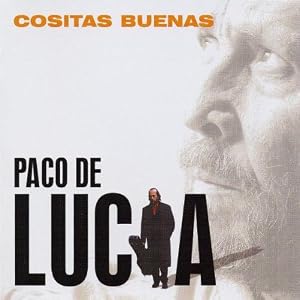
Paco de Lucia does just that on his latest album Cositas Buenas, released in 2004. On his first release in five years, he reexamines the traditional relationship between guitar and voice. Keeping his prodigious chops in check, he tastefully backs an array of the finest flamenco cantaores (singers). He wouldn't be the trailblazer he is if he didn't do some tinkering: Throughout the CD he also plays bouzouki, lute and mandolin.
Bulerias, soleas and tangos (no, not those tangos) are what flamenco is all about. While the singing is once again in the spotlight, there is plenty of de Lucia magic on Cositas Buenas to propel the music toward those unison flourishes (rasgueos) that almost always illicit outbursts of "Ole!" from the group." - By Felix Contreras, JazzTimes

January 26, 2011

Al Di Meola Sextet live at 31st Leverkusener Jazztage 2010


Al Di Meola - Guitar
Fausto Beccalossi - Accordeon
Kevin Seddiki - Guitar
Peter Kaszas - Drums
Victor Miranda - Bass
Gumbi Ortiz - Percussion
recorded live at Forum Leverkusen, November 2010

1. Siberiana
2. Oblivion
3. Bona
4. If
5. Michelangelo´s 7th Child
6. Double Concerto Milonga
7. Umbras

Legendary guitar virtuoso Al Di Meola’s latest outing Pursuit of Radical Rhapsody will be out March 15 on Telarc International, a division of Concord Music Group.
Working with accordionist Fausto Beccalossi, second guitarist Kevin Seddiki, bassist Victor Miranda, drummer Peter Kazsas and percussionist Gumbi Ortiz, Di Meola has created a collection of 15 entrancing tracks that highlight his unparalleled technique on both acoustic and electric guitar. Percussionist Mino Cinelu, Hungary’s Sturcz String Quartet and former Weather Report drummer Peter Erskine also appear on the album.

January 23, 2011

Abdullah Ibrahim live at NDR Hamburg 1977


Abdullah Ibrahim, piano
Johnny Dyani, bass

recorded live at NDR Studio 10, Hamburg, May 25, 1977

1. Air
2. Ntsikan´s Bell

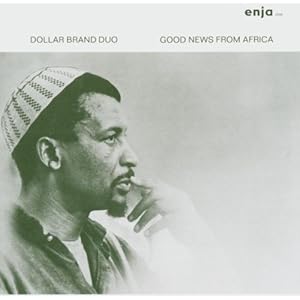
In 1973 this duo released "Good News From Africa" on enjoy. "The extraordinary South African pianist meets his countryman, the late, very great bassist Johnny Dyani, and the result is one of the single most beautiful recordings of the '70s. The duo mix in traditional African and Islamic songs and perform with a fervor and depth of feeling rarely heard in or outside of jazz. From the opening traditional Xhosa song, "Ntsikana's Bell," the rich, sonorous approach of these two musicians is evident, both singing in stirring fashion, Ibrahim guttural and serious, Dyani as free and light as a swallow. Ibrahim treats the listener to some of his all-too-rarely heard flute work on the following track, using Kirk-ian techniques of sung overtones in a gorgeous original. Dyani's bass playing is simply astonishing, never indulging in mere virtuosic displays but always probing, always deep -- what Mingus might have sounded like had he been born in South Africa." - Brian Olewnick

January 22, 2011

Gwilym Simcock, Florian Ross & Iiro Rantala: European Piano Summit live at WDR 3 jazz.cologne 2010


Gwilym Simcock – p
Florian Ross – p, loop
Iiro Rantala - p
recorded live at Klaus-von-Bismarck-Saal, WDR Funkhaus Köln, October 28, 2010

1. On Broadway (Mann, Weill/Leiber/Stoller)
2. Plain Song (Gwilym Simcock)
3. Northern Smiles (Gwilym Simcock)
Gwilym Simcock, piano

4. Rondo # 1 (Florian Ross)
5. Mechanism (Florian Ross)
6. Round About (Florian Ross)
7. Nice to meet you (Florian Ross)
Florian Ross, piano

8. Köln (Iiro Rantala)
9. How low can you go (Iiro Rantala)
Iiro Rantala, piano

10. I love you (Gwilym Simcock)
Gwilym Simcock – p, Iiro Rantala – p

11. Bridges (Florian Ross)
Gwilym Simcock – p, Florian Ross – p

12. Voyage (Kenny Barron)
Florian Ross – p, Iiro Rantala – p

13. Bernd Boogie (Gwilym Simcock)
14. Bye, Bye Blackbird (Ray Henderson)
Gwilym Simcock – p, Florian Ross – p, Iiro Rantala – p

Gwilym Simcock did, after all, start out as a classical pianist. At the age of just three his mother and father (a church organist) recognised their son’s talent and very much encouraged it. By the age of seven Simcock started lessons at London’s renowned Trinity College of Music and then went on to Chetham’s School in Manchester. The effects of this early education can still be heard in Simcock’s music today – with his technique and ability to interpret, he could easily have become a successful classical pianist. But at the age of 15 he was given a cassette of jazz music by his improvisation teacher Steve Berry. This included tracks by Keith Jarrett and Pat Metheny that were to change his musical direction and inspire him to study jazz at the Royal Academy of Music where he graduated with distinction and won the coveted Principal's prize.  His most recent album “Good Days at Schloss Elmau” was released on January 7 an ACT.
Florian Ross, born in 1972, studied piano and composition in Cologne, London and New York with John Taylor, Joachim Ullrich, Bill Dobbins,Don Friedman and Jim McNeely.
While many of his European colleagues consider it a virtue to distance themselves from the mainstream, another camp makes an effort to continue the American jazz tradition in Europe as authentically as possible. Florian Ross's music is a refreshing break from this often embarrassing programmatic context. Ross not only ignores the demarcation line but
translates traditional aspects into a language of the present. His lack of interest in the idea of “higher, further, faster“ corresponds to his fondness for deeper sound regions and warmer timbres, as sounds oscillate between blue, orange and terracotta. "Mechanism" is his first CD as solo pianist and his first recording on Pirouet Records.
Iiro Rantala (born 1970, in Helsinki) has studied piano in the jazz department of Sibelius Academy and classical piano in Manhattan School of Music. He is one of the best known Finnish jazz pianists, both in Finland and abroad. He's a pianist and composer of Trio Töykeät, a Finnish jazz trio.
His newest solo record called "lost heroes" will be released on ACT in February.


January 21, 2011

Gwilym Simcock Trio live at Musikfest Bremen 2010


Gwilym Simcock, piano
Yuri Goloubev, bass
James Maddren, drums

recorded live at BLG Forum, Überseestadt, Bremen, September 5, 2010

1. Blue Vignette (Gwilym Simcock)
2. Spring Step (Gwilym Simcock)
3. Plain Song (Gwilym Simcock)
4. Nice Work If You Can Get It (George & Ira Gershwin)
5. Longing To Be (Gwilym Simcock)
6. Cry Me A River (Arthur Hamilton)
7. 1981 (Gwilym Simcock)
8. A Typical Affair (Gwilym Simcock)
9. How Deep Is The Ocean (Irving Berlin)

29 year old, Gwilym Simcock is one of the most gifted pianists and imaginative composers on the British scene.  Able to move effortlessly between jazz and classical music, he can, at times, inhabit both worlds and has been described as stylistically reminiscent of Keith Jarrett, complete with ‘harmonic sophistication and subtle dovetailing of musical traditions’ as well as being a pianist of ‘exceptional’, ‘brilliant’ and ‘dazzling’ ability.  His music has been widely acclaimed as ‘engaging, exciting, often unexpected, melodically enthralling, complex and wonderfully optimistic’.
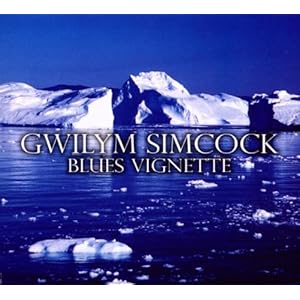
Aside from his renowned solo piano work, Gwilym has worked extensively throughout Europe with the cream of British and international jazz artists including Dave Holland, Kenny Wheeler, Lee Konitz, Bill Bruford’s Earthworks, Bob Mintzer and Bobby McFerrin.  His own groups as leader range from trio to big band.  His debut album “Perception” featured his sextet with Stan Sulzmann (saxophones), John Parricelli (guitar), Phil Donkin (bass), Martin France (drums) and Ben Bryant (percussion). was nominated for Best Album in the BBC Jazz Awards 2008 and has been critically acclaimed at home and abroad. His most recent release "Blues Vignette" features both solo piano and work with his new trio with Yuri Goloubev and James Maddren.

January 20, 2011

John Scofield Trio live in Hamburg 2010


John Scofield, guitar
Steve Swallow, bass
Bill Stewart, drums

recorded live at Rolf-Liebermann-Studio, NDR, Hamburg, October 28, 2010

1. How Deep (Scofield)
2. Chicken Dog (Scofield)
3. A Girl I Used To Know (Jack H. Clement)
4. Plain Song (Scofield)
5. Someone To Watch Over Me (George Gershwin)
6. Trio Blues (Scofield)
7. Lawns (Carla Bley)

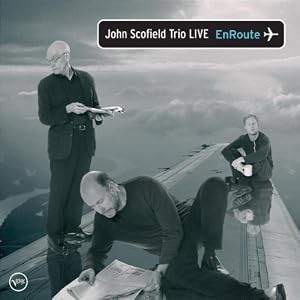
This here is a great set by Sco´s longtime working band featuring Steve Swallow and Bill Stewart. Following a series of coruscating servings of progressive uber funk for Verve, Scofield stripped down to a trio for the 2004 album "en route", a live session at New York's Blue Note club in December 2003. He hooked up with a pair of old friends, the terrific loose-limbed drummer Bill Stewart, and the tense, nimble bassist Steve Swallow, and the three go after each other in some often-furiously busy, driving, tangled interplay, defying the frigid New York weather of that period. 

January 19, 2011

John Scofield Quartet live at NDR Hamburg 1990

 
John Scofield, gt
Joe Lovano sax
Anthony Cox, b
John Riley, dr
recorded live at NDR Studio 10, Hamburg, October 8, 1990

1. Big Fan (John Scofield)
2. Let's Say We Did (John Scofield)
3. Evansville (John Scofield)
4. Chariots (John Scofield)
5. Mr. Coleman To You (John Scofield)
6. Wabash III (John Scofield)

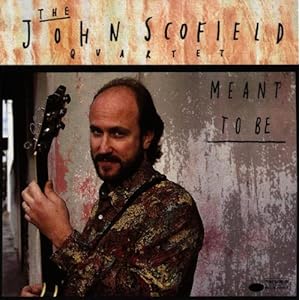
"Meant To Be features guitarist John Scofield's 1990 pianoless quartet on eleven of his compositions. During the best selections (such as "Big Fun" and "Mr. Coleman To You") one can hear the influence of not just the original Ornette Coleman Quartet but the Keith Jarrett/Dewey Redman Quintet. Joe Lovano's increasingly original tenor sound (mixing together John Coltrane, Dewey Redman and even Eddie Harris on this set) works well with Scofield, and the tight but loose rhythm section (bassist Marc Johnson and drummer Bill Stewart). "Eisenhower" (a slightly tongue-in-cheek, boppish romp) and "Some Nerve" (which uses New Orleans parade rhythms) are also memorable performances. The colorful and enjoyable set is modern mainstrem music of the 1990s, stretching ahead while holding on to the roots of hard bop, funk and fusion." - Scott Yanow, allmusicguide.com about the 1990 record "Meant To Be", released on Blue Note.

January 18, 2011

Avishai Cohen: Aurora live at NDR Hamburg 2010


Avishai Cohen (b/voc)
Karen Malka (voc)
Shai Maestro (p)
Amos Hoffmann (oud, git)
Itamar Doari (perc)

recorded live at Rolf-Liebermann-Studio, NDR Hamburg, November 18, 2010

1. Seven Seas (Avishai Cohen)
2. Morenika (Trad)
3. Dreaming (Avishai Cohen)
4. In One (Avishai Cohen)
5. Aurora (Avishai Cohen)
6. Alfonsina y el mar (Ramirez/ Luna)
7. Para el monte me voy porque en monte no estoy (Trad.)

"Aurora finds Avishai Cohen not only playing acoustic and electric bass, but also playing acoustic piano and electric keyboards and singing. In fact, he does a great deal of singing on this 2008 recording -- which will come as a surprise to those who think of Cohen as strictly an instrumentalist. Aurora is by no means an easy album to categorize; at the risk of oversimplifying things, one possible description could be "world jazz meets post-bop meets adult alternative." Jazz is a prominent ingredient on Aurora, but so are pop/rock and world music -- and Cohen gets a lot of inspiration from Middle Eastern, North African, and Spanish music. He sings in four different languages -- Hebrew, English, Ladino (the language of Spain's Sephardic Jews), and Spanish -- on an album that is dominated by original material but also contains some traditional Jewish songs. But as unpredictable as this 53-minute CD is, Aurora has a certain continuity. Cohen sounds like he knows exactly what he's doing, and he has sympathetic support that includes Amos Hoffman on oud (a traditional Middle Eastern lute) and Karen Malka on vocals (although Cohen is the main vocalist)." - by Alex Henderson, allmusicguide.com

January 17, 2011

Betty Carter Trio: 199th NDR Jazz Workshop Hamburg 1985


Betty Carter, voc
Benny Green, p
Tarik Shah, b
Winard Harper, dr

recorded live at NDR Studio 10, Hamburg, May 29, 1985

1. Tight (Betty Carter)
2. Look What I Got (Betty Carter)
3. Dearly Beloved/ Blue Moon
4. Timeless (Betty Carter)

Arguably the most adventurous female jazz singer of all time, Betty Carter was an idiosyncratic stylist and a restless improviser who pushed the limits of melody and harmony as much as any bebop horn player. The husky-voiced Carter was capable of radical, off-the-cuff reworkings of whatever she sang, abruptly changing tempos and dynamics, or rearranging the lyrics into distinctive, off-the-beat rhythmic patterns. She could solo for 20 minutes, scat at lightning speed, or drive home an emotion with wordless, bluesy moans and sighs. She wasn't quite avant-garde, but she was definitely "out." Yet as much as Carter was fascinated by pure, abstract sound, she was also a sensitive lyric interpreter when she chose, a tender and sensual ballad singer sometimes given to suggestive asides. Her wild unpredictability kept her marginalized for much of her career, and she never achieved the renown of peers like Ella Fitzgerald, Sarah Vaughan, or Carmen McRae. What was more, her exacting musical standards and assertive independence limited her recorded output somewhat. But Carter stuck around long enough to receive her proper due; her unwillingness to compromise eventually earned her the respect of the wider jazz audience, and many critics regarded her as perhaps the purest jazz singer active in the '80s and '90s. Additionally, Carter took an active role in developing new talent, and was a tireless advocate for the music and the freedom she found in it, right up to her death in 1998.
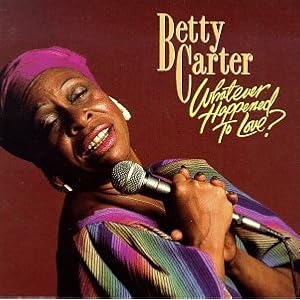
1982 brought a live album with orchestra backing, Whatever Happened to Love?, and five years later, she recorded a live duets album with Carmen McRae at San Francisco's Great American Music Hall. She continued to tour as well, and when Polygram's reactivated Verve label started signing underappreciated veterans (Abbey Lincoln, Shirley Horn, Nina Simone, etc.), they gave Carter her first major-label record deal since the '60s. Verve reissued much of her Bet-Car output, giving those records far better distribution than they'd ever enjoyed.

January 16, 2011

Lucky Thompson Octet live at NDR Hamburg 1961


Lucky Thompson, ts
Nat Peck, tb
Jo Hrasko, as
William Boucaya, bs
Christian Bellest, tp
Carlos Charlie Diernhammer, p
Peter Trunk, b
Daniel Humair, dr

recorded live at NDR Studio 10, Hamburg, April 28, 1961

1. Mr. Care Free
2. It's A Fantasy
3. Old Reliable
4. I Remember When
5. Check Out Time

Eli "Lucky" Thompson (June 16, 1924, Columbia, South Carolina — July 30, 2005, Seattle, Washington) was a United States jazz tenor and soprano saxophonist. While John Coltrane usually receives the most credit for bringing the soprano saxophone out of obsolescence in the early 60s, Lucky Thompson, along with Steve Lacy, played it in a more advanced bebop format.
After playing with the swing orchestras of Lionel Hampton, Don Redman, Billy Eckstine, Lucky Millinder, and Count Basie, he worked in rhythm and blues and then established a career in bop and hard bop, working with Kenny Clarke, Miles Davis, Dizzy Gillespie and Milt Jackson. Thompson was an inspired soloist capable of a very personal style in which the tradition of Coleman Hawkins, Ben Webster and Don Byas was intelligently mixed with a modern grasp of harmony. He showed these capabilities as sideman on many albums recorded during the mid-1950s, such as Stan Kenton's Cuban Fire, and those under his own name. He appeared on Charlie Parker's Los Angeles Dial Records sessions and on Miles Davis’s hard bop Walkin' session. Thompson recorded albums as leader for ABC Paramount and Prestige and as a sideman on records for Savoy Records with Milt Jackson as leader.
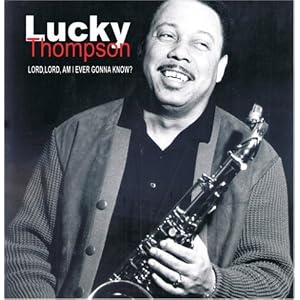
He lived in Lausanne, Switzerland in the late 1960s and recorded several albums there including "Lord, Lord, Am I Ever Gonna Know?", released more than 30 years after the original recording session in 1962 on Candid records.
 

January 15, 2011

Max Roach Quartet live at NDR Hamburg 1984


Max Roach, dr
Cecil Bridgewater, tp
Odean Pope, ts
Tyrone Brown, b

recorded live at NDR Studio 10, Hamburg, January 19, 1984

1. Six Bits Blues (Roach)
2. Scott Free (Bridgewater)

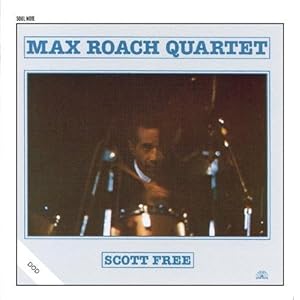
Another concert of Max Roach´s 1984 tour was released as "Scot Free" on the Italian label Soul Note. "This strong set from the Max Roach Quartet (one of the finest regular bands of the 1980s) finds the group performing a 40-minute version of trumpeter Cecil Bridgewater's "Scott Free." Because the piece has plenty of solo space (two lengthy improvisations apiece for Bridgewater, tenor saxophonist Odean Pope, bassist Tyrone Brown and drummer Roach, with a medium-tempo section, a rapid segment and some free interludes), there is more variety on this lengthy work than one might expect. This is excellent music, easily recommended as an example of the underrated but consistently brilliant Max Roach Quartet." - Scott Yanow, allmuscguide.com

January 14, 2011

Klaus Doldinger Ensemble live at NDR Hamburg 1962


Klaus Doldinger, ts
Kenny Clarke, dr
Don Ellis, tp
Jacques Pelzer, sax, fl
Ingfried Hoffmann, org, p
Benoit Quersin, b
Rene Thomas, gt

recorded live at NDR Studio 10, Hamburg, December 7, 1962

1. Open Door (Klaus Doldinger)
2. Quintenzirkel (Klaus Doldinger)
3. Theme For Freddy (Rene Thomas)
4. Signal (Klaus Doldinger)
5. Six Eight Pleasure
6. Crépuscule With Nellie (Monk)
7. Theme (Rene Thomas)
8. Solo (Don Ellis)
9. After You've Gone (Layton)
10. Hasten Jason (Kenny Clarke)
11. For Two Only (Klaus Doldinger)
12. Sweetie's Bounce  (Klaus Doldinger)

Doldinger's probably best remembered for the more dynamic fusion he cut with the Passport group in the 70s, but back in his early years he was full on soul jazz player, steeped in the tradition of Gene Ammons, Lou Donaldson, Sonny Stitt, and others before him – all players that we'd easily rank Doldinger with during these years, given the ultra-high level of his work for Philips. But given his German orientation, Doldinger also picked up on some of the freer influences that were running around the European scene of the 60s – and the tracks here don't just sparkle with American soul jazz sounds, but also show a bit of Brazilian and more progressive jazz influences as well.

January 13, 2011

Carla Bley Band: 188th NDR Jazz Workshop Hamburg 1984


Michael Mantler, tp
Gary Valente, tb
Vincent Chancey, frh
Bob Stewart, tuba
Steve Slagle, fl
Tony De Grady, ts
Steve Swallow, b
Ted Saunders, p, org
Victor Lewis, dr

recorded live at NDR Studio 10, Hamburg, March 14, 1984

1. Talking Hearts (Carla Bley)
2. Joyful Noise (Carla Bley)
3. Misterioso (Thelonious Monk)

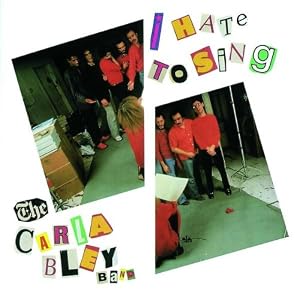
In 1984 Carla Bley released the album "I hate to sing", released on WATT. "There's a comic, antic quality afoot here-and isn't that what one expects from Bley in regular doses? The dose is over the top here, particularly on the title track. Certain band members, including the boss, take turns letting the listener know in no uncertain terms why they are instrumentalists and not singers. Dissonant voices collide with dissonant chords on track one, anchored by Steve Swallow's distinctive electric bass on "The Internationale." This one is perhaps even more madcap than usual because of the confluence of flat, non-singing singers balanced with a sort of Germanic romanticism that in places would have brought a smile to Kurt Weill". - Willard Jenkins, JazzTimes

January 12, 2011

Ornette Coleman Quartet: 219th NDR Jazzconcert Hamburg 1987

Ornette Coleman, as, tp
Don Cherry, tp
Charlie Haden, b
Billy Higgins, dr

recorded live at NDR Studio 10, Hamburg, October 29, 1987

1. Yesterday, Today and Tomorrow
2. Latin Genetics
3. Chanting
4. Africa Is The Mirror of All Colours
5. The Art Of Love Is Happiness

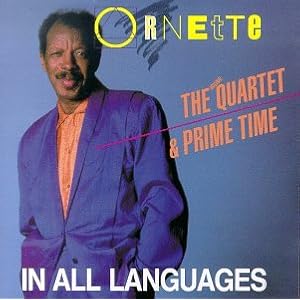
This concert has been circled among tape traders for years and is available on several download sites. Here I can offer a recently digitally broadcast excerpt featuring his legendary quartet. In 1987 Ornette released the double album "In All Languages". Ornette and the other members of his 1950s quartet, trumpeter Don Cherry, bassist Charlie Haden, and drummer Billy Higgins, performed on one of the two records, while his electrified ensemble, Prime Time, performed on the other. Many of the songs on In All Languages had two renditions, one by each group.
The double album was originally released by Caravan of Dreams, who also issued the title as a single cassette or compact disc. Coleman's record label, Harmolodic, re-issued In All Languages in 1997 through a then-current distribution deal with Verve Records.