September 30, 2010

Pee Wee Ellis & The Mahotella Queens live at Music Hall, Worpswede 2010

Pee Wee Ellis, tenor saxophone, vocals
Fred Ross - vocals
Ty - rap
Raymond Doumbe - Bass

Tony Remy - Guitar
Peter Madsen - Keys
Mamadou Sarr - Percussion

Guido May - Drums

James Morton - Alto Sax

Josh Arcoleo - Sax
Guests: The Mahotella Queens
Hilda Tloubatla, Nobesuthu Mbadu and Mildred Mangxola, vocals

recorded live at Music Hall, Worpswede, May 15, 2010

1. Soul Pride (James Brown)
2. No Discrimination (Tony Allen)
3. The Chicken (Alfred “Pee Wee” Ellis)
4. Din Don Dan (Alfred “Pee Wee” Ellis, Cheikh Lô, Guido May)
5. I Got The Feeling (James Brown)
6. Umuntu (Simon Nkabinde)
7. Please, please, please (James Brown, Johnny Terry)
8. Make It Funky (James Brown)
9. Pass The Peas (James Brown)
10. Cold Sweat (James Brown, Alfred “Pee Wee” Ellis)
11. Say It Loud, I’m Black And Proud (James Brown)
12. I Got You (I Feel Good) (James Brown)

Pee Wee Ellis and a host of African superstars are
 bringing music full circle with an innovative project called Still Black, Still Proud.
Pee Wee Ellis has been described as "The Man Who Invented Funk" for
 his work with James Brown, bringing R&B into the era of Funk, starting
 with Pee Wee's seminal 1967 song, Cold Sweat – arguably the first pure
 modern Funk song – and 25 more James Brown hits. It started a revolution in music.
Funk was the renewal of the African in African-American music, making
J ames Brown's music immensely popular, deeply felt and vastly
 influential in Africa.
So it only makes sense that Africa now comes to James Brown, with a host of African stars joining with Pee Wee Ellis in a rhythm-fueled tribute 
to the worldwide circle that Funk has become.

September 29, 2010

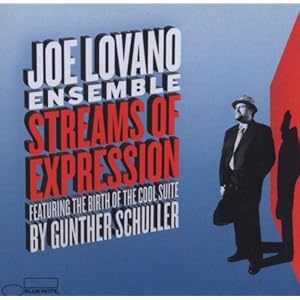
Joe Lovano Nonet: Birth of the Cool & More - live at German Jazzfestival Frankfurt 2009

Photo Credit: Jimmy Katz

Joe Lovano, ts, alto-cl, aulochrome
Steve Slagle, as, ss, fl
Ralph Lalama, ts, cl
Gary Smulyan, bs, bcl
Barry Ries, tp
Larry Farrell, tb
James Weidman, p
Cameron Brown, b
Lewis Nash, dr

recorded live at 40th German Jazzfestival, HR Sendesaal, 
Frankfurt am Main/Germany, October 29, 2009

1. Streams of Expressions
2. Streams of Expressions: Cool (Pt.II)
3. Prelude/ Moon Dreams
4. Move

Streams of Expression, Lovano's 18th album for Blue Note Records, unites disparate themes from his own discography, not to mention jazz history as a whole.
Streams of Expression reunites Lovano with the great composer, conductor, and musicologist Gunther Schuller (their first collaboration was Rush Hour, Blue Note, 1995), and draws upon everything from the cool school to late-era Coltrane, offering a holistic take on jazz, present and future. The album is comprised of two extended, multipart pieces (Streams of Expression Suite, Birth of the Cool Suite) and three stand-alone tunes (Blue Sketches, Buckeyes, Big Ben) and features an augmented incarnation of Lovano's nonet from the albums 52nd Street Themes (2000) and On this Day . . . At the Vanguard (2003). Three of the tracks showcase Lovano in a trio setting, recalling his Trio Fascination series, regarded as a contemporary classic.

September 28, 2010

Enrico Rava Quintet live at JazzBaltica 2004

Enrico Rava - Trumpet
Gianluca Petrella - Trombone
Andrea Pozza - Piano
Rosario Bonaccorso - Bass
Roberto Gatto - Drums

recorded live at Große Konzerscheune Salzau, July 2004

1. Sand
2. Rain
3. Algir Dalbughi
4. Nature Boy
5. Happiness Is To Win a Big Prize (in cash…)
6. Art Deco
7. Estate (feat. Roberta Gambarini)

“Contemporary Italian jazz can be said to have begun with Enrico Rava”, writer Mike Zwerin observed in the International Herald Tribune.
Featuring his regular Italian quintet with trombonist Gianluca Petrella, pianist Stefano Bollani, bassist Rosario Bonaccorso and drummer Roberto Gatto, “Easy Living” (released in 2004 on ECM) was recorded in Udine, near Rava’s Genovan home. It finds Enrico, in his 65th year, playing with unforced inspiration. Working ‘in the tradition’, he is characteristically disinclined to be limited by it. And his trumpet sings, perhaps more eloquently than ever. “I’m extremely happy about this record”, Rava told American web journal All About Jazz. “I think it’s by far the best record I ever made. Everybody on the record sounds beautiful. The session was so easy, so relaxed… Everybody was very much into the music.”
In general, the disc bears out the judgement of the Jazzpar Prize jury who elected Rava Musician of the Year in 2002. “Rava has proven himself adept at many styles… His bittersweet music does not fit neatly into any one genre. He can play fiery and lyrical lines and he can generate romantic atmospheres. Enrico Rava may shift between abstraction and structure but he mostly plays the trumpet with a warm, mellow sound – smooth and intoxicating. Sometimes his slow, spiralling, bop-like lines glide into free terrain. His phrases often close with a slur and he may employ half valves and other means to obtain a lyrical and adventuresome voice.” He may indeed, and on “Easy Living”, that lyricism is much in evidence.

September 27, 2010

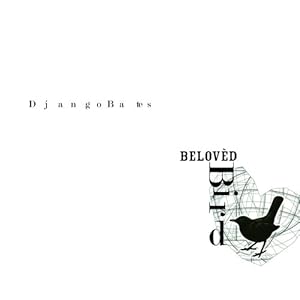
Django Bates Trio "Beloved Bird" live at The Vortex, London 2010


Django Bates - Piano
Petter Eldh - Bass
Peter Bruun - Drums

recorded live at "The Vortex", London, April 13, 2010

1. Moose The Mooche (Parker)
2. Little Suede Shoes (Parker)
3. Hot House (Dameron)
4. Ex Pat (Django Bates)
5. Ah-Leu-Cha (Parker)
6. Now's The Time (Parker)

We proudly present a concert by pianist Django Bates and his new trio Beloved Bird, in which they perform new interpretations of music by Bates' hero, the pioneering saxophonist Charlie Parker. Bates has said, 'having heard Charlie Parker's music from my birth onwards, I knew it was good in the way that I knew that food was good. It was nutrition: a life force'. Parker classics such as Now's The Time and Moose the Mooche will be re-arranged and de-constructed resulting in various levels of recognizability.
Beloved Bird features Petter Eldh on bass and Peter Bruun on drums. Best known for playing keyboards, this is the first time Bates has toured with an acoustic piano trio in many years, and he acknowledges that two classic American piano trios provided particular inspiration: the Bill Evans Trio and The Bad Plus. For the latter, the admiration is certainly mutual, and this programme also features an extensive interview with Bates by Bad Plus pianist Ethan Iverson.
Now residing in Copenhagen, where he's Professor of Rhythmic Music at the Rhythmic Music Conservatory, Django Bates first came into the public eye as a member of seminal 1980s big band Loose Tubes. Since then he has led his own large ensemble Delightful Precipice, found an outlet for his more experimental compositions with his small group Human Chain and won numerous awards including being voted Best UK Jazz Composer three times by The Wire.

September 26, 2010

Nils Landgren & Michael Wollny live at JazzBaltica 2010

Nils Landgren, trombone, vocals
Michael Wollny, piano
recorded live at Kleine Scheune Salzau, July 3, 2010

1. Salzau Blues (Wollny/ Landgren)
2. Fragile (Sting)
3. Mr. Loso (Michael Wollny)
4. I Loves You Porgy (Gershwin)
5. In Love Again (Nils Landgren)
6. Spring Dance (Michael Wollny)

As Artists in Residence Nils Landgren and Michael Wollny have been in the centre of JazzBaltica 2010. They represent the old and the new festival – its eventful past and its promising future. Landgren experienced his German premiere in Salzau, played with Jazz-Stars like Maceo Parker and the Brecker-Brothers und has been an integral part of the JazzBaltica-family for almost two decades. In Europe and Germany Wollny has been titled the most important Jazz piano-talent of the last years. By now he has taken root in the German Jazz-scene. The Artists in Residence’s duo concert, Landgren’s »Funk Night« and Wollny’s »Wunderkammer« are just some of the highlights of this year’s festival.

September 25, 2010

Art Farmer live in Stuttgart 1965/ Heidelberg 1972

Art Farmer, trumpet
George Gruntz, piano
Jimmy Woode, bass
Stu Martin, drums

recorded live at Sängerhalle Stuttgart, December 3, 1965

1. Stella by starlight (Victor Young)

2. Four (Miles Davis)

Art Farmer, trumpet
Horst Mühlbradt, piano
Niels-Henning Ørsted-Pedersen, bass
Tony Inzalaco, drums

recorded June 2, 1972 at Heidelberger Jazztage


3. Whole tone dance
4. The gap sealer (Jimmy Heath)

5. Cascavello (Horst Mühlbradt)


September 24, 2010

Branford Marsalis Quartet live at 34. International Jazzweek Burghausen 2003

Branford Marsalis, tenor saxophone
Joey Calderazzo, piano
Eric Revis, bass
Jeff „Tain“ Watts, drums
recorded live at Wackerhalle Burghausen, May 8, 2003

1. In the Crease
2. Mumphkin Man

"The intricate "In the Crease" is the kind of set-opener that would rather set up an evening's universe of discourse than knock you flat for starters. Even so, there are probably very few bands who could play it and live. The vamp on which it is constructed will probably defy your attempts to count it. For the record, it's two bars of 4, then one each of 6, 3, 4, 6, followed by three bars of 4; that's on the improv: the melody chorus features an extra bar of 5/8 before the bar of 3, and if you think I worked that out without asking the composer you're mistaking me for some other guy. Anyhow the vamp would only be a wiz-kid math-trick worth its approximate weight in gnats" wings did it not make musical sense and were it not for the fact that the quartet gets into its furious complications and swings it high and wide. Branford's choruses are procedural and logically constructed, and he surprised me by not wrapping himself in sheets of sound, as is sometimes his wont, for a climax: there's just the smallest flash of linen and it's not at the end: there goes another predictable feature of his playing wiped away by fresh development. Quiet as it's kept, I think Joey Calderazzo gets into more interesting terrain on this tune than the leader. While you're enjoying the landscape, do note Tain's serial thunderbolts cannonading down the valley over the vamp near the finish." Rafi Zabor wrote the liner notes for the Grammy winning 2000 album "Contemporary Jazz".

September 22, 2010

Sonny Rollins Quartet live at Jazzfest Berlin 1974

Sonny Rollins: Tenor Saxophone
Rufus Harley: Saxophone, Bagpipes
Yoshiaki Masuo: Guitar
Gene Perla: Bass
David Lee: Drums

recorded live during Berliner Jazztage at Philharmonie Berlin, November 1, 1974

1. A house is not a home (Burt Bacharach)
2. Swing low, sweet chariot (Trad.)
3. The first move (Rollins)
4. Look for the silver lining (Jerome Kern)
5. Dat dere (Bobby Timmons)

Sonny Rollins celebrated his 80th birthday on September 7. This concert features Sonny Rollins with his Quintet with a second saxophonist who also plays bagpipes (sic!). Earlier this year Sonny recorded a concert in Montreux, realeased as the record "The Cutting Edge" on Milestone.

September 19, 2010

Nils Landgren Funk Unit: Funk for Life - live in St. Ingbert 2010

 
Photo © by: ACT / Steven Haberland

Nils Landgren Funk Unit:
Nils Landgren / trombone, vocals
Magnum Coltrane Price / bass, vocals
Magnus Lindgren / woodwinds, background vocals
Jonas Wall / woodwinds, background vocals
Sebastian Studnitzky / keyboards, trumpet, background vocals
Andy Pfeiler / guitar, vocals
Robert Mehmet Ikiz / drums, background vocals

recorded live at Mechanische Werkstatt, St. Ingbert, March 27, 2010

1. Funk for Life
2. Mag Runs The Voodoo Down
3. Dry
4. The Brown Blues
5. Never Judge
6. Danger Zone
7. Suguta Road

"The whole thing started with an idea that I got from receiving a letter. I love letters, something you can hold in your hands, like you can feel the hands of the one who wrote it. It was sent from Darfur, Sudan, where my godson Anders Giesecke was stationed, at the time working as a doctor for the Médecins Sans Frontières (MSF). He wrote among other things, that even if the general conditions are terrible, thousands and thousands of people having to flee their homes and leave everything behind in terrified search for refuge in the camps of MSF, there is one more aspect and that is the total lack of something meaningful to do in the camps, specially for the children, any age. There might be something to eat and maybe even a tent roof to sleep under but besides that, what is there to do? I discussed this with my wife and we came to the conclusion that maybe music could make a difference. At that time, it was in October 2008, we were doing a benefit concert for MSF Sweden with the Funk Unit, so it was quite natural for me to talk to Dan Sermand, General Director of MSF in Sweden about the idea. MSF is, in my opinion, THE organization to support and, I already had some experience working with MSF when the organization was new and fresh in Sweden, some 15 years ago. Dan immediately started with contacting the headquarters in Geneva and Brussels about the ideas we had talked about and thanks to him, the project went from idea to actual realisation in much less than a year. Dan is just like the organization he represents, he is without borders. But he sure knows how to make things happen. The idea that he presented was to visit the urban slum Kibera in Nairobi, where there is a need for basically everything. There is an infrastructure but still on top of that, there is a hunger from kids of all ages to get something more out of their lives, besides just trying to survive the day. Kibera is probably Africa’s biggest slum with almost one million people living in an area of 2.8 square kilometres under what we should call very primitive conditions, no descent water supply, very little electrical power and very small chances to keep any kind of hygienic standards. Still, people are really trying to build a life in there, with what they have and what they can possibly get…

We recorded the Funk For Life album in June 2009 in Berlin, at the famous Hansa Studio, where so many great bands have been making fantastic records over the years. At the same time the band was booked to play a week at the jazzclub A-Trane during the ACT week. I figured it would make sense to record daytime and play gigs at night. It turned out to be a very good idea. Everybody in the band gave everything on the gigs, coming to the studio the next day at 11 am, full of new power and new ideas. It was hard but it sure was fun and it was worth it too! After finishing the basic recordings, we all went on with our lives until it was time to finish the album, which has been done in different small studios in Berlin, in someone’s basement in Stockholm, in the guesthouse in Kibera, in the studio in Paris or in my little house in Skillinge, Sweden. Wherever we bring our instruments, that’s where music is being made. Funk For Life is a true Funk Unit album, with hard hitting riffs, drummers laying down great grooves, spitting horns and chanting vocals. All the ingredients that have made Funk Unit a name in the world of music. Only, this time it’s with a cause: To help young people to find a way out of their misery. Music knows no boundaries and has no borders. Music is universal.

I do believe that the magic of music is the best thing you can ever give to anyone, so why not start by making music a way of getting out of the situation the kids in Kibera are in? To begin with, try to bring as many instruments as possible to give away? Those were my thoughts when I approached my close friend and world famous photographer Mattias Klum about the project. We had decided to work on a big project on the subject of pollution in and around the Baltic Sea, so we where already into doing things together. He said: "I'm in and I’ll bring a small team." And so he did. On our trip Samuel Svensäter came along as Mattias assistant, together with the very experienced film photographer Peter Östlund - wonderful people that knows what hard work means and what can come out of it.

Then I contacted Mats Udd at Yamaha Sweden. We know each other ever for a long time. Since many years he is the head of sales at Yamaha and as I have been endorsing the company for 24 years, I figured he was the one to talk to. He just said, "we’ll give you what we have left", it was just after the music school in Sweden had made their orders. I had already talked to my long term key player in Funk Unit, bassist, singer and producer friend Magnum Coltrane Price as well as the guys in the band and they all said: "Hell yeah! -We’ll go for free!" I met with ACT and Siegfried Loch, informing him of my idea to give 1 Euro per sold CD to MSF and this project. He simply said, "I’ll bring in half of it." And then he went one step further: As no-one knows exactly how many CDs will be sold in these times of continually decreasing CD sales, ACT will present a cheque to MSF, at the CD release, for 20,000 euros as a guaranteed advance payment of the expected donation amount. What great news! By the way, upon mentioning ACT: I’ve been with the company for 15 straight years. What a bliss indeed, in this strange world of the music industry.

Ok, so the time to leave for Kibera, Nairobi, came closer and closer and we all worked hard to get everything together. Visas, Customs declarations, finding accommodations, getting the travel organized... Dan Sermand managed to get KLM-Air France to sponsor the tickets for all of us.13 people all in all and a lot of equipment and all the instruments went down and got through without any problems, for which we are forever grateful! Directly upon arrival in Nairobi, there was a party where we got to meet some of the people working for MSF in Kibera - incredibly many nationalities getting together in a very friendly way, to wash the day off with a few beers and some laughter before the next long workday. It felt good right away being around new friends, all with the mutual goal to do good in some way. Well at "home" in the Guesthouse of MSF Belgium behind bars, barbed wire and armed guards, the welcome given by our host Nancy told us all that we were in very good hands indeed. For the first time in 20 years, the whole band slept more or less in one room, including Magnum, Magnus, Jonas, Andy, Robert and Sebastian plus Dan, Mattias film team and our crew Jan, Jörg and a few MSF friends stopping over on their way to missions in Sudan. Just like a big family and it really worked out great throughout the whole stay. Music was played every hour of the day and night when at home. Always someone plucking on a guitar, playing the tambourine, testing a trumpet or a flute somewhere in the house and a great feeling of togetherness spread around us.

The next day we went to Kibera to check the location and to get a brief introduction to MSF’s work and the running of the three clinics. We met with doctors and nurses, we met with other staff and we met many of the patients. We learned that everyone who can find some space in the waiting area, will also be treated during the day and, there were so many, many of them: women with babies and small children, somewhat older kids, ladies and men of all age, waiting patiently under the old roof, keeping the heat of the burning sun away, HIV, TB and Hepatitis, Cholera patients on certain days only because of the disease being airborne. The treatment and the medicine are all free of charge. The staff is very efficient and at the same time very friendly and empathic. The patients show dignity amidst the terrible but today often curable diseases they carry. What great work is being done by everyone. We sure have a lot to learn...
On the way out we heard the voices of children singing behind a fence, so we asked if we could come in. They sang, all these little kids with no parents, alone in the world but still, having found refuge in this little school in the very heart of Kibera. They sang for us. And they danced. A very emotional moment!

The next days and nights were filled with work and music, from filming the sunrise over Kibera, making a video for the title song "Funk For Life", playing a concert at the National Museum in Nairobi as well as shooting a documentary about the life in Kibera. On the second last day we played a free outdoor concert in Kibera, music filling our souls, red dust blinding our eyes and filling our lungs. On the evening of that concert, Richard from MSF Belgium threw a party in the guesthouse and we all played and sung together all night, MSF employees and Funk Unit all alike, ending with Nancy and her sister teaching us Swahili. A better way of spending time with friends, new or old, is really hard to imagine.

On the very last day of our very first visit, we finally got together with the children from the three schools we had been advised to give our instruments. Under a big tree behind one of the clinics, we met on the red soil: Baraka za Ibrahim School, Stara School and Kibera Hamlet. What a joy to see their enthusiasm while trying all the different instruments out. Each and everyone managed to get a tone out of any instrument we brought, trumpet or flute, altosax or trombone. Quite amazing, we thought. At the end of the session we presented our gifts to the teachers and the children, knowing that something had changed. It was a start of something and we do not know the end of it but we know that there is no way we are going to let go of these children. Now we know that there is something to be done to help them towards a better life through music. We have seen it happen and we will continue to make it happen, again and again. Nothing can stop us now. Maybe nothing can stop them either!
Every child has the fire within - only, someone has to light it up."
Nils Landgren about the Funk For Life project.
Please make a donation to Médecins Sans Frontières:

September 12, 2010

SFJAZZ Collective live at Jazzclub „Unterfahrt“ Munich 2010


Miguel Zenón (Alto Saxophone, Flute)
Mark Turner (Tenor Saxophone)
Avishai Cohen (Trumpet)
Robin Eubanks (Trombone)
Ed Simon (Piano)
Stefon Harris (Vibraphone)
Matt Penman (Bass)
Eric Harland (Drums)

recorded live at Jazzclub Unterfahrt, Munich/ Germany, March 10, 2010

1. "Senor Blues" (Horace Silver)
2. "Sister Sadie" (Horace Silver)
3. "The mystery of water" (Miguel Zenón)
4. "Suite for Ward Martin Tavares" (Avishai Cohen)
5. "Cape Verdean Blues" (Horace Silver)
6. "The Lady from Johannesburg" (Horace Silver)
7. "Brother Sister II" (Mark Turner)
8. "Song for my father" (Horace Silver)

The SFJAZZ Collective is an all-star jazz ensemble comprising eight of the finest performer/composers at work in jazz today. Launched in 2004 by SFJAZZ—the West Coast’s largest nonprofit jazz institution and the presenter of the annual San Francisco Jazz Festival—the Collective has quickly become one of the most exciting and acclaimed groups on the American and international jazz scenes. As The New York Times hailed the Collective upon its debut: “A serious jazz band rises in San Francisco.”
In addition to its outstanding line-up, the SFJAZZ Collective has been praised for its innovative approach to repertoire. Each year, the ensemble performs an entirely new list of compositions by a modern jazz master and new pieces by the Collective members
After exploring the work of Ornette Coleman (2004), John Coltrane (2005), Herbie Hancock (2006), Thelonious Monk (2007), Wayne Shorter (2008), and McCoy Tyner (2009), the Collective takes on hard-bop composer and pianist Horace Silver for its 2010 season. The co-founder of the Jazz Messengers (with Art Blakey), and the leader on countless classic Blue Note sessions, Silver stands as one of the singular voices in jazz history.
Each program has been released on CD, available from SF Jazz.

September 10, 2010

Michel Portal Trio at Jazz sur le vif 2009


Michel Portal - Clarinet, Bass Clarinet, Soprano Saxophone, Bandoneon
Bruno Chevillon - Bass
Éric Échampard - Drums

recorded live at Jazz sur le vif, Paris, Studio Trenet/Radio France, June 6, 2009

1. Pastor
2. African Ritual
3. Dolce
4. Max Mon Amour
5. Nada Mas
6. Little Tango

Multi-instrumentalist (clarinets, saxophones, bandoneon, etc.) and composer Michel Portal can be considered as the father figure of the French modern jazz scene. Classically trained, Portal gained notoriety through his association with various modern and contemporary music composers. His performance as the featured soloist on Pierre Boulez's Domaines remains a highlight of his career.
However, this exceptional musician also had a serious interest in folk music and jazz. In the late '60s, he initiated the free jazz movement in France with François Tusques, Bernard Vitet, and Sunny Murray. He went on to form New Phonic Art with Vinko Globokar, Carlos Roque Alsina, and Jean-Pierre Drouet to encourage collective improvisation, sonic explorations, and instant composing.
In 1970, Portal developed a fruitful collaboration with John Surman. The following year, he created the long-lived Michel Portal Unit, a structure designed to have European and American musicians meet in a freely improvised setting. In 1975, writing movie soundtracks became a regular activity, which is well-documented on Musiques de Cinémas.
In the '80s and '90s, Portal went through countless new musical encounters, never following a plan and always seizing the moment. At the turn of the century, Portal finally started to make a serious connection with the U.S., and Minneapolis in particular. He enlisted the help of some of Prince's musicians to develop a rock-tinged project which represented yet another departure.
In 2010 he released his album "Turbulence" on Le Chant du Monde.

September 09, 2010

HR-Big Band feat. Jim McNeely: The Artistry of Rabih Abou-Khalil - live at Bavarian Broadcast 2010

Rabih Abou-Khalil, oud
Michel Godard, tuba, serpent

Jarrod Cagwin, perc
Jim McNeely, cond
HR Big Band

recorded live at Bavarian Broadcast, Munich, May 7, 2010

1. "Ma muse m'amuse" (Rabih Abou-Khalil, Arr. Jim McNeely)
2. "No mar das tuas pernas?" (Rabih Abou-Khalil, Arr. Jim McNeely)
3. "How can we dance if I cannot waltz?" (Rabih Abou-Khalil, Arr. Jim McNeely)
4. "Maltese chicken farm" (Rabih Abou-Khalil, Arr. Jim McNeely)

Rabih Abou-Khalil grew up in Beirut and moved to Munich, Germany during the civil war in 1978. From early on, he learnt to play the oud, a fretless string instrument, similar to the European lute or Greek bouzouki. He studied in the Beirut conservatory from oud virtuoso Georges Farah. After moving to Germany, he studied classical flute at the Academy of Music in Munich under Walther Theurer. He has often blended traditional Arab music with jazz, and has earned praise such as "a world musician years before the phrase became a label, he makes the hot, staccato Middle Eastern flavour and the seamless grooves of jazz mingle as if they were always meant to" (John Fordham, Guardian 2002). He helped highlight the oud as a vehicle of eclectic "world jazz". Abou-Khalil and his associates are arguably creating a new international platform for improvised music, comparable to John McLaughlin and his associates in Shakti. Humor is a very important ingredient in Abou-Khalil's art and live performances. Various compositions are inspired by humorous stories, common to many is the absurdity of "commuting between cultures". Rabih Abou-Khalil's CDs are conspicuous for their high quality covers depicting Arabic art.

After recording with jazz greats, with traditional Arab musicians, with classical string quartets or Armenian musicians, after writing symphonic orchestral works for the BBC Orchestra in London and the Ensemble Modern in Germany – what would a Lebanese composer do next? Of course he would join forces with an upcoming, well known German Big Band, the Frankfurt Radio Big Band (HR-Big Band) conducted by arranger Jim McNeely.
Rabih Abou-Khalil´s latest CD called "EM PORTUGUÊS" was released on enja.

September 06, 2010

It's Jazz Rock Time - Tony Williams Lifetime, Soft Machine & Association P.C. live at Berliner Jazztage 1971

Lifetime:
Larry "Khalid Yasin" Young (org)
Ted Dunbar (elg)
Juini Booth (elb)
Tony Williams (dr, voc)

recorded live at Philharmonie, Berlin, Berliner Jazztage November 7, 1971

1. Medley: Life of the party/ Changing man (fragment)


Soft Machine:
Mike Ratledge (org, fender rhodes)
Elton Dean (as, saxello, fender rhodes)
Hugh Hopper (elb)
Philip Howard (dr)

recorded live at Philharmonie, Berlin, Berliner Jazztage November 7, 1971

2. Medley: Neo-Caliban grides/ All white/ Slightly all the time (fragment)


Association P.C.:
Jasper van't Hof (keyb)
Toto Blanke (elg)
Siegfried "Sigi" Busch (b)
Pierre Courbois (dr)

recorded live at Philharmonie, Berlin, Berliner Jazztage November 7, 1971

3. Soft time in a life machine
4. Solar Plexus (fragment)


This legendary concert from the Berliner Jazztage (now Jazzfest Berlin) 1971 featured three bands playing Jazz-Rock featured Tony Williams Lifetime, Soft Machine from UK and Association P.C. from the Netherlands, the last one playing a tribute to the others (Soft time in a life machine).
Sorry for delivering only fragments of the very lengthy tunes, but these parts are the only surviving recordings of this concert

September 03, 2010

Bobby McFerrin & NDR Bigband: Migrations Suite live in Munich 2008

Photo © by Thomas Schloemann

Bobby McFerrin, vocals
Dave Hartley, piano
Ben Perowsky, drums
Marcio Doctor, percussion
Geir Lysne, conductor
NDR Big Band

recorded live at Philharmonie, Munich, July 18, 2008

Migrations Suite (composed by Fred Sturm):
1. Migrations Fanfare / Palo
2. Rhythm Of The Rain Forest
3. Ken Dum Variations / Praising Khanghai
4. Cradle Song
5. Kopanitsa
6. Seneca
7. Didjeridu
8. Sagari Ha
9. Cluck Old Hen
10. Oharabushi
11. Capoeiristas

12. Introduction of the Band
13. Duo Improvisation (Bobby McFerrin & Lutz Büchner)
14. Solo Improvisation (Bobby McFerrin)
15. Lullaby Of Birdland (Shearing)
16. Smile (Chaplin)

Composed by Fred Sturm, Kimberly Clark Professor of Music and director of jazz studies at Lawrence University, “Migrations" was commissioned in 2007 by Bobby McFerrin and the NDR Big Band in Hamburg, Germany. The work is a “musical plea for world unity" that illustrates both the distinct and shared characteristics of indigenous music from 18 countries on six continents.

Collaborating with a former Lawrence student, Brian Pertl '86, an ethnomusicologist and, at the time, the manager of Microsoft's Media Acquisitions Group, Sturm researched more than 2, 000 recordings from around the globe. Sturm transcribed, arranged, orchestrated and “re-composed" about two-dozen indigenous recordings to create the magical two-hour concert showcasing McFerrin.

“The music we selected for 'Migrations' is centuries old, “ Sturm said. “It's pure, innocent, beautiful and powerful. Though the character and styles are as varied as the world's people who created this music, there is a prevalent common linkage between the selections. Bobby's improvisations and interpretations of the material I've scored are intended to illustrate the musical unity of the world's people."

September 02, 2010

Jermaine Landsberger Trio live at Bavarian Broadcast Munich 2010


Jermaine Landsberger (Hammond B3 Organ)
Jim Mullen (Guitar)
Guido May (Drums)
recorded live at Studio II, Bavarian Broadcast, Munich, Germany, July 28, 2010

1. "Valse Manouche" (Jermaine Landsberger)
2. "Ballada para J" (Paulo Morello)
3. "Nuages" (Django Reinhardt)
4. "Nardis" (Miles Davis)
5. "Sno' Peas" (Phil Markowitz)
6. "You've changed" (Carl Fisher)

Jermaine Landsberger comes from a Sinti family and has made many albums as a jazz pianist under his own name.
Originally inspired by the sound of Django Reinhardt, later he focused on modern jazz and developed his own B3 tone in a completely innovative way. He combined his virtuoso piano style with the earthy and bluesy organ sound to create a highly explosive blend.
”Throughout the years I've had the blessing, and the pleasure, to interact with some of the greatest players of the Hammond B-3-amazing people! As always, in the evolution of any instrument, there's only a handful who are really innovative. This guy's one of them. Jermaine Landsberger is a formidable artist, a master with the flame!” --Pat Martino
Jemaine´s latest recording called "Gettin´Blazed" feat. among others Pat Martino and James Genus was released on Resonance in 2009.