October 16, 2011

HR Big Band feat. Cæcilie Norby live in Bad Hersfeld 2010

Photo © ACT / Isak Hoffmeyer

Cæcilie Norby | voc
Örjan Fahlström | cond
HR Big Band:
Frank Wellert, Thomas Vogel, Martin Auer, Axel Schlosser | tp
Günter Bollmann, Peter Feil, Christian Jaksjø | tb
Manfred Honetschläger | bass-tb
Heinz-Dieter Sauerborn, Oliver Leicht | as
Tony Lakatos, Julian Argüelles | ts; Rainer Heute | bs
Martin Scales | g;  Peter Reiter | p; Thomas Heidepriem | b; Jean Paul Höchstädter | dr
recorded live at  Stadthalle Bad Hersfeld, October 10, 2010 & Jazztival Bühl, October 8, 2010
1. Girl Talk (Neal Hefti / Bobby Troup)
Soloist: Tony Lakatos, ts
2. My Man (Cæcilie Norby)
Soloists: Martin Scales, gt; Rainer Heute, bs; Peter Reiter, p
3. Just One Of Those Things (Cole Porter)
Soloist: Jean Paul Höchstädter, dr
4. First Conversation (Cæcilie Norby)
Soloist: Tony Lakatos, ts
5. Man's Got Soul (Curtis Mayfield)
Soloists: Heinz-Dieter Sauerborn, as; Martin Scales, gt
6. Naked In The Dark (Cæcilie Norby)
Soloist: Axel Schlosser, tp
7. Set Them Free (Sting)
Soloist: Peter Feil, tb
8. Life On Mars (David Bowie)
Soloist: Thomas Heidepriem, b
9. I Had A Ball (Jack Lawrence and Stan Freeman)
Soloist: Julian Argüelles, ts
10. The Dead Princess (Maurice Ravel/ Lyrics: Cæcilie Norby)
11. Spinning Wheel (David Clayton-Thomas)
Soloist : Axel Schlosser, tp

Musical pigeonholes have never interested Danish singer Cæcilie Norby: “I have always been in search of catchy melodies – if you want to have a hit in the pop world, you need a strong melody. In jazz the central subject is that which opens a piece and, in classical music, even the grandest orchestral arrangements may become boring and flat if they aren’t carried by a natural melody.” For Norby it is the melody that is the essence of music, and the decisive criteria according to which she evaluates and chooses music which is free of any genre boundaries. It is an approach which mirrors her extraordinary career and is probably also the secret of her success.
As the daughter of classical musicians – her mother, Solveig Lumholt, was an opera singer and her father, Erik Norby, was a composer – it was the discovery of jazz with its bluesy, swinging and cool moments which brought the decision to follow in her parents’ footsteps. A short while later, whilst still a teenager, she got caught up in the maelstrom of rock and pop music with its raw energy and catchy tunes. As a traveller between these different musical worlds she quickly made a name for herself, beginning with her funk jazz band “Frontline” which won all the Danish jazz awards going in the early Eighties.
Her latest project “Arabesque” is her debut for ACT. It is an ambitious, possibly even pioneering project which brings together her career up until now, reflected through the influence of the classical music of her childhood. For the first time, Norby has written song texts for classical pieces, particularly from the Impressionist period (which represents the majority of the 15 tracks on the album).

October 15, 2011

John Scofield & WDR Big Band live in Köln 2011


John Scofield, gt
Michael Abene, cond, arr
WDR Big Band Köln:
Johan Hörlen, Karolina Strassmayer, Olivier Peters, Paul Heller, Jens Neufang: saxophones
Ludwig Nuss, Marshall Allan Gilkes, Hans-Jürgen Fink, Mattis Cederberg: trombones
Andy Haderer, John Marshall, Wim Both, Rob Bruynen, Klaus Osterloh: trumpets
Frank Chastenier, keys; John Goldsby, bass; Hans Dekker, drums
recorded live at Philharmonie, Köln, May 21, 2011

1. Let the Cat Out
Soloists: Karolina Strassmayer, as; Frank Chastenier, org; John Scofield, gt
2. Hive
Soloists: John Scofield, gt; Andy Haderer, tp
3. Chicken Dog
Soloists: John Scofield, gt; Marshall Gilkes, tb
4. Keep Me In Mind
Soloists: John Scofield, gt; John Marshall, tp
5. Introduction of the band by Michael Abene
6. Go Blow
Soloists: Johan Hörlen, as; John Scofield, gt
7. The Guiness Spot
Soloists: John Scofield, gt; John Goldsby, b
8. Still Warm
Soloists: John Scofield, gt;  Paul Heller, ts; Hans Dekker, dr
9. Easy For You
Soloists: John Scofield, gt; Paul Heller, ts;
10. Sin And Misery
Soloists: John Scofield, gt; Frank Chastenier, p; Johan Hörlen, as
11. Pigs And Pans
Soloists: John Scofield, gt; Ludwig Nuss, tb; Hans Dekker, dr

Even before it went steeply uphill for John Scofield in 1982, he was in great demand as a guitarist, whether with Charles Mingus or Gary Burton. Then Miles Davis took him into his band, and Scofield recorded for him his to the present day distinctive sound in legendary fusion records such as Decoy. Today we can no longer imagine the pool of the five worldwide most influential jazz guitarists without Scofield and his characteristic creaking single notes. It is an honor for the WDR Big Band that Scofield himself is coming to lend his most famous pieces orchestral pulse and groove. Bandleader Michael Abene contributed the new arrangements. 
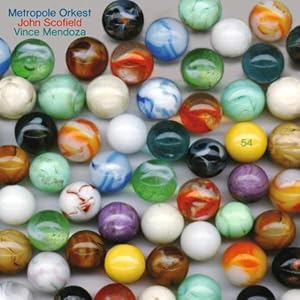
Last year another great arranger (Vince Mendoza) with another fine big band (Metropole Orkest) released a record featuring John Scofield, entitled 54.

October 13, 2011

Miles Davis Group live at Berliner Jazztage 1971


Miles Davis (trumpet)
Gary Bartz (saxophone)
Keith Jarrett (electric piano, organ)
Michael Henderson (bass)
Ndugu Leon Chancler (drums)
Charles Don Alias (percussions)
James Mtume Forman (percussions)
recorded live at Philharmonie Berlin, November 6, 1971

1. Directions (J. Zawinul) (incomplete)
2. Honky Tonk (M. Davis)
3. What I Say (M. Davis)
4. Sanctuary (W. Shorter-M. Davis)
5. It's About That Time (M. Davis)
6. Funky Tonk (M. Davis) (incomplete)

Just one year before this concert, Miles recorded a string of live dates  at the Cellar Door with a similar group and a similar repertoire. Read here parts of the allmusic.com review by Thom Jurek:
"Davis was keen on having Columbia record his live sets, and pressured them to do so for these four nights, just a week before Christmas in 1970. This set is a solid look at what's in-the-can, since the vast majority of these tracks -- three hours' worth of them -- have never seen the light of day in any form.
This music reveals a truly muscular Miles Davis at the top of his form as an improviser and as a bandleader with the most intense and nearly mystical sense of the right place-the right time-the right lineup. These shows, played in a club instead of a concert hall, provided a virtual laboratory for possibilities Davis was exploring. The money for the gig was nearly non-existent compared to what he was used to making playing halls, so he paid the band out of his own pocket.
The music here fades in with Joe Zawinul's "Directions." There is a five-note bass figure that repeats almost constantly throughout, offering DeJohnette a solid bass from which to enhance the groove and dance around. From the beginning, Davis is blowing his ass off, soloing furiously in the middle register. Jarrett is filling the space, playing both a Rhodes and an organ at the same time. When Bartz begins to solo on soprano, the deep, funky groove is well-established, giving the musicians room to dig in and let loose. Jarrett's solo is like a spaced-out Sly Stone, offering back the groove and then building on it like a man possessed. He matches both DeJohnette and Henderson with a slippery, utterly rhythmic sense of pure groove and then moves them somewhere else until Davis brings them back.
Disc two opens with Jarrett, Henderson, and Airto locking horns in a ferocious groove on "What I Say" that has the members of the audience showing their appreciation with shouts of "Yeah!" and "Blow!" and "You Go!" Jarrett's solo at the beginning is unlike anything he has ever played -- before or since. As they move through the set and get to "Inamorata," the gate to heaven and hell is wide open. The spaced-out blues in "Honky Tonk" reveals Davis' total mastery of the wah wah he employed in so much of his material of the time. "Inamorata" is wildly funky, dirty, and outright nasty in places. But the middle sections offer, as Bartz notes in his liner essay, the kinds of vocalese concepts that are reflected in his solo, Davis' solo, and in the actual voices of Airto and Henderson.
The Cellar Door Sessions set is like a combination of the Tribute to Jack Johnson set and the complete It's About That Time disc, with a watershed of information providing a complete bridge from one phase of that exploratory period in Davis' career to another. As Jarrett observes in his liner essay (each bandmember has one) after this date, Davis never played with a group as musically sophisticated again. And for all the ego displayed in stating this, one may tend to agree with him. Lavishly packaged and annotated, The Cellar Door Sessions is the last great reissue of the year 2005, and an essential testament to the genius Davis displayed in weaving together exploratory jazz, funk, and rock." 

September 17, 2011

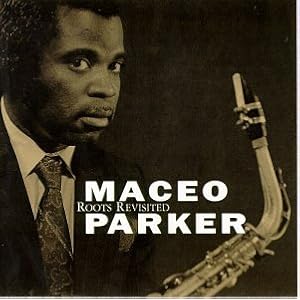
Maceo Parker „Roots Revisited“ live in Bremen 1990


Maceo Parker, Alto Saxophone
Pee Wee Ellis, Tenor Saxophone
Fred Wesley, Trombone
Larry Goldings, Hammond B3
Rodney Jones, Guitar
Bill Stewart, Drums

recorded live at Modernes, Bremen, November 7, 1990

1. McGriff’s Blues (Rodney Jones)
2. For The Elders    (Fred Wesley)
3. Up And Down East Street (Maceo Parker)
4. Let’s Go Funky (a.k.a. Southwick) (Maceo Parker)
5. Peace Fuge (Fred Wesley)

Maceo Parker is a funk monster. He started his career playing saxophone for James Brown. He left the Godfather of Soul to join none other than George Clinton and the legendary Parliament, before going back with James Brown and later on Bootsy Collin’s own band. His own website pretty clearly states that there would be no funk music without Maceo Parker-that might be a little much, but he did help out a lot. Yet in 1990, Maceo Parker decided to put aside his funky nature (well on some tracks) in exchange for some old fashioned jazz and soul music for his now legendary album "Roots Revisited". The mixture of all three is very entertaining.
This CD gave him a chance to stretch out as a leader, and his soulful horn immediately brings to mind Hank Crawford and (to a lesser extent) Lou Donaldson. With a strong backup group that includes Pee Wee Ellis on tenor, trombonist Fred Wesley, and Don Pullen on organ, Parker enthusiastically plays over infectious grooves with just one funky departure ("In Time"). Roots Revisited is a throwback to the 1960s soul-jazz style and Maceo Parker gives one the impression that, if called upon, he could hold his own on a bebop date.
The second Roots installment, "Mo' Roots" was cut minus Pullen and Collins, leaning a little more toward the instrumental soul side. Three fine originals in conjunction with covers of Ray Charles, Marvin Gaye, Otis Redding, Horace Silver, and Lionel Hampton.

September 14, 2011

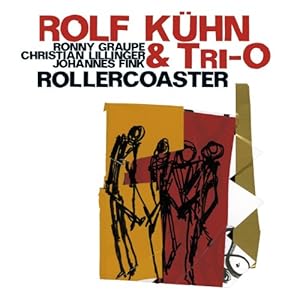
Rolf Kühn & TRI-O live at Jazzclub "Unterfahrt", Munich 2011


Rolf Kühn (Clarinet)
Ronny Graupe (Guitar)
Johannes Fink (Bass)
Christian Lillinger (Drums and Percussion)
recorded live at Jazzclub "Unterfahrt", Munich, March 2, 2011

Lifeline (Rolf Kühn)
Changing the Umbrella (Joachim Kühn)
Mamarazzi (Rolf Kühn)
Positive Reflections (Rolf Kühn)
Canaveral (Ronny Graupe)

Since the death of Albert Mangelsdorff, clarinetist Rolf Kühn, born in Köln and turning 82 this September, is Germany's elder statesman in jazz. He has played with such diverse figures as Jack Sheldon and Tony Oxley and his voluminous output has included trad, free and fusion, all featuring his quirkily modern compositions. Rollercoaster, Kühn's first disc for Jazzwerkstatt, finds him leading a trio whose combined age barely exceeds his. But Kühn doesn't look and certainly doesn't play old, presenting a fresh program of nine tunes written by himself, brother Joachim, group guitarist Ronny Graupe and Ornette Coleman. It is often said that the best avant-garde players are those thoroughly steeped in the classics; Kühn embodies this and his band responds with both respect and urging. 

September 12, 2011

Johannes Enders Quartet feat. Billy Hart live in Karlsruhe 2011


Johannes Enders (sax)
Jean-Paul Brodbeck (p)
Milan Nicolic (b)
Billy Hart (dm)
recorded live at Jazzclub Karlsruhe, May 23, 2011

1. Sonnentierchen (Johannes Enders)
2. Billy Rubin (Johannes Enders)
3. Zeitgeistmaschine (Johannes Enders)
4. Billy Rubin 2 (Johannes Enders)
5. Little Drummer (Johannes Enders)
6. So Ro (Rebecca Bakken)
7. X-March (Johannes Enders)

One of europes most important tenorsaxophone players with his new quartet feat. Billy Hart, Jean Paul Brodbeck and Milan Nicholic. Enders 2009 release "Billy Rubin" with Billy Hart has been awarded with the german “JazzEcho” , his collaboration with the famous Weilheim group NOTWIST and his own EndersRoom helped to establish a growing reputation amoung advanced listeners. 

September 10, 2011

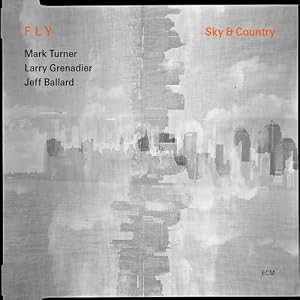
Mark Turner, Larry Grenadier, Jeff Ballard: Fly live at JazzBaltica 2010


Mark Turner, tenor saxophone
Larry Grenadier, bass
Jeff Ballard, drums
recorded live at Große Konzertscheune, Salzau, July 2010

1. Lady B (Jeff Ballard)
2. Super Sister (Mark Turner)
3. Emergence/ Resurgence (Larry Grenadier)
4. The Fruit (Bud Powell)
5. Fly Mr. Freakjar (Mark Turner, Larry Grenadier, Jeff Ballard)
6. Brothersister (Mark Turner)
7. Child´s Play (Jeff Ballard)
8. State Of The Union  (Mark Turner)

Fly is a leaderless collective comprised of three influential American jazz musicians Mark Turner, Larry Grenadier and Jeff Ballard are all powerful individual voices in the jazz community (One, both or all have graced the performances and recordings of Chick Corea, Joshua Redman, Brad Mehldau, Kurt Rosenwinkel, Pat Metheny, Charles Lloyd, to name just a few.) who have created a cohesive unit that expresses each part while creating an uniquely realized whole. In other words, they celebrate the group, without sacrificing the individual. In the era of individual "star" instrumentalists, the idea of a truly collective trio can be a difficult concept to fathom. Yet collectivity is what the FLY trio strives for; and collectivity is what they so unabashedly and unquestionably achieve. Ballard, Grenadier and Turner - all very sought-after session-musicians/side-men - represent three rather distinct musical personalities -- simultaneously complimentary and contrasting. "Because we've all been sidemen a lot, the idea of playing in a collective band--it's completely inclusive of everything we've done. All the experience of all the different bands we've played with is absorbed in this group." "Sky & Country" is the ECM debut for Fly, a Fly provides the context in which all three players get to spread their wings as composers, "bringing together many musical elements, traditions, histories and mysteries," says Turner. The music is unique; it can be harmonically rich or very bare bones and often just simply beautiful.  

September 09, 2011

Dave Liebman + John Abercrombie "Lookout Farm" live at Berliner Jazztage 1975


Dave Liebman: Tenor and Soprano Saxophone, Flute
John Abercrombie: Guitar
Richard Beirach: Keyboards
Frank Tusa: Bass
Jeff Williams: Drums
Badal Roy: Percussion

recorded live during Berliner Jazztage at Philharmonie, Berlin, November 05, 1975

1. Within you without you (George Harrison)
2. Napanoch (Dave Liebman)
3. Mitsuku (Richie Beirach)
4. Lover Man (Jimmie Davis; Jimmy Sherman; Ram Ramirez)

Saxophonist, flutist, and all-around wunderkind Dave Liebman made his ECM debut with Lookout Farm, his first of only two albums for producer Manfred Eicher as leader (the other being the enthralling Drum Ode; he would also guest on Steve Swallow’s Home some six years later) and a trendsetter for fledgling improvisers seeking their voices in the seventies and beyond. Here, he is joined by a telepathic ensemble that includes regulars Richie Beirach and John Abercrombie, in addition to a pointed percussion section.
A spectacular sense of curiosity would seem to be de rigueur in Liebman territory, its infectiousness inescapable. This is a milestone album, not only for the liberating musicianship and timeless sounds, but also for its production value. With Lookout Farm, Eicher channeled the reverberant specter that has haunted the label’s sound ever since, and with it an entirely new way of listening emerged.

September 08, 2011

Miroslav Vitous Group "Remembering Weather Report" live in Le Mans 2010


Miroslav Vitous - Bass, Samples
Franco Ambrosetti - Trumpet
Gary Campbell - Saxophone
Nasheet Waits - Drums
recorded live at Europa Jazz Festival Le Mans/France, May 7, 2010

Opening
Morning Lake
Autumn Leaves (Kosma, Prévert)
Miro Bop
Stella By Starlight (Victor Young)

Vitous was one of the founders of Weather Report and helped to shape its early (and revolutionary) mix of enigmatic, free-flowing compositions and high-level improvisational dialogues, in which all the instruments enjoyed parity. It is this formative period that Miroslav salutes with his all-acoustic band and some phenomenal playing. The obvious musical empathy between Vitous and drummer Gerald Cleaver is a joy, Ambrosetti and Campbell contribute inspired solos – as does guest Michel Portal, another iconic figure in the history of the music.

September 07, 2011

Verneri Pohjola Quartet live at Jazzclub Unterfahrt, München 2011


Verneri Pohjola - Trumpet
Aki Rissanen - Piano
Antti Lötjönen - Bass
Joonas Riippa - Drums
recorded live at Jazzclub Unterfahrt, München, March 25, 2011
1. Akvavit (Pohjola)
2. For Three (Pohjola)
3. Askisto (Pohjola)
4. Boxer Diesel (Pohjola)
5. What Reason Could I Give (Ornette Coleman)
6. Colossus (Verneri Pohjola)
7. Spirit of S (Verneri Pohjola)
8. Kuohija (Verneri Pohjola)
9. Karhu (Verneri Pohjola)
10. In The End Of This Album (Verneri Pohjola)

Pohjola is a name with great symbolic power in Finland. It is the main place in the national epic poem Kalevala, and the surname of one of the country’s best known jazz musician families. With Aurora, trumpeter Verneri Pohjola is now creating quite a stir outside his homeland. In Finland his debut won the Emma award as leader, the Finnish Grammy, as “Best Jazz Album of 2009”.
It was clear that the trumpeter would go on to have a musical career from very early on.
He was born in 1977, the son of national jazz legend Pekka Pohjola. From 1999 he studied jazz at the Sibelius Academy, one of Europe’s leading academies, and in 2004 he was named Young Artist of the Year at the Pori Jazz Festival. In that same year the Finnish jazz critics also declared him the Best Trumpeter and Musician of the Year.
Even though Aurora is Pohjola’s first work under his own name, he is no longer a newcomer.
The Finn consciously gave his music time to mature and to find its own artistic expression. When ACT star Nils Landgren heard Pohjola’s debut album, he was immediately captivated. He promptly invited the trumpeter to the Berlin Jazz Festival 2010 and raved to his label boss, Siggi Loch, about this great talent. That Sweden and Norway are real “treasures troves” for first class jazz is far from a secret but its tranquil neighbouring country, covered by forests, lakes, deer and with only 5 million inhabitants was until now undiscovered.

September 06, 2011

Frederik Köster Quartet live at Birdland, Hamburg 2011


Frederik Köster - Trumpet, Flügelhorn
Tobias Hoffmann - Guitar
Robert Landfermann - Bass
Ralf Gessler - Drums

recorded live at Birdland, Hamburg, March 26, 2011

1. 3x211 (Köster)
2. Liebeslied (Köster)
3. 2. Juni (Köster)
4. Prayer (Köster)

Time is one of our world’s strangest phenomena: it has both physical size as well as being a philosophical construct, measurable by fine apparatus, yet barely captured by human experience. Frederik Köster has alsways been fascinated by „time“, by mind games such as „Minority Report“ as well as by the traces of contemporary history reaching up to our present.
Even his quartet’s debut was programmatically named „Constantly Moving“ and documented the first years of the band after it was founded in 2003. On the follow-up album “Zeichen der Zeit” Signs of Time (2009) the Frederik Köster Quartet adopted a position of its own using an outspoken mixture of honest rock guitar and elastic jazz trumpet, delightful improvisation and songwriter storyteller qualities. “This is the band as it sounds today and it includes all our influences, the signs of the present times and the past times”, the bandleader explains. And the signs of the times are looking good for Frederik Köster. In 2009 he received - as a soloist as well as his quartet - the New German Jazz Award, and in 2010 the ECHO and the WDR Jazz Awards. The third album of the band now follows, developed as a constant “work in progress”: “Momentaufnahme (Snapshot)”.

September 05, 2011

Roy Ayers live in Basel 2010


Roy Ayers, vocals, vibes, synth
Donald Nicks, bass
Troy Miller, drums
Ray Gaskins Jr., alto saxophone, keyboards, vocals
John Pressley, vocals
Mark Adams, keyboards

1. Don´t Stop The Feeling
2. We Live In Brooklyn
3. No Stranger to Love
4. Can´t You See Me/  Running Away/  Evolution
5. Everybody Love´s The Sunshine
6. Sugar

Vibraphonist/vocalist Roy Ayers is among the best-known, most loved and respected jazz/R&B artist on the music-scene today.
Now in his fourth decade in the music business, Ayers, known as the Godfather of Neo-soul, continues to bridge the gap between generations of music lovers. In the 60’s he was an award-winning jazz vibraphonist, and transformed into a popular R&B band leader in the 70's/80's. Today, the dynamic music man is an iconic figure still in great demand and whose music industry heavyweights, including Mary J. Blige, Erykah Badu, 50 Cent, A Tribe Called Quest, Tupac and Ice Cube.
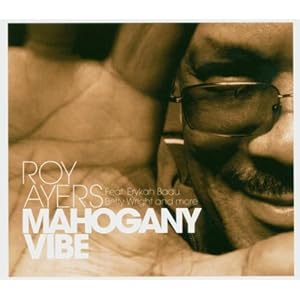
Ayers recently recorded with hip hop artist Talib Kweli (produced by Kanye West) and jazz/R&B singer Wil Downing. His solo album "Mahogany Vibe" was released in 2004.
Many of Ayers' songs including: “Everybody Loves the Sunshine”,”Searchin”, Running Away” have been frequently sampled and remixed by DJ’s worldwide.

September 03, 2011

Jack DeJohnette Group live at NDR 2011


Jack DeJohnette (dr/melodica)
Rudresh Mahantappa (as)
George Colligan (p/ keys/ tp)
Dave Fiuczynski (git)
Jerome Harris (b, voice)
recorded live at Rolf- Liebermann-Studio, Hamburg, May 19, 2011

1. Introduction by Jack DeJohnette - One For Eric
2. Soulful Ballad
3. Blue
4. Tango Africaine

Born in Chicago in 1942, Grammy® winner Jack DeJohnette is widely regarded as one of jazz music's greatest drummers.  Music appreciation flourished in DeJohnette's family.  He studied classical piano from age four until fourteen, before beginning to play drums with his high school concert band and taking private piano lessons at the Chicago Conservatory of Music. In 1966, he drummed alongside Rashied Ali in the John Coltrane Quintet.  International recognition came with his tenure in the Charles Lloyd Quartet, one of the first jazz groups to receive cross-over attention, which also alerted the world to Keith Jarrett's skills.
Jack DeJohnette has collaborated with most major figures in jazz history.  Some of the great talents he has worked with are John Coltrane, Miles Davis, Ornette Coleman, Sonny Rollins, Sun Ra, Jackie McLean, Thelonious Monk, Bill Evans, Stan Getz, Keith Jarrett, Chet Baker, George Benson, Stanley Turrentine, Ron Carter, Lee Morgan, Charles Lloyd, Herbie Hancock, Dave Holland, Joe Henderson, Freddie Hubbard, Abbey Lincoln, Betty Carter and Eddie Harris, who is responsible for convincing DeJohnette to stick with drums because he heard DeJohnette's natural talent.
It was in 1968 that DeJohnette joined Miles Davis's group in time for the epochal upheaval marked by Bitches Brew, an album that changed the direction of jazz.  In his autobiography, Miles Davis said, "Jack DeJohnette gave me a deep groove that I just loved to play over."  Jarrett soon followed DeJohnette into the Davis group, and the drummer's first ECM recording, the duet Rutya and Daitya was made in 1971.  Working with Miles also brought about collaborations with John McLaughlin, Chick Corea and Dave Holland.
His latest project is The Jack DeJohnette Group, featuring Rudresh Mahanthappa on alto saxophone, David Fiuczynski on double-neck guitar, George Colligan on keyboards and piano, and long-time associate Jerome Harris on electric and acoustic bass guitars.  The Group has toured North America and Europe in 2010 and will record and tour in 2011. They released a first album "live at Yoshi´s" this year

September 02, 2011

Terence Blanchard Quintet live at London JazzFestival 2010


Terence Blanchard - Trumpet
Brice Winston - Tenor Sax
Fabian Almazan - Piano
Ben Williams - Bass
Kendrick Scott - Drums

recorded at The Barbican, London, as part of the London Jazz Festival 2010, on 15th November 2010

1. Bass: Choices
2. A Time To Spare
3. Band: Choices
4. Wander Wonder
5. Bounce

As an Art Blakey alumnus, Blanchard learnt the craft of the bandleader early on. With his own group he has a similar concept to Blakey, giving youg lions a context to work their socks off, and to develop. There was one very new player, the ex-Julliard bassist Ben Williams. Blanchard pointed this out he was still relying on the written music. The inference was clear: Blanchard has the clear expectation that, like the others, he should quickly rise to the challenge of getting to know every single tricky contour of Blanchard's compositions. The other band members were both impressive - tenor player Brice Winston and young Cuban pianist Fabian Almazan.
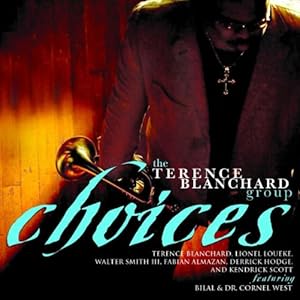
Blanchard's clearly intense work with his band has another purpose too. He responds, deeply, sincerely to developments in society,and acts as the public conscience. He uses recorded words written and spoken by Cornel West. The quintet wraps its work around the compelling speech-rhythms and ideas. Listeners were impressed in the summer by Blanchard's depth and sincerity in "Choices", a response to Katrina. Blanchard as a musician and as a citizen pursues serious goals, and has a healthy disregard for tabloid headlines and throwaway culture.  


September 01, 2011

Robert Glasper Trio live at London Jazzfestival 2010


Robert Glasper, piano
Derrick Hodge, bass
Mark Colenburg, drums

recorded live at Barbican Hall, November 14th 2010


1. Rise and Shine/ I Have A Dream/  Smells Like Teen Spirit/ FTB
(Robert Glasper/ Herbie Hancock/ Kurt Cobain/ Robert Glasper)
2. Canvas (Robert Glasper)

"It was a very special set indeed. The high point came with the arrival onstage of Glasper's regular drummer Chris "Daddy" Dave, a fireball of energy, with Terence Blanchard for the final number of the set, Glasper's composition Canvas. Glasper had been working on it with the East London Creative Jazz Orchestra, and they were all present in the audience, and were clearly appreciative.
But if that tune stayed uppermost in the mind afterwards, it shouldn't in any way devalue what had gone before. For the main part of the set the drum chair had been occupied by Mark Colenburg. Colenburg is a very different drummer from Chris Dave. Colenburg is more cerebral, more calculating, but a remarkable player.
Colenburg's influence on the constantly watchful and attentive Glasper was to take him off in very different and fascinating directions. Glasper is known for incorporating hip hop and gospel. But on the evidence of last night, they are just a small part of the stylistic palette which he can summon up. He has an internalized memory and an imagination into which he can dig very deep and find resources from surprising places - I thought I heard takes on the cult piano minimalists and texturalists Conlon Nancarrow and Terry Riley. Then there was a very fine moment when the band pulled the audience's ears in, and settled into a compelling, assured, anthemic groove - in what sounded like 11/8 time. At another moment the audience were quick to pick up that the trio had found its way cleverly into Nirvana's Teen Spirit. But in this context, with this drummer it was hushed, seen through the prism of Keith Jarrett. This was an intensely lyical take on the tune which was so quiet, I could hear the tick of my neighbour's watch.
A special word too about Derrick Hodge. Hodge thinks and hears low. His sound is big, his presence imposing yet genial. He had one wonderful feature using the open E string as a pedal note. Think Ron Carter, only with more of a sense of mischief." - Review of this concert on londonjazz.blogspot.com
Robert Glasper´s most recent album "Double Booked" was released on Blue Note in 2009.