January 18, 2011

Avishai Cohen: Aurora live at NDR Hamburg 2010


Avishai Cohen (b/voc)
Karen Malka (voc)
Shai Maestro (p)
Amos Hoffmann (oud, git)
Itamar Doari (perc)

recorded live at Rolf-Liebermann-Studio, NDR Hamburg, November 18, 2010

1. Seven Seas (Avishai Cohen)
2. Morenika (Trad)
3. Dreaming (Avishai Cohen)
4. In One (Avishai Cohen)
5. Aurora (Avishai Cohen)
6. Alfonsina y el mar (Ramirez/ Luna)
7. Para el monte me voy porque en monte no estoy (Trad.)

"Aurora finds Avishai Cohen not only playing acoustic and electric bass, but also playing acoustic piano and electric keyboards and singing. In fact, he does a great deal of singing on this 2008 recording -- which will come as a surprise to those who think of Cohen as strictly an instrumentalist. Aurora is by no means an easy album to categorize; at the risk of oversimplifying things, one possible description could be "world jazz meets post-bop meets adult alternative." Jazz is a prominent ingredient on Aurora, but so are pop/rock and world music -- and Cohen gets a lot of inspiration from Middle Eastern, North African, and Spanish music. He sings in four different languages -- Hebrew, English, Ladino (the language of Spain's Sephardic Jews), and Spanish -- on an album that is dominated by original material but also contains some traditional Jewish songs. But as unpredictable as this 53-minute CD is, Aurora has a certain continuity. Cohen sounds like he knows exactly what he's doing, and he has sympathetic support that includes Amos Hoffman on oud (a traditional Middle Eastern lute) and Karen Malka on vocals (although Cohen is the main vocalist)." - by Alex Henderson, allmusicguide.com

January 17, 2011

Betty Carter Trio: 199th NDR Jazz Workshop Hamburg 1985


Betty Carter, voc
Benny Green, p
Tarik Shah, b
Winard Harper, dr

recorded live at NDR Studio 10, Hamburg, May 29, 1985

1. Tight (Betty Carter)
2. Look What I Got (Betty Carter)
3. Dearly Beloved/ Blue Moon
4. Timeless (Betty Carter)

Arguably the most adventurous female jazz singer of all time, Betty Carter was an idiosyncratic stylist and a restless improviser who pushed the limits of melody and harmony as much as any bebop horn player. The husky-voiced Carter was capable of radical, off-the-cuff reworkings of whatever she sang, abruptly changing tempos and dynamics, or rearranging the lyrics into distinctive, off-the-beat rhythmic patterns. She could solo for 20 minutes, scat at lightning speed, or drive home an emotion with wordless, bluesy moans and sighs. She wasn't quite avant-garde, but she was definitely "out." Yet as much as Carter was fascinated by pure, abstract sound, she was also a sensitive lyric interpreter when she chose, a tender and sensual ballad singer sometimes given to suggestive asides. Her wild unpredictability kept her marginalized for much of her career, and she never achieved the renown of peers like Ella Fitzgerald, Sarah Vaughan, or Carmen McRae. What was more, her exacting musical standards and assertive independence limited her recorded output somewhat. But Carter stuck around long enough to receive her proper due; her unwillingness to compromise eventually earned her the respect of the wider jazz audience, and many critics regarded her as perhaps the purest jazz singer active in the '80s and '90s. Additionally, Carter took an active role in developing new talent, and was a tireless advocate for the music and the freedom she found in it, right up to her death in 1998.
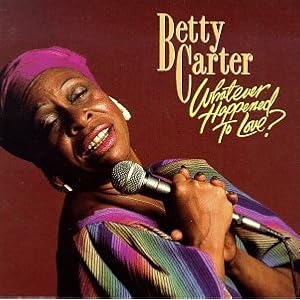
1982 brought a live album with orchestra backing, Whatever Happened to Love?, and five years later, she recorded a live duets album with Carmen McRae at San Francisco's Great American Music Hall. She continued to tour as well, and when Polygram's reactivated Verve label started signing underappreciated veterans (Abbey Lincoln, Shirley Horn, Nina Simone, etc.), they gave Carter her first major-label record deal since the '60s. Verve reissued much of her Bet-Car output, giving those records far better distribution than they'd ever enjoyed.

January 16, 2011

Lucky Thompson Octet live at NDR Hamburg 1961


Lucky Thompson, ts
Nat Peck, tb
Jo Hrasko, as
William Boucaya, bs
Christian Bellest, tp
Carlos Charlie Diernhammer, p
Peter Trunk, b
Daniel Humair, dr

recorded live at NDR Studio 10, Hamburg, April 28, 1961

1. Mr. Care Free
2. It's A Fantasy
3. Old Reliable
4. I Remember When
5. Check Out Time

Eli "Lucky" Thompson (June 16, 1924, Columbia, South Carolina — July 30, 2005, Seattle, Washington) was a United States jazz tenor and soprano saxophonist. While John Coltrane usually receives the most credit for bringing the soprano saxophone out of obsolescence in the early 60s, Lucky Thompson, along with Steve Lacy, played it in a more advanced bebop format.
After playing with the swing orchestras of Lionel Hampton, Don Redman, Billy Eckstine, Lucky Millinder, and Count Basie, he worked in rhythm and blues and then established a career in bop and hard bop, working with Kenny Clarke, Miles Davis, Dizzy Gillespie and Milt Jackson. Thompson was an inspired soloist capable of a very personal style in which the tradition of Coleman Hawkins, Ben Webster and Don Byas was intelligently mixed with a modern grasp of harmony. He showed these capabilities as sideman on many albums recorded during the mid-1950s, such as Stan Kenton's Cuban Fire, and those under his own name. He appeared on Charlie Parker's Los Angeles Dial Records sessions and on Miles Davis’s hard bop Walkin' session. Thompson recorded albums as leader for ABC Paramount and Prestige and as a sideman on records for Savoy Records with Milt Jackson as leader.
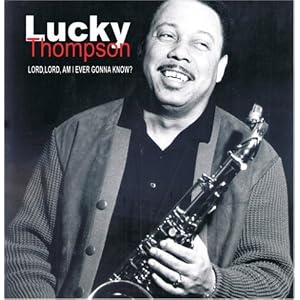
He lived in Lausanne, Switzerland in the late 1960s and recorded several albums there including "Lord, Lord, Am I Ever Gonna Know?", released more than 30 years after the original recording session in 1962 on Candid records.
 

January 15, 2011

Max Roach Quartet live at NDR Hamburg 1984


Max Roach, dr
Cecil Bridgewater, tp
Odean Pope, ts
Tyrone Brown, b

recorded live at NDR Studio 10, Hamburg, January 19, 1984

1. Six Bits Blues (Roach)
2. Scott Free (Bridgewater)

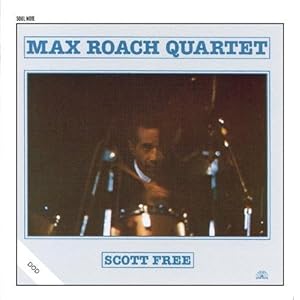
Another concert of Max Roach´s 1984 tour was released as "Scot Free" on the Italian label Soul Note. "This strong set from the Max Roach Quartet (one of the finest regular bands of the 1980s) finds the group performing a 40-minute version of trumpeter Cecil Bridgewater's "Scott Free." Because the piece has plenty of solo space (two lengthy improvisations apiece for Bridgewater, tenor saxophonist Odean Pope, bassist Tyrone Brown and drummer Roach, with a medium-tempo section, a rapid segment and some free interludes), there is more variety on this lengthy work than one might expect. This is excellent music, easily recommended as an example of the underrated but consistently brilliant Max Roach Quartet." - Scott Yanow, allmuscguide.com
January 14, 2011

Klaus Doldinger Ensemble live at NDR Hamburg 1962


Klaus Doldinger, ts
Kenny Clarke, dr
Don Ellis, tp
Jacques Pelzer, sax, fl
Ingfried Hoffmann, org, p
Benoit Quersin, b
Rene Thomas, gt

recorded live at NDR Studio 10, Hamburg, December 7, 1962

1. Open Door (Klaus Doldinger)
2. Quintenzirkel (Klaus Doldinger)
3. Theme For Freddy (Rene Thomas)
4. Signal (Klaus Doldinger)
5. Six Eight Pleasure
6. Crépuscule With Nellie (Monk)
7. Theme (Rene Thomas)
8. Solo (Don Ellis)
9. After You've Gone (Layton)
10. Hasten Jason (Kenny Clarke)
11. For Two Only (Klaus Doldinger)
12. Sweetie's Bounce  (Klaus Doldinger)

Doldinger's probably best remembered for the more dynamic fusion he cut with the Passport group in the 70s, but back in his early years he was full on soul jazz player, steeped in the tradition of Gene Ammons, Lou Donaldson, Sonny Stitt, and others before him – all players that we'd easily rank Doldinger with during these years, given the ultra-high level of his work for Philips. But given his German orientation, Doldinger also picked up on some of the freer influences that were running around the European scene of the 60s – and the tracks here don't just sparkle with American soul jazz sounds, but also show a bit of Brazilian and more progressive jazz influences as well.

January 13, 2011

Carla Bley Band: 188th NDR Jazz Workshop Hamburg 1984


Michael Mantler, tp
Gary Valente, tb
Vincent Chancey, frh
Bob Stewart, tuba
Steve Slagle, fl
Tony De Grady, ts
Steve Swallow, b
Ted Saunders, p, org
Victor Lewis, dr

recorded live at NDR Studio 10, Hamburg, March 14, 1984

1. Talking Hearts (Carla Bley)
2. Joyful Noise (Carla Bley)
3. Misterioso (Thelonious Monk)

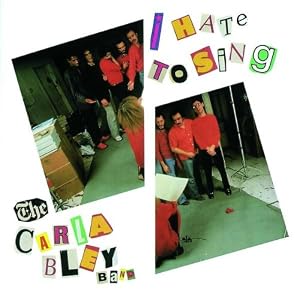
In 1984 Carla Bley released the album "I hate to sing", released on WATT. "There's a comic, antic quality afoot here-and isn't that what one expects from Bley in regular doses? The dose is over the top here, particularly on the title track. Certain band members, including the boss, take turns letting the listener know in no uncertain terms why they are instrumentalists and not singers. Dissonant voices collide with dissonant chords on track one, anchored by Steve Swallow's distinctive electric bass on "The Internationale." This one is perhaps even more madcap than usual because of the confluence of flat, non-singing singers balanced with a sort of Germanic romanticism that in places would have brought a smile to Kurt Weill". - Willard Jenkins, JazzTimes

January 12, 2011

Ornette Coleman Quartet: 219th NDR Jazzconcert Hamburg 1987

Ornette Coleman, as, tp
Don Cherry, tp
Charlie Haden, b
Billy Higgins, dr

recorded live at NDR Studio 10, Hamburg, October 29, 1987

1. Yesterday, Today and Tomorrow
2. Latin Genetics
3. Chanting
4. Africa Is The Mirror of All Colours
5. The Art Of Love Is Happiness

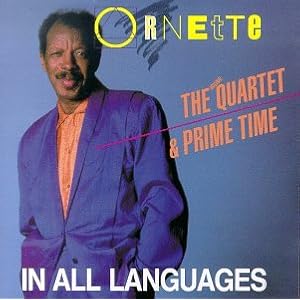
This concert has been circled among tape traders for years and is available on several download sites. Here I can offer a recently digitally broadcast excerpt featuring his legendary quartet. In 1987 Ornette released the double album "In All Languages". Ornette and the other members of his 1950s quartet, trumpeter Don Cherry, bassist Charlie Haden, and drummer Billy Higgins, performed on one of the two records, while his electrified ensemble, Prime Time, performed on the other. Many of the songs on In All Languages had two renditions, one by each group.
The double album was originally released by Caravan of Dreams, who also issued the title as a single cassette or compact disc. Coleman's record label, Harmolodic, re-issued In All Languages in 1997 through a then-current distribution deal with Verve Records.

January 11, 2011

Woody Herman Orchestra: 184th NDR Jazz Workshop Hamburg 1983


Woody Herman Orchestra
recorded live at NDR Studio 10, Hamburg, November 30, 1983

1. Blue Flame (Bishop/ Ray Noble)
2. Things Ain't What They Used To Be (Duke Ellingon)
3. Four Brothers (Jimmy Giuffre)
4. Early Autumn (Burns)
5. Come Rain or Come Shine (Howard Arlen/ Johnny Mercer)
6. Perdido (Juan Tizol/ Duke Ellington)
7. I Got News For You (Roy Alfred)
8. Count Down (John Coltrane)

No other bandleader in the history of jazz had the staying power of Woody Herman. From the Band That Plays the Blues, Herman’s first ensemble, organized in 1936, through the many "Herds" that came and went from the 1940s to the 1980s, Herman managed to maintain vitality in his big bands as others ran out of steam and dropped out of the race. There were two keys to Herman’s success. First, he continuously hired talented young players and arrangers. Second, he refused to lead a nostalgia band that played only hits of the past. The result was an ensemble that was always fresh and exciting, musically sharp, and—especially notable from the 1960s on, as rock music was eclipsing jazz—popular.
Herman’s bands were always characterized by their rhythmic drive and intensity and by the enthusiasm of the players. In Herman’s autobiography, jazz critic Gene Lees is quoted as saying that "Woody had an astonishing capacity to spot talent before it was particularly obvious to anybody else … the list of careers that he either made or advanced is staggering." Herman’s personnel lineup over the years reads like an index to jazz, including such notables as sax players Stan Getz, Zoot Sims, and Flip Phillips; trumpeters Shorty Rogers, Pete and Conte Candoli, and Sonny Berman; trombonists Bill Watrous, Jim Pugh, and Bill Harris; pianists Ralph Burns and Jimmy Rowles; vibraphonists Milt Jackson, Red Norvo, Marjorie Hyams, and Terry Gibbs; bassists Oscar Pettiford and Chubby Jackson; and drummers Dave Tough, Shelley Manne, and Ed Soph.
In 1982 the band released the album "World Class" on Concord. As with most of the Woody Herman Orchestra's recordings for Concord, this set (taken from concerts in Japan) welcomes guests from Herman's past. In this case tenors Al Cohn, Med Flory, Sal Nistico and Flip Phillips get to star on half of the eight selections including a remake of "Four Brothers" and Phillips's "The Claw." Phillips has an opportunity to reprise his famous Jazz at the Philharmonic solo on "Perdido."

January 10, 2011

Freddie Hubbard Quintet + Leon Thomas live at Onkel Pö's Carnegie Hall 1979


Freddie Hubbard, trumpet
Hadley Caliman, tenor saxophone
Billy Childs, piano
Larry Klein, bass
Carl Burnett, drums
Leon Thomas, vocals

recorded live at Onkel Pö's Carnegie Hall, October 30, 1979

1. A Night In Tunesia (Gillespie)
2. After The Rain (Coltrane)
3. Straight No Chaser (Monk)

"Leon Thomas is one of the most unique and gifted of all jazz vocalists, he shocked the jazz world with his amazing capabilities when he took it by storm in the late 1960s with his collaborations with Pharoah Sanders.
Leon Thomas born in East St. Louis, Illinois on Oct. 4 1937, and studied music at Tennesseee State University, eventually moving to New York City in 1958. Early sessions included work with names like Count Basie, Randy Weston, Roland Kirk and Oliver Nelson before linking up with Pharoah Sanders for a partnership that continues to entrance listeners today.
Leon recorded on two of Sanders’ most renowned classics “Karma,” (1969) and “Jewels Of Thought,” (1970) and his vocals on the cuts “The Creator Has A Master Plan” and “Hum-Allah” have ensured his reputation. Just as Sonny Sharrock's startling guitar was the unique foil for Pharoah's slashing saxophone, so Leon Thomas had the virtuosity, intensity and blinding originality to keep up with Sanders. It was on these recordings that Leon revealed his unique vocal gift which might best be described as kind of scat-yodelling, offbeat and wonderful sounds which seem to well up from his inner being.
Having made his name with Pharoah, Leon was ready for a solo career and the Flying Dutchman label stepped in with a deal. The label represented total freedom and support for the artist and Thomas responded to this environment with a series of great albums.
He toured Europe with Freddie Hubbard in 1979, a partnership that spawned the enjoyable “A Piece Of Cake” (1980)." -Simon Leng


January 09, 2011

Louis Hayes-Junior Cook- Quintet live at Onkel Pö´s Carnegie Hall, Hamburg 1976


Junior Cook, tenor saxophone
Ronnie Matthews, piano
Stafford James, bass
Louis Hayes, drums
(and Woody Shaw, having some drinks at the bar or so...)

recorded live at Onkel Pö's Carnegie Hall, March 11, 1976

1. Moment To Moment (Johnny Mercer)
2. Four For Nothing (Tex Allen)

"In spite of the group's relatively short life during the first part of 1976, the Louis Hayes--Junior Cook unit was an important catalyst that helped rejuvenate the wellsprings of bop. Along with the bands of Ted Curson and Billy Harper, the Hayes-Cook group derived much of its inspiration and substance from the tradition established by Parker, Gillespie, Silver and Blakey.
Cook, for instance, after a two month stint with Diz in 1957, refined his funky, post-bop stylings during a six-year tenure with Horace Silver, 1958-64. Hayes, a Silver alum from the class of 1956-59, propelled bop-based groups led by Cannonball Adderley, Oscar Peterson and Freddie Hubbard.
Woody Shaw, the young man with a horn who recently has captured critics and public alike, is firmly grounded in the canons of bop. Among his credits are Horace Silver (1965) and Art Blakey (1973).
Ronnie Mathews, in addition to tours with Blakey in the late 60s and early 70s, was an important contributor to the bands of Max Roach, Roy Haynes, Kenny Dorham and Hubbard. As for Stafford James, his resume lists Blakey, 1973-74, Chico Hamilton, Barry Harris and Bobby Timmons.
Though bop was the center of gravity for the Cook-Hayes band, the structural outlines provided by well-defined melodic, harmonic and rhythmic markers were considerably loosened by the "free" vocabulary developed by Ornette Coleman, John Coltrane, Eric Dolphy and Cecil Taylor during the 1960s. This was especially true for Shaw, Mathews and James. Ichi-Ban, though recorded in 1976, has a sense of contemporaneity that derives from the players' superb musicality and commitment to the highest standards. This is real music played by real musicians who take their muse seriously." ---CHUCK BERG

January 08, 2011

Dizzy Gillespie Quartet live at Onkel Pö´s Carnegie Hall, Hamburg1978


Dizzy Gillespie, trumpet
Rodney Jones, guitar
Benjamin Brow, bass
Mickey Roker, drums

recorded live at Onkel Pö's Carnegie Hall, March 23, 1978

1. The Sunshine (Michael Joseph Longo)
2. The land of milk and honey
3. Brother K. (Dizzy Gillepsie)

"A fairly standard date from Dizzy Gillespie's mid-'70s tenure at Pablo Records, Dizzy's Party is primarily a straightforward bop session, with the trumpeter backed by a simple sax/guitar/bass/drums quartet, plus Brazilian percussionist Paulinho Da Costa on the rattling "Harlem Samba," a breathless showcase for Gillespie's hyper-speedy blowing. On the Middle Eastern-influenced "Land of Milk and Honey" -- which would remain a staple of Gillespie's set list until his death nearly 20 years later -- the trumpet has the wailing tone of a muezzin; unfortunately, this 1976 recording has an inappropriately porn-sounding wah-wah guitar plus bongos backing track that detracts from Gillespie's marvelous performance. The two tracks on side one, "Dizzy's Party" and the wild "Shim Sham Shimmy on the St. Louis Blues," fall between those two extremes in terms of performances, but both are a bit overlong; the title track in particular features a tenor solo by Ray Pizzi that goes on far too long with not much melodic inspiration. Dizzy's Party is fine stuff that occasionally approaches excellence." -Stewart Mason about the 1976 album Dizzy´s Party.

January 07, 2011

Johnny "Guitar" Watson & Ensemble live at Onkel Pö´s Carnegie Hall, Hamburg 1976


Johnny "Guitar" Watson, guitar, vocals
Peter Martin, trumpet
Paul Dunmall, tenor saxophone
Gil Noble, piano
Bobby Howard, bass
Emory Thomas, drums

recorded live at Onkel Pö's Carnegie Hall, December 12, 1976

1. Stormy Monday (Aaron Thibeaux Walker)
2. Superman Lover (Johnny "Guitar" Watson)
3. Gangster of Love (excerpt)

A working bluesman since his teenage years in the early 1950s, Johnny “Guitar” Watson scored numerous chart successes in the 1970s with a unique guitar-based sound that mixed the feel and instrumental technique of the blues with the bass-heavy sound of funk. Watson also excelled as a vocalist. His singing was by turns sexy, humorous, and political; his guitar playing exploited the full range of the instrument's powers. He was also a prolific songwriter. When Watson died in 1996 at the age of 61, he was receiving the most modern form of musical homage: rappers and hip-hop musicians quoting or “sampling” his recordings." 
Much like its white counterparts, black pop music is often dominated by young people, and Watson's emergence into the spotlight at the age of 41 was remarkable. His first two albums for DJM, “Ain't That a Bitch” (1976) and “A Real Mother for Ya” (1977) both were certified as gold records for sales of over 500,000 copies each. The title track of the latter album was a major hit and provides an excellent illustration of Watson's style on the DJM recordings. Handling vocals, guitar, and bass, he topped off his blues-funk fusion with a tense, sardonic rendition of lyrics that described a set of difficult circumstances.


January 06, 2011

Bobby Hutcherson Quartet live at Onkel Pö´s Carnegie Hall, Hamburg 1977


Bobby Hutcherson, vibraphone
Hadley Caliman, tenor saxophone
James Leary, bass
Eddie Marshall, drums
recorded live at Onkel Pö's Carnegie Hall, March 22, 1977

1. So far, so good (James Leary)
2. Body and Soul (John W.Green)
3. Knuckle-bean (Eddie Marshall)

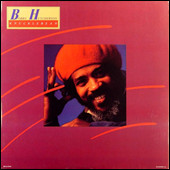
In 1977 Bobby Hutcherson recorded the album "Knucklebean" on Blue Note, re-released on Mosaic


January 05, 2011

John Scofield Quartet live at Onkel Pö´s Carnegie Hall, Hamburg 1978


John Scofield, guitar
Hal Galper, piano
Stafford James, bass
Adam Nussbaum, drums

recorded live at Onkel Pö's Carnegie Hall, October 10, 1978

1. Gray And Visceral (Scofield)
2. Aileron (Scofield)

This quartet released "Rough House" on enja. Down Beat:
»It’s seldom that an album combines fine tunes, inspired blowing, and creative and dynamic interaction to the extent these sides do. They satisfy my emotional cravings and at the same time keep me intellectually involved... Scofield should be applauded for putting it together.«


January 03, 2011

Bill Frisell Trio live at JazzFest Berlin 2005

 
Bill Frisell · guitar
Jenny Scheinman · violin
Greg Leisz · pedal steel + slide guitar

recorded live at Quasimodo, Berlin, November 5, 2005

1. Across the universe (John Lennon/Paul McCartney)
2. You’ve got to hide your love away (John Lennon/Paul McCartney)
3. Come together (John Lennon/Paul McCartney)
4. Lucy in the sky with diamonds (John Lennon/Paul McCartney)
5. Imagine (John Lennon)

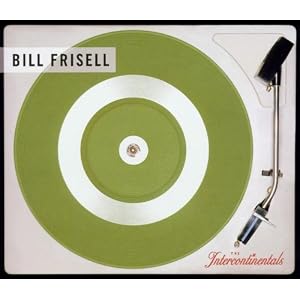
For twenty years Bill Frisell has been reinventing the jazz guitar in adapting well-tried traditions to jazz. On his album Nashville (1997) for instance he has been combining jazz with – guess what(!) – country music. In the beginning of the 90s his trio with Joey Baron and Kermit Driscoll rose to international fame. Coming from there he continues likewise with Jenny Scheinman and Greg Leisz. Both have been part in Frisell’s The Intercontinentals project. Jenny Scheinman’s violin playing is influenced by klezmer, jazzrock, modern music and improvisation. Greg Leisz likes to be associated with his slide-, lap- and pedal-steel guitar and as an all-round studio ‘handyman’.